The GLP-1 + PMOS plate
A dinner plate divided into portions for someone with PMOS taking a GLP-1 medicine. Half the plate is non-starchy vegetables, one quarter is lean protein, and one quarter is a high-fibre carbohydrate, with a small drizzle of healthy fat on top. Beside the plate, a numbered order shows eating protein and vegetables first, then the carbohydrate, then stopping when comfortably full. A callout sets the protein target at 30 to 50 grams per meal, and a note explains that eating protein and vegetables first blunts the post-meal glucose and insulin spike.
The GLP-1 + PMOS Plate
Fewer meals, so each one has to carry more protein and more plants
Why what you eat still matters on a GLP-1
The medicine handles hunger. It does not handle nutrition. GLP-1 medicines like semaglutide (Ozempic, Wegovy) and tirzepatide (Mounjaro, Zepbound) slow stomach emptying and quiet appetite signals, so you eat less almost automatically. That solves the calorie side of weight loss. It does nothing about the quality of what lands on the plate, and quality is where PMOS is won or lost.
PMOS runs on insulin resistance, the state where cells respond poorly to insulin and the pancreas pumps out more to compensate (Diamanti-Kandarakis and Dunaif, 2012). Refined carbs still spike glucose and insulin even when you eat very little of them. Losing weight quickly without enough protein still costs you muscle. So the food strategy on a GLP-1 is not "eat less," the medicine already did that. It is "make every reduced calorie count for protein, fibre and steady blood sugar." For how the medicine itself works in PMOS, see the hub explainer on GLP-1 medicines for PMOS .
This is not a niche question anymore. A Truveta analysis of 120 million US patient records found GLP-1 use among women with PCOS rose from 2.4% in 2021 to 17.6% in 2025, a more than 7-fold increase. Millions of women are now on these medicines, and very few are told what to actually eat while they are.
The GLP-1 plate formula for PMOS
The plate is simple enough to picture without weighing anything. Half of it is non-starchy vegetables. A quarter is lean protein. A quarter is a high-fibre carb. On top goes a thumb of healthy fat: a drizzle of olive oil, a few nuts, or a quarter of an avocado.
The order you eat in matters as much as the ratios. Eat the protein and vegetables first and save the carb for last. Shukla and colleagues (Diabetes Care, 2015) showed that eating protein and vegetables before carbs lowered post-meal glucose and insulin compared with eating the same meal carbs-first. On a GLP-1 there is a bonus: because the medicine fills you up fast, eating protein and vegetables first means you get the muscle-protecting, blood-sugar-steadying part of the meal in before the appetite switch flips off.
One practical warning. GLP-1 medicines slow how fast your stomach empties, so very large or very fatty meals sit heavily and can trigger nausea and reflux. Smaller, slower, lower-fat meals suit the medicine far better than the classic "eat a big healthy dinner" advice.
Protein: the one number that decides fat loss versus muscle loss
If you change only one thing on a GLP-1, make it protein. Fast weight loss pulls from both fat and lean tissue, and a meaningful share of the weight lost on a GLP-1 can be muscle if protein intake is low. Muscle is the largest insulin-sensitive tissue in the body, so losing it makes PMOS worse in the long run, even as the scale drops.
Clinical guidance for preserving muscle during weight loss generally lands around 1.2 to 2.0g of protein per kilogram of body weight per day. For most women that works out to 30 to 50g of protein per meal. A case series of patients on GLP-1 therapy found that pairing the medicine with adequate protein and resistance training helped preserve lean tissue during the weight loss (PMC case series). The medicine takes fat off. Protein and strength work decide how much muscle stays.
The hardest meal is usually breakfast, because appetite is lowest first thing and a GLP-1 makes it lower still. That is exactly why breakfast should be small and protein-dense: Greek yogurt, eggs, cottage cheese, or a scoop of protein blended into a small smoothie. For the full breakdown of the muscle question, see protein and muscle on a GLP-1 with PMOS .
The best foods to eat on a GLP-1 with PCOS
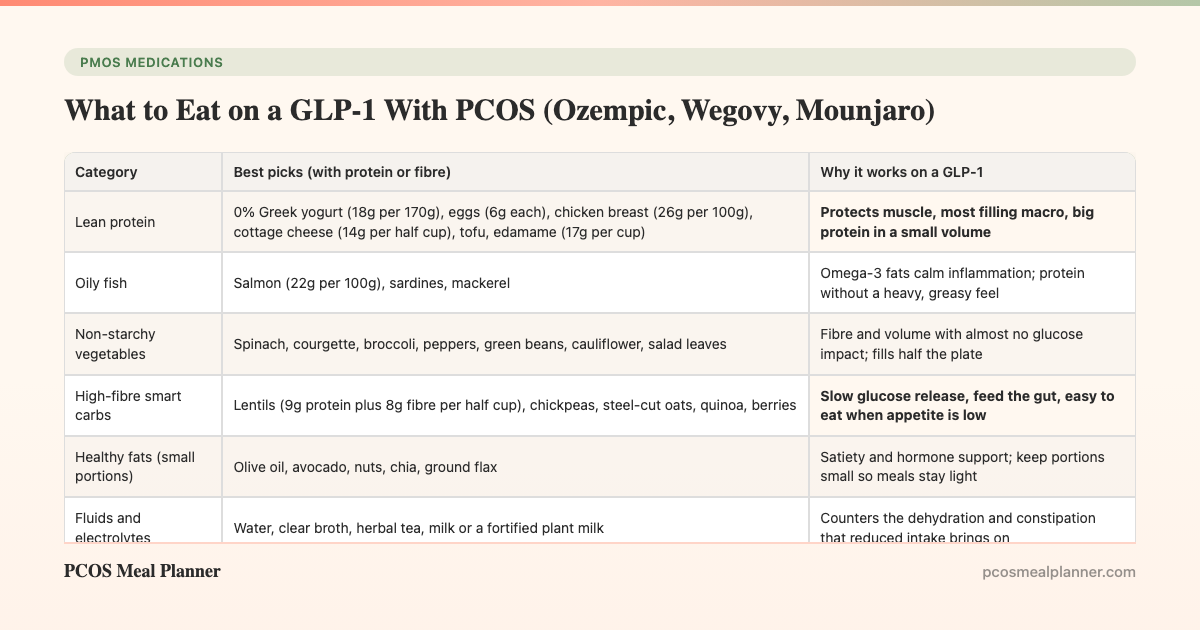
These are the categories that do the most work per bite, which matters when you can only manage a few bites. Every pick is chosen to be protein-dense, fibre-rich, or gentle on a slow-emptying stomach.
Category
Best picks (with protein or fibre)
Why it works on a GLP-1
Lean protein
0% Greek yogurt (18g per 170g), eggs (6g each), chicken breast (26g per 100g), cottage cheese (14g per half cup), tofu, edamame (17g per cup)
Protects muscle, most filling macro, big protein in a small volume
Oily fish
Salmon (22g per 100g), sardines, mackerel
Omega-3 fats calm inflammation; protein without a heavy, greasy feel
Non-starchy vegetables
Spinach, courgette, broccoli, peppers, green beans, cauliflower, salad leaves
Fibre and volume with almost no glucose impact; fills half the plate
High-fibre smart carbs
Lentils (9g protein plus 8g fibre per half cup), chickpeas, steel-cut oats, quinoa, berries
Slow glucose release, feed the gut, easy to eat when appetite is low
Healthy fats (small portions)
Olive oil, avocado, nuts, chia, ground flax
Satiety and hormone support; keep portions small so meals stay light
Fluids and electrolytes
Water, clear broth, herbal tea, milk or a fortified plant milk
Counters the dehydration and constipation that reduced intake brings on
A full sample day with protein grams
Here is one realistic day built for a small appetite, hitting roughly 120g of protein across four eating occasions. Portions are examples, not prescriptions; scale them to your own hunger and your dietitian's target.
Meal
What is on the plate
Protein
Breakfast
170g 0% Greek yogurt, a handful of berries, 1 tbsp chia, and a small scoop of protein or collagen stirred in
~30g
Lunch
120g grilled chicken over a big mixed salad, half a cup of chickpeas, olive oil and lemon; eat the chicken and salad first
~40g
Snack
150g cottage cheese with cucumber and a few olives, or a small tin of tuna
~17g
Dinner
130g baked salmon, roasted broccoli and courgette, half a cup of quinoa; vegetables and fish before the quinoa
~34g
Daily total ~121g protein
If a full meal feels like too much, split it. Two small protein-first mini-meals beat one large plate you cannot finish, and they keep the total protein up.
Foods to limit on a GLP-1 with PCOS
Nothing here is banned. The point is that a slow-emptying stomach changes which foods feel good and which do not. These are the ones most likely to backfire.
Large, greasy, fried meals. High-fat volume sits in a slow stomach and is the top trigger for GLP-1 nausea and reflux.Refined carbs and sugary drinks. White bread, pastries, soda and juice spike glucose and insulin, which works directly against PMOS even in small amounts.Very rich, heavy desserts. Cream, fried, and sugar-dense sweets combine the fat and sugar problems at once.Fizzy drinks and a lot of caffeine on an empty stomach. Both can add to reflux and unsettle a sensitive stomach.Very spicy food, if it triggers you. Reflux is more common on GLP-1 medicines, and spice can make it worse.
For a deeper guide to eating around nausea, reflux and constipation, see managing GLP-1 side effects with food .
Alcohol on a GLP-1 with PCOS
Keep alcohol low or skip it. A common experience on GLP-1 medicines is a sharp drop in alcohol tolerance, so one drink can hit like two or three. Alcohol also worsens nausea and reflux, can push blood sugar down, and pours empty calories into a day where your appetite is already small, crowding out the protein you need.
For PMOS there is an extra reason. Your liver clears alcohol before it deals with fat and glucose, so drinking pauses the metabolic work you are on the medicine to do. If you do drink, keep it modest, eat protein first, and drink water alongside. Alcohol advice can depend on your other medicines and your blood sugar, so raise it with your prescriber.
Hydration and fibre: the two levers for side effects
Most GLP-1 discomfort is a plumbing problem, and hydration and fibre are the two levers that fix it. When you eat less, you drink less by accident, and constipation follows fast. Aim for steady water through the day, add a mug of clear broth for sodium, and do not wait until you feel thirsty.
Fibre is the other lever, and it does double duty for PMOS. It keeps digestion moving against the slowdown, and it slows glucose absorption, which steadies insulin. Build it from the smart carbs on the list: lentils, chickpeas, steel-cut oats, berries, chia and ground flax, plus the half-plate of vegetables. Increase fibre gradually with plenty of water, since a sudden jump can add bloating on top of the medicine.
The food noise connection
One of the most talked-about effects of GLP-1 medicines is the drop in "food noise," the constant background chatter about what to eat next. For many women with PMOS that mental quiet is the first time in years that food has felt neutral. It is also the reason the plate matters so much: with cravings turned down, you are choosing food deliberately rather than reactively, so a simple protein-first template is easy to follow.
Use the quiet window to build habits, not just to eat less. The pattern you lock in now, protein first, half a plate of vegetables, water on hand, is what protects you if and when appetite returns. We cover this mechanism and how to use it in the PMOS food noise guide .
What to eat when you come off the GLP-1
Appetite usually returns when the medicine stops, so the food habits you build now are what carry the result forward. If you spent the time locking in protein-first meals, a half-plate of vegetables, regular strength training and steady routines, you keep far more of the benefit. If the weight came off through appetite suppression alone, it can come back.
Any decision to stop, pause or change a GLP-1 belongs with your prescriber, not a food article. There is also one safety fact worth stating plainly, and it is not a selling point: GLP-1 medicines are stopped before trying to conceive and are not used in pregnancy, so anyone planning a pregnancy should raise timing with their doctor early. The hub article on GLP-1 medicines for PMOS covers the broader picture.
Your GLP-1 plate checklist
Before a meal on a GLP-1, run this quick check. If you can tick most of it, the plate is working for your PMOS rather than against it.
Is there a clear protein source? Aim for 30 to 50g. If not, add eggs, Greek yogurt, tinned fish, or a scoop of protein.Do vegetables cover about half the plate? Frozen counts. So does a bag of pre-washed salad. It does not have to be fancy.Is the carb a high-fibre one, in a small portion? Lentils, chickpeas, oats, quinoa or berries beat white bread, rice or pasta.Will you eat protein and vegetables before the carb? This single habit lowers the glucose and insulin spike (Shukla 2015).Is the meal small, slow and not too greasy? A slow stomach handles this far better and cuts nausea and reflux.Is there water within reach? Reduced intake means reduced fluids, and constipation follows fast.
You will not tick every box at every meal, and that is fine. Getting the protein and the protein-first order right most of the time is what moves your PMOS, not perfection.
Build your GLP-1 plate with the PCOS Meal Planner
Knowing the formula is one thing. Hitting 30 to 50g of protein per meal, day after day, with a small appetite and a slow stomach, is where most people stall. The PCOS Meal Planner builds a high-protein, insulin-friendly plan around the GLP-1 plate, so the protein target, the half-plate of vegetables and the protein-first ordering are handled for you. It is the same insulin-friendly way of eating that helps PMOS with or without the medicine, which means it keeps working after you come off. Build a plan you can actually eat on a GLP-1 .
Often asked questions
What should I eat on Ozempic or a GLP-1 with PCOS?
Build every meal around protein and non-starchy vegetables, then add a small high-fibre carb: half the plate vegetables, a quarter lean protein, a quarter a fibre-rich carb, plus a little healthy fat. Aim for 30 to 50g of protein per meal and eat the protein and vegetables before the carb. Because the medicine cuts appetite, the few meals you eat have to carry more nutrition, not less. Educational only, not medical advice.
Share this answer
How much protein do I need on a GLP-1 with PCOS?
Clinical guidance for preserving muscle during weight loss lands around 1.2 to 2.0g of protein per kg of body weight per day, roughly 30 to 50g per meal. Protein matters more on a GLP-1 than almost any other time, because fast weight loss can strip muscle, and muscle is what keeps you insulin-sensitive. Front-load it at breakfast, when appetite is lowest. Ask your prescriber or dietitian about the right target for you.
Share this answer
What foods should I limit or avoid on a GLP-1 with PCOS?
Go easy on large, greasy, fried and very rich meals, because slowed stomach emptying makes them sit heavily and worsen nausea and reflux. Limit refined carbs and sugary drinks, which spike glucose and insulin, the opposite of what PMOS needs. Fizzy drinks, a lot of caffeine on an empty stomach, and very spicy food can add to reflux. Small, slow, lower-fat, protein-first meals feel best.
Share this answer
Can I drink alcohol on a GLP-1 with PCOS?
Keep it low or skip it. Many people find their tolerance drops sharply, so one drink hits harder. Alcohol can worsen nausea and reflux, drop blood sugar, and add empty calories that crowd out protein when appetite is already small. For PMOS, your liver clears alcohol before it deals with fat and glucose. If you drink, keep it modest, eat protein first, hydrate, and check with your prescriber.
Share this answer
Does what I eat still matter if the GLP-1 controls my appetite?
Yes, more than ever. The medicine changes how much you eat, not the quality, and quality is where PMOS is won or lost. Too little protein risks losing muscle. Refined carbs still spike insulin. The GLP-1 buys you a smaller, calmer appetite; your food choices decide whether that becomes lost fat and steadier hormones or lost muscle and the same insulin resistance.
Share this answer
What happens to my diet when I come off a GLP-1?
Appetite tends to return, so the habits you build while on the medicine are what carry the result forward. Lock in protein-first meals, a half-plate of vegetables and strength training and you keep more of the benefit. Any decision to stop or change belongs with your prescriber. As a safety note, GLP-1 medicines are stopped before trying to conceive and are not used in pregnancy, so raise pregnancy timing with your doctor early.
Share this answer
Sources and further reading
GLP-1 use and PCOS
Food order, insulin resistance and PCOS mechanism
Clinical guidelines and patient-facing summaries
Build a high-protein, insulin-friendly plan you can actually eat on a GLP-1. Hitting 30 to 50g of protein per meal with a small appetite is the hard part, and it is exactly what our
AI PCOS Meal Planner handles for you: the protein target, the half-plate of vegetables, and the protein-first ordering, built into every day. It keeps working after you come off the medicine, too.
Build your GLP-1 plate now .
How this article was made
The rise in GLP-1 use among women with PCOS is from the Truveta analysis of 120 million US patient records (use rose from 2.4% in 2021 to 17.6% in 2025). The protein-first food order evidence is from Shukla et al. 2015 in Diabetes Care. The insulin-resistance basis of PMOS draws on Diamanti-Kandarakis and Dunaif 2012 in Endocrine Reviews. Lean-tissue preservation with adequate protein and resistance training is from a published case series (PMC). Protein targets reflect general clinical guidance for preserving muscle during weight loss, roughly 1.2 to 2.0g per kg per day.
Aligned with the 2023 International Evidence-Based Guideline for PCOS, plus NHS and Mayo Clinic patient summaries. PMOS is the new name for PCOS as of 12 May 2026; the underlying biology is unchanged. This article is educational only and is not medical advice. It gives no dosing and does not tell anyone to start, stop or change any medication; those decisions belong with your prescriber. As a safety fact, not a marketing point, GLP-1 medicines are stopped before trying to conceive and are not used in pregnancy.
Related reading
Community Comments
Add a comment