GLP-1 side effect to food map
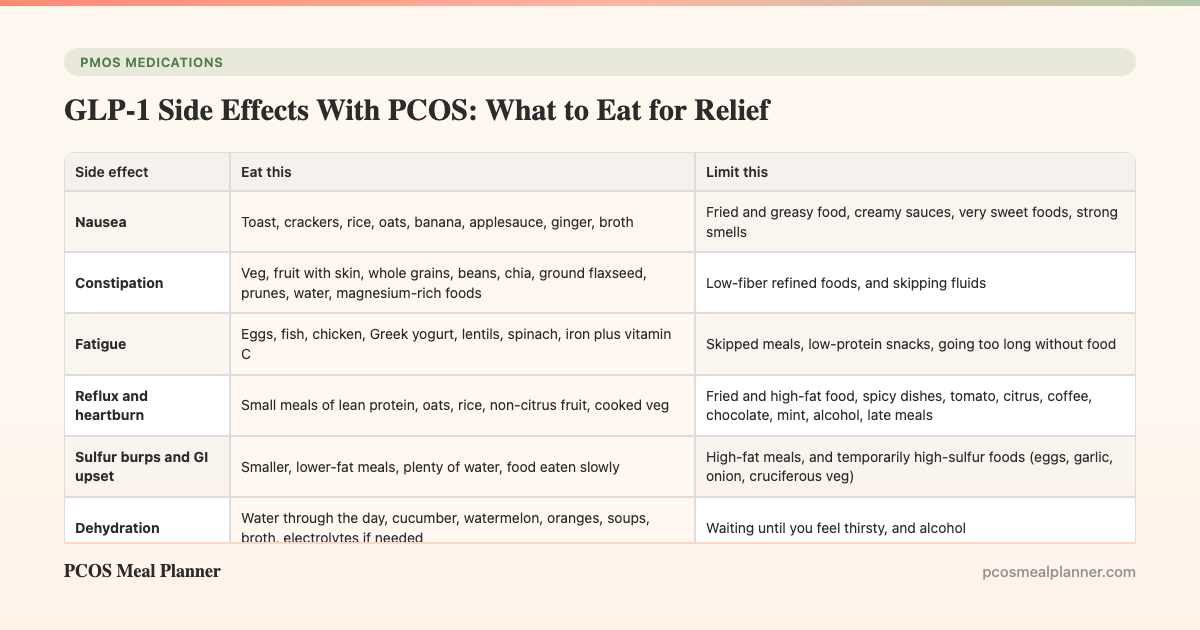
Four rows, each pairing a common GLP-1 side effect on the left with the food strategy on the right. Row one: nausea maps to bland, low-grease foods such as toast, crackers, rice, oats and ginger. Row two: constipation maps to fiber, fluids and magnesium, from vegetables, fruit, beans, chia and flaxseed with plenty of water. Row three: fatigue and low energy map to protein and iron, from eggs, fish, chicken, Greek yogurt, lentils and leafy greens. Row four: reflux and sulfur burps map to smaller, slower, lower-fat meals eaten upright. A footer notes this is general food guidance, not medical advice.
GLP-1 Side Effect to Food Map
What to eat when a GLP-1 for PCOS is hard on your gut
Nausea
Queasy, put off food
Why food matters more on a GLP-1 when you have PCOS
GLP-1 receptor agonists work partly by slowing how fast your stomach empties. That is what keeps you full for longer, and it is also why the side effects are mostly digestive: nausea, constipation, reflux, burping and early fullness. Food does not just soften those symptoms, it is often the difference between staying on a medicine that is helping and quitting because your gut is miserable.
These medicines have become common in PCOS care. Using de-identified health records, Truveta reported that GLP-1 use among women with PCOS rose from 2.4% in 2021 to 17.6% in 2025, a more than 7-fold increase. The reason they are used at all traces back to insulin resistance, which sits at the center of PCOS for most women (Diamanti-Kandarakis and Dunaif, 2012). Improving that insulin picture is the goal, and the food that eases side effects is the same insulin-friendly food that supports PCOS anyway.
Everything below is general dietetic guidance. It does not involve changing your dose or your schedule. Only your prescriber does that.
Nausea: eat bland and low-grease
Nausea is the most common GLP-1 side effect, and it usually eases as your body adjusts. The food pattern that helps is bland, dry, low-grease and low-volume. Big, rich, greasy meals are the ones that turn your stomach.
Foods that tend to sit well:
Dry toast, plain crackers, plain rice and plain potatoes
Oats or oatmeal made with water or a splash of milk
Bananas and unsweetened applesauce
Ginger, as tea, in hot water, or grated into food
Clear broth and plain, lean protein in small amounts
Foods to ease off while you feel sick: fried food, greasy takeout, creamy sauces, very sweet foods and desserts, and anything with a strong smell. Cold or room-temperature foods give off less aroma, so they often go down more easily than hot dishes. Eat small amounts more often rather than three big plates, sip fluids between meals instead of with them, and stop as soon as you feel full. If you cannot keep fluids down, that is a prescriber call, not a food fix.
A practical rhythm helps too. Many women find nausea is worse at certain points in the day, so front-load your eating when you feel best, often earlier, and keep the evening meal light. Having a few plain, ready-to-grab options in the house, like crackers, a banana or a small yogurt, means you are never stuck facing a big cook when your stomach is already turning.
Constipation: fiber, fluids, and magnesium
Because a GLP-1 slows the whole digestive tract, stool moves more slowly and dries out, so constipation is common. The three levers that help are fiber, fluids and movement, and food covers two of them.
Build in gentle, steady fiber:
Vegetables at lunch and dinner, and fruit with the skin on, such as pears, apples and berries
Whole grains like oats and whole-grain bread in place of white versions
Beans, lentils and chickpeas, which add fiber and protein together
Chia seeds and ground flaxseed, a spoonful stirred into yogurt or oats
Prunes or kiwi, both of which have a track record for regularity
Building a simple daily rhythm helps the food do its job. A warm drink in the morning, a fiber-containing food at each meal, and a short walk after eating all nudge a sluggish gut along. Aim for a spoon of ground flaxseed or chia every day rather than a big fiber load once a week, and keep a water bottle in sight so sipping becomes automatic.
Increase fiber gradually. Adding a lot at once, on top of already-slow digestion, can leave you more bloated. Fiber also only works with fluids, so drink water through the day, not all at once. Magnesium is worth a mention: a magnesium-rich pattern from leafy greens, nuts, seeds and beans supports regularity, and magnesium is a nutrient many women with PCOS run low on. For the food sources and the detail, see our guide to magnesium for PCOS . Before adding a magnesium supplement or any laxative, check with your prescriber or pharmacist, since some interact or are not right for everyone.
Fatigue and low energy: lead with protein and iron
Feeling flat and tired on a GLP-1 is common, and it usually traces back to one thing: you are eating a lot less. Eat too little for long enough and you run short on calories, protein and iron, and energy drops. The answer is not to force big meals, it is to make the smaller meals you do eat count.
Put protein first, every meal: eggs, fish, chicken, Greek yogurt, cottage cheese, tofu, beans and lentils. Protein steadies energy, protects muscle while you lose weight, and keeps you fuller on less food. Our companion guide on protein and muscle on a GLP-1 goes into targets and timing.
Steady blood sugar matters here as well. Long gaps with nothing to eat, followed by a small sugary snack, leave you more drained, not less. Pair a little slow carb, like oats or whole-grain toast, with your protein so energy holds instead of spiking and crashing.
Cover iron: when you eat less overall, iron often slips, and low iron feels exactly like this. Include lean red meat, lentils, spinach, tofu and fortified cereals, and pair plant sources with a hit of vitamin C, such as peppers or citrus, to absorb more. Do not skip meals just because appetite is low, and keep an easy protein snack, like yogurt or a boiled egg, on hand for the days nothing appeals. If the tiredness is heavy or lingers, ask your prescriber about checking your iron, B12 and other bloods.
Reflux and heartburn: smaller, slower meals
Slower stomach emptying means food and acid sit around longer, so reflux and heartburn are common on GLP-1s. The pattern that helps is smaller, slower and less greasy, plus paying attention to position after you eat.
Eat small meals and stop before you feel full
Eat slowly, which also reduces the air you swallow
Stay upright for two to three hours after eating, and avoid eating close to bedtime
Ease off common triggers: fried and high-fat foods, spicy dishes, tomato-based sauces, citrus, coffee, chocolate, peppermint and alcohol
Lean on gentler choices: lean protein, oats, rice, non-citrus fruit and cooked vegetables
Triggers are individual, so it is worth noticing which foods set you off rather than cutting everything at once. If heartburn is frequent, wakes you at night, or is severe, tell your prescriber.
Sulfur burps and other GI upset
Sulfur burps, the ones that smell of rotten eggs, are an unpleasant but recognised GLP-1 complaint. The likely reason is the same slowed digestion: food lingers, and gut bacteria have more time to produce sulfur-containing gases, especially after fatty or high-sulfur meals. Some people also get bloating or looser stools.
What tends to help with food:
Keep meals smaller and lower in fat, which is the single biggest lever
Temporarily cut back on the highest-sulfur foods, then reintroduce them slowly to see what you tolerate: eggs, garlic , onion, and cruciferous vegetables like broccoli, cauliflower and cabbage
Eat slowly and avoid fizzy drinks and chewing gum, which add swallowed air
Stay hydrated, which supports the whole system moving along
This is general guidance, and cutting sulfur foods is a short experiment, not a permanent plan, since many of those foods are good for PCOS. If burping comes with severe pain, repeated vomiting, or diarrhea that will not settle, that is a reason to call your prescriber.
Dehydration: fluids and electrolytes
Dehydration sneaks up on a GLP-1 for a simple reason: when you are eating and drinking far less, and especially if nausea or looser stools are in the mix, fluid intake quietly drops. Dehydration then makes constipation, fatigue and headaches worse, so it is a common thread behind several side effects at once.
Sip water steadily through the day rather than waiting to feel thirsty. Water-rich foods count too: cucumber, tomatoes, watermelon, oranges, soups and broths all add fluid. If you have had vomiting or diarrhea, an oral rehydration or electrolyte drink can help replace what you lost, and broth adds both fluid and sodium. If you cannot keep fluids down at all, treat that as urgent and contact your prescriber or seek care.
Side effect to food, at a glance
Here is the whole picture in one place: the common GLP-1 side effects, what to reach for, and what to ease off.
Side effect
Eat this
Limit this
Nausea Toast, crackers, rice, oats, banana, applesauce, ginger, broth
Fried and greasy food, creamy sauces, very sweet foods, strong smells
Constipation Veg, fruit with skin, whole grains, beans, chia, ground flaxseed, prunes, water, magnesium-rich foods
Low-fiber refined foods, and skipping fluids
Fatigue Eggs, fish, chicken, Greek yogurt, lentils, spinach, iron plus vitamin C
Skipped meals, low-protein snacks, going too long without food
Reflux and heartburn Small meals of lean protein, oats, rice, non-citrus fruit, cooked veg
Fried and high-fat food, spicy dishes, tomato, citrus, coffee, chocolate, mint, alcohol, late meals
Sulfur burps and GI upset Smaller, lower-fat meals, plenty of water, food eaten slowly
High-fat meals, and temporarily high-sulfur foods (eggs, garlic, onion, cruciferous veg)
Dehydration Water through the day, cucumber, watermelon, oranges, soups, broth, electrolytes if needed
Waiting until you feel thirsty, and alcohol
When to contact your prescriber
Food helps with the everyday, mild-to-moderate version of these side effects. It is not the answer for the severe end, and knowing the difference matters. Contact your prescriber if a side effect is severe, will not settle, or keeps you from eating and drinking normally, and seek urgent care for severe belly pain, ongoing vomiting, signs of dehydration, or symptoms that alarm you. Never change or stop a GLP-1 on your own; that is your prescriber's call.
Pregnancy safety note. GLP-1 medicines are not used during pregnancy and are generally stopped well before you try to conceive. Because a GLP-1 can improve ovulation in PCOS, fertility can return, so reliable contraception is usually advised while you are taking one unless you are actively planning a pregnancy with your doctor. If you are trying to conceive, could become pregnant, or are breastfeeding, talk to your prescriber about timing and safe alternatives before making any change. This is not medical advice, and it does not replace your prescriber.
How the PCOS Meal Planner makes GLP-1 side effects easier
Reading a list of do-and-avoid foods is one thing. Turning it into meals when you feel queasy and can barely face cooking is another. That is the gap the PCOS Meal Planner fills. It builds gentle, insulin-friendly PMOS meals that are protein-forward and easy on the gut, so the food already leans bland-and-low-grease on the rough days and fiber-and-fluids for the backed-up ones.
You get a plan that works with a smaller appetite instead of against it. Managing GLP-1 side effects with PCOS comes down to eating the right small things at the right time, and a system that plans that for you makes staying on a medicine that is helping a lot more livable. Build your gentle GLP-1 plan now .
Often asked questions
What should I eat when Ozempic makes me feel nauseous with PCOS?
Keep it bland, dry and low in grease, and keep portions small. Toast, crackers, plain rice, oats, bananas, applesauce and ginger tend to sit best. Sip fluids between meals, and ease off fried, greasy and very sweet foods. Cold or room-temperature foods smell less and often go down easier. If nausea is severe or you cannot keep fluids down, contact your prescriber.
Share this answer
What helps GLP-1 constipation with PCOS?
Fiber, fluids and movement. Add vegetables, fruit with the skin, whole grains, beans, chia and ground flaxseed, and increase fiber gradually with plenty of water. A magnesium-rich pattern from greens, nuts, seeds and beans can help too, and many women with PCOS run low on magnesium. Check with your prescriber before adding a supplement or laxative.
Share this answer
Why am I so tired on a GLP-1, and what should I eat?
Fatigue usually comes from eating much less, which can mean too few calories, too little protein, and low iron. Make smaller meals count: protein first every meal (eggs, fish, chicken, Greek yogurt, lentils), iron-rich foods like spinach and lean red meat, and pair plant iron with vitamin C. Do not skip meals. If tiredness lingers, ask your prescriber to check your bloods.
Share this answer
What foods reduce reflux and heartburn on Ozempic or Mounjaro?
Eat smaller meals, eat slowly, and stop before you feel full. Stay upright for two to three hours after eating and avoid late meals. Ease off fried and high-fat foods, spicy dishes, tomato, citrus, coffee, chocolate, mint and alcohol. Lean on lean protein, oats, rice, non-citrus fruit and cooked vegetables. Tell your prescriber if heartburn is frequent or severe.
Share this answer
What causes sulfur burps on GLP-1 medications and how do I stop them with food?
Slower digestion gives gut bacteria more time to make sulfur gases, often after fatty or high-sulfur meals. Smaller, lower-fat meals help most. It can help to briefly cut back on high-sulfur foods (eggs, garlic, onion, broccoli, cabbage), then reintroduce them slowly. Eat slowly, skip fizzy drinks, and stay hydrated. Severe pain or vomiting is a reason to call your prescriber.
Share this answer
Can I keep taking a GLP-1 for PCOS if I want to get pregnant?
That is a decision for your prescriber. As a safety fact, GLP-1 medicines are not used in pregnancy and are generally stopped well before you try to conceive. Because a GLP-1 can improve ovulation in PCOS, fertility can return, so reliable contraception is usually advised unless you are planning a pregnancy with your doctor. Talk to your prescriber about timing and safe alternatives before any change.
Share this answer
Sources and further reading
GLP-1 use in PCOS
Insulin resistance and PCOS
Clinical guidelines and patient-facing summaries
Gentle, insulin-friendly meals that are easy on GLP-1 side effects. Our
AI PCOS Meal Planner builds protein-forward PMOS meals that work with a smaller appetite: bland-and-low-grease on the queasy days, fiber-and-fluids for the backed-up ones.
Build your gentle GLP-1 plan now .
How this article was made
The usage figure is from Truveta Research on the rising use of GLP-1 medications among women with PCOS (from 2.4% in 2021 to 17.6% in 2025, a more than 7-fold increase), reported via Reuters. The rationale for GLP-1 use in PCOS rests on insulin resistance as a central feature (Diamanti-Kandarakis and Dunaif, 2012). The side-effect food strategies (bland low-grease foods for nausea, fiber plus fluids for constipation, protein and iron for fatigue, smaller lower-fat meals for reflux and sulfur burps, and fluids for dehydration) are general dietetic guidance, aligned with the 2023 International Evidence-Based Guideline for PCOS and patient-facing summaries from the NHS and Mayo Clinic; they are not tied to a specific trial.
PMOS is the new name for PCOS as of 12 May 2026; the underlying biology is unchanged. This article is educational and is not medical advice. GLP-1 medicines are prescription drugs: do not start, stop or change a dose based on this article, and take any severe or persistent side effect to your prescriber.
Related reading
Community Comments
Add a comment