"Food noise" describes the constant background mental chatter about food (what to eat next, cravings, planning meals, intrusive food thoughts) that many women with PMOS describe and that GLP-1 receptor agonists are now well-known to quiet dramatically. Food noise in PMOS has 4 main drivers: insulin-resistance-driven blood glucose swings that produce real hunger and craving cues, gut microbiome alterations that affect satiety hormone signaling, restricted dieting patterns that amplify food preoccupation, and underlying mental health conditions (depression, anxiety, ADHD) that can present as food noise.
The 5-step plan to reduce food noise without medication: 30/30/40 macros with calorie front-loading, protein-first eating at every meal, structured eating (3 meals + 1-2 snacks vs grazing), addressing sleep and stress, and treating underlying conditions. GLP-1 medications (semaglutide, tirzepatide) reduce food noise dramatically for around 80 percent of users; many women describe this as more transformative than the weight loss itself. PMOS is the new name for PCOS as of 12 May 2026; food noise evidence is identical under both names.
What food noise actually is
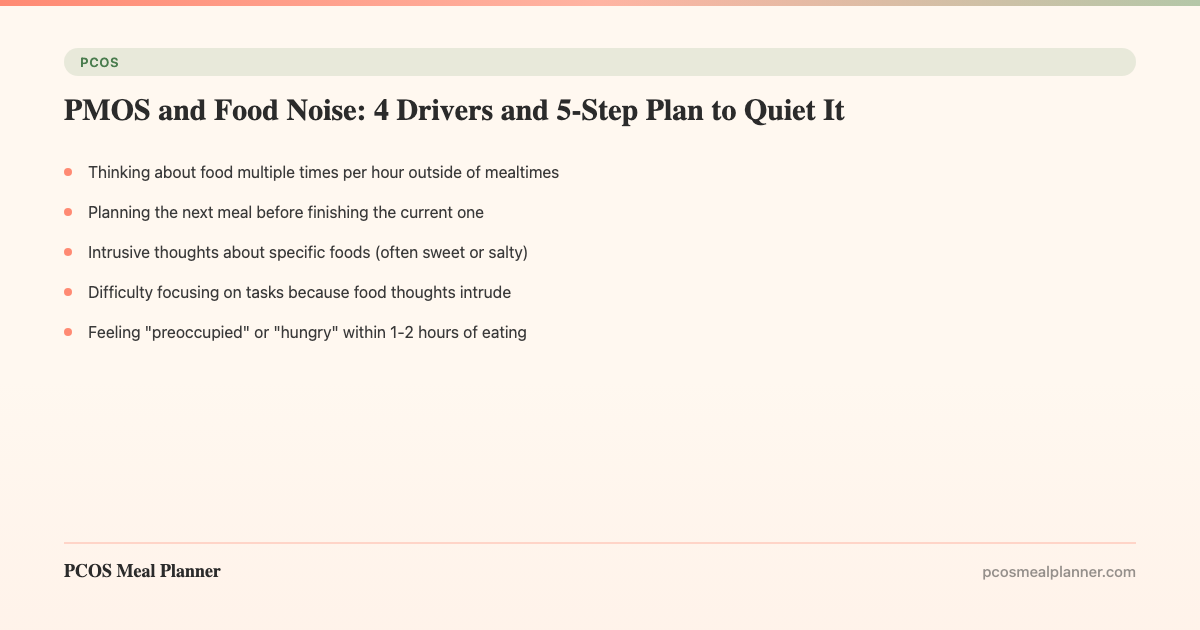
Food noise is the recognised term in 2026 for the constant background mental chatter about food. Features include:
- Thinking about food multiple times per hour outside of mealtimes
- Planning the next meal before finishing the current one
- Intrusive thoughts about specific foods (often sweet or salty)
- Difficulty focusing on tasks because food thoughts intrude
- Feeling "preoccupied" or "hungry" within 1-2 hours of eating
- Strong drives toward eating even when not biologically hungry
Most people experience some food thoughts; "food noise" describes the experience when these thoughts become frequent, intrusive, or distressing.
Why food noise is more prominent in PMOS
1. Insulin-resistance-driven blood glucose swings
Around 70 percent of women with PMOS have insulin resistance. The sharper post-meal glucose swings produce real hunger cues 2-4 hours after eating that compound with the psychological food noise. The food noise is partly biological, not just mental.
2. Gut microbiome alterations
The altered PMOS microbiome (lower diversity, fewer butyrate-producing bacteria per the 2023 Endocrine systematic review) affects production of satiety hormones GLP-1 and PYY. Reduced satiety signaling amplifies food noise.
3. Dieting history
Many women with PMOS have long restriction histories (cycles of diets, attempted weight loss, calorie counting). Chronic restriction is one of the strongest drivers of food noise per restrictive eating research.
4. Mental health and neurodivergence
Depression (3x more common in PMOS), anxiety (2.5x), disordered eating (3x), and ADHD (1.7-2.4x) all can present as food noise. Treating the underlying condition often reduces food noise greatly.
The 5-step plan to reduce food noise without medication
1. 30/30/40 macros with calorie front-loading
Stable blood glucose reduces the biological component of food noise. The protein-and-fat breakfast within 1 hour of waking is the single most leveraged change.
2. Protein-first eating at every meal
25-35g of protein per main meal. The 2020 Diabetes Care study on food order: eating protein and vegetables first reduces post-meal glucose spike by 37 percent, which translates to reduced food noise 2-4 hours later.
3. Structured eating: 3 meals + 1-2 snacks vs grazing
Constant grazing keeps insulin chronically high and amplifies food noise. Structured eating windows (e.g., breakfast 7-8am, lunch 12-1pm, snack 3pm, dinner 6-7pm) with no eating in between often dramatically reduces food preoccupation within 2-3 weeks.
4. Address sleep and stress
Sleep restriction raises ghrelin (hunger) and lowers leptin (satiety), amplifying food noise the next day. Chronic stress raises cortisol, which drives food noise particularly for sweet and salty foods. Sleep and stress practice often reduce food noise within 1-2 weeks.
5. Treat underlying conditions
If depression, anxiety, ADHD, or eating disorders are contributing, treating them addresses food noise upstream. CBT, SSRIs, ADHD medication, eating disorder treatment all have showed food noise effects beyond their primary indications.
GLP-1 medications and food noise
GLP-1 receptor agonists (semaglutide as Wegovy/Ozempic, tirzepatide as Zepbound/Mounjaro) reduce food noise dramatically for around 80 percent of users per patient-reported outcome data from the SURMOUNT and STEP trial programs. Mechanism: GLP-1 directly affects reward pathways in the brain, reducing the hedonic drive to eat. Many users describe food noise reduction as more meaningful than the weight loss itself.
For PMOS women considering GLP-1s for food noise reduction:
- Most appropriate at BMI 30+ or BMI 27+ with comorbidities (standard prescribing criteria)
- Food noise reduction is often dramatic within 2-4 weeks of reaching maintenance dose
- Food noise returns 6-12 weeks after stopping
- See GLP-1s for PMOS for full discussion
What does not reduce food noise
- Aggressive calorie restriction. Increases food noise by raising biological hunger drives.
- "Clean eating" perfectionism. Can spiral into orthorexia which amplifies food preoccupation.
- Cutting out food groups without proper trial. Often increases food noise about the eliminated foods.
- Constant snacking to "stay full." Keeps insulin high, increases food noise paradoxically.
- Willpower as the primary strategy. Food noise is biological; willpower against biology is exhausting and unsustainable.
Often asked questions
What is food noise in PMOS?
Constant background mental chatter about food (planning, cravings, intrusive thoughts) that interferes with daily focus and feels distressing. More prominent in PMOS due to insulin resistance, gut microbiome alterations, dieting history, and mental health overlap.
How do I reduce food noise with PMOS?
5-step plan: 30/30/40 macros with calorie front-loading, protein-first eating at every meal, structured eating (3 meals + 1-2 snacks vs grazing), sleep and stress, treat underlying mental health conditions. Most see reduction in 2-4 weeks.
Do GLP-1 medications reduce food noise in PMOS?
Yes, dramatically for around 80 percent of users per SURMOUNT and STEP trial patient-reported data. Mechanism: GLP-1 affects reward pathways directly. Many users describe this as more transformative than weight loss. Returns 6-12 weeks after stopping.
Is food noise the same as cravings?
Related but distinct. Cravings are specific desires for particular foods, often acute. Food noise is the ongoing background preoccupation with food, often chronic. They share drivers and respond to similar interventions.
Will reducing food noise help me lose weight with PMOS?
Often yes. Constant food noise often translates to more frequent eating and larger portions. Reducing food noise often results in spontaneous calorie reduction without conscious restriction. Combined with the 30/30/40 PMOS pattern, this supports sustainable weight control.
What to read next
- PMOS cravings
- GLP-1s for PMOS
- PMOS anxiety and depression
- PMOS and ADHD
- PCOS is now PMOS: full renaming explainer
How this article was researched
Sources include patient-reported outcome data from the SURMOUNT and STEP trial programs, the 2023 Endocrine systematic review of gut microbiome in PCOS, the 2020 Diabetes Care food order study, the 2023 International Evidence-based Guideline for the Assessment and Management of PCOS, and the 2024 Obesity journal review on hedonic eating and GLP-1 mechanisms. PCOS was renamed PMOS on 12 May 2026. This article is informational and not medical advice. See our editorial standards.
Community Comments
Add a comment