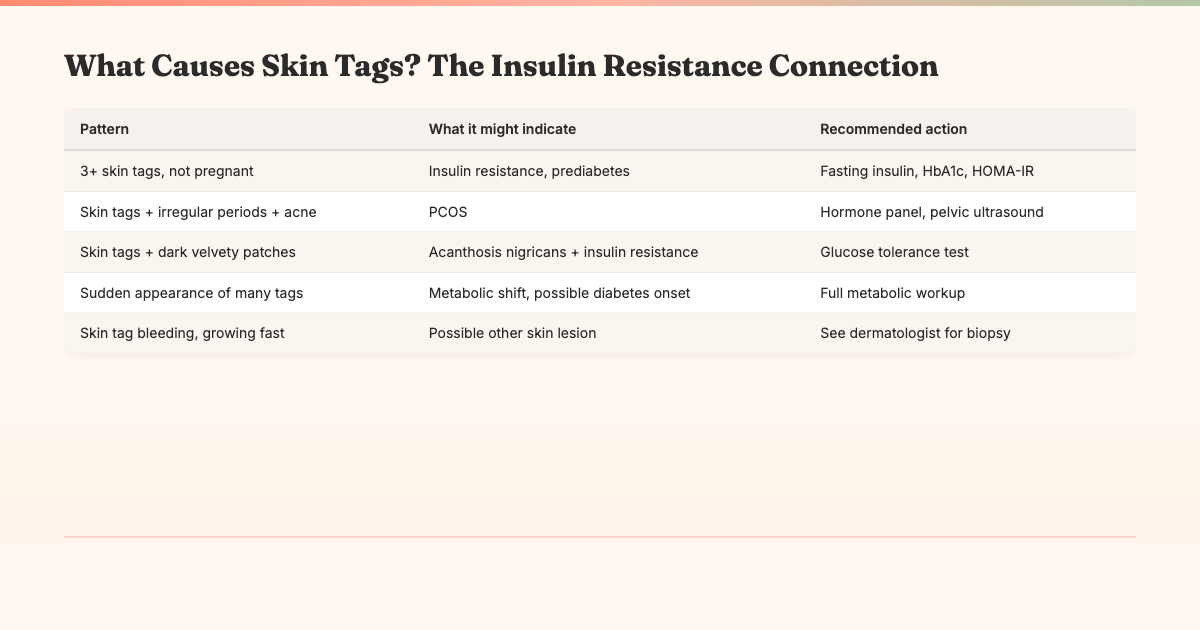
Skin tags are one of the more overlooked PCOS signs. They are not painful. They are not dangerous. They are not the symptom that lands you in a doctor's office. They are also one of the most useful diagnostic flags a woman with PCOS can read on her own body, because they almost always trace back to the same upstream driver: insulin resistance. Reduce the insulin load, and the skin tags slow down. Some shrink. New ones stop forming. This is a guide to what causes PCOS skin tags, what to eat to fade them, what does not work, and how long the changes actually take.
The short version. PCOS skin tags are an insulin-resistance signal, not a cosmetic problem. Eating to lower fasting insulin reduces the rate of new tag formation within about 8 to 12 weeks. Existing tags often soften and shrink, but they rarely disappear on their own. Removal is a dermatologist procedure. Prevention is a kitchen one.
Why PCOS causes skin tags
Skin tags (acrochordons) form where insulin signaling goes wrong. The mechanism is well documented: high circulating insulin binds to insulin-like growth factor (IGF-1) receptors on skin cells. IGF-1 receptors do not care that you wanted insulin to do its day job (move glucose into cells). They respond by telling the skin to grow extra tissue. That extra tissue, when it lands in friction-prone areas, becomes a skin tag.
About 70 to 80 percent of women with PCOS have some degree of insulin resistance. That high baseline insulin is the driver. Two specific findings make the connection explicit:
- A 2010 study in the International Journal of Dermatology found that 77 percent of patients with multiple skin tags had insulin resistance markers, compared with 28 percent of skin-tag-free controls.
- A 2012 cross-sectional study in the Indian Journal of Dermatology found a significant correlation between skin tag count and HOMA-IR (the standard insulin resistance score) in women with PCOS.
This is why skin tags cluster in PCOS-typical locations: the neck, armpits, under the breasts, the groin, the eyelids. These are the friction-and-warmth zones where insulin-driven skin overgrowth has a place to develop. If you have more than five skin tags in your 20s or 30s, especially in those zones, it is a fair bet that your fasting insulin is higher than it should be.
What to eat to slow and fade PCOS skin tags
The food strategy is the same one that addresses insulin resistance in PCOS broadly. There is no skin-tag-specific diet. There is an insulin-lowering diet that happens to take the upstream pressure off the cells that form skin tags. The five specific moves that show up in the research:
1. Lower the glycemic load of your carbs
Replace high-GI carbs (white rice, white bread, sugary cereals, juice, sweetened yogurt) with low-GI versions (steel-cut oats, lentils, chickpeas, quinoa, intact whole grains, berries). The macro target stays roughly the same. The insulin response is the variable that changes. A 2020 Nutrients review on glycemic load in PCOS reported meaningful drops in fasting insulin within 8 to 12 weeks on low-GI eating patterns versus standard advice.
2. Move protein up to 25-30% of calories
Protein blunts the post-meal glucose curve, which means a smaller insulin spike to clear it. The 2023 International Evidence-based Guideline for the Assessment and Management of PCOS supports a higher-protein pattern for insulin-resistant phenotypes. Practical translation: most women with PCOS who are eating around 1,800 calories should aim for roughly 110 to 130g of protein per day, distributed across meals (20-35g per meal, not one giant dinner serving).
3. Front-load fiber to 28-35g per day
Fiber slows gastric emptying, which flattens glucose curves. The two most useful fiber sources for PCOS are soluble fiber (oats, chia seeds, ground flaxseed, lentils, psyllium) and resistant starch (cooked-and-cooled potatoes, green bananas, properly cooked beans). Aim for 28g/day at minimum, 35g if you tolerate it well.
4. Add chromium and magnesium-rich foods
Both minerals are insulin-sensitizing. Chromium-rich foods: broccoli, green beans, oats, grapes, garlic. Magnesium-rich foods: pumpkin seeds, almonds, spinach, black beans, dark chocolate (85% or higher). The studies on chromium supplementation in PCOS are mixed, but food-source chromium and magnesium are uncontroversial additions.
5. Keep added sugar under 25g per day
The World Health Organization's 25g cap on added sugars is the practical ceiling. Going lower is fine. What matters most is the sustained, week-after-week pattern, not occasional events.
What a typical PCOS-aware day looks like. Breakfast: steel-cut oats with 1 tbsp ground flaxseed, 25g whey or pea protein stirred in, half a cup of berries. Lunch: lentil and roasted vegetable bowl with chicken thigh and tahini dressing. Dinner: salmon, quinoa, big serving of greens, drizzle of olive oil. Snack: Greek yogurt with pumpkin seeds and a square of 85% dark chocolate. That day lands at roughly 1,800 calories, 130g protein, 30g fiber, and a low overall glycemic load.
Foods that make PCOS skin tags worse
The food categories that drive the highest insulin spikes are the ones that increase new skin tag formation over time:
- Sweetened beverages. Soda, sweetened iced tea, fruit juice (even 100% juice), specialty coffee drinks with syrup, sweetened plant milks. These deliver glucose without any fiber, fat, or protein to slow absorption.
- White flour products eaten alone. White bread, white pasta, white rice, pretzels, crackers eaten without protein or fat. The same foods become much lower-impact when paired with protein and fat (sandwich with chicken and avocado, pasta with bolognese, rice with stir-fried protein).
- Sweetened breakfast cereals. The combination of refined grain and added sugar on an empty stomach in the morning is the worst-case glycemic profile for the day. Steel-cut oats or eggs in some form is the swap.
- Hidden-sugar yogurts. A typical flavored low-fat yogurt has 18 to 25g of added sugar. Plain Greek or skyr with fresh fruit added at home is the swap.
- Alcohol on an empty stomach. Especially sweet cocktails, dessert wines, and sugary mixers. Alcohol disrupts the next morning's blood sugar regulation; sugar on top makes it worse.
None of these foods need to be permanently eliminated. They cause skin tag pressure when they make up the dominant pattern of how you eat day to day.
How long does it take?
Honest answer in three timeframes:
- Weeks 1 to 4. Fasting insulin starts to drop. You will not see skin changes yet. Energy and post-meal crashes often improve in this window, which is the first signal the diet changes are landing.
- Weeks 8 to 12. The rate of new skin tag formation slows visibly. People often notice that the areas where new tags were forming (especially neck and armpits) stay flat for the first time in years.
- Months 3 to 6. Existing skin tags often soften and shrink. Some fall off on their own. Most do not disappear entirely without removal, but they stop growing and stop multiplying.
The pattern is consistent across the published evidence: insulin sensitivity changes precede visible skin changes by 6 to 8 weeks. If you give up at week 6 because nothing visible has happened, you are likely 4 to 6 weeks away from the first visible improvement.
What about removal?
Existing skin tags rarely disappear from diet changes alone, even when new tags stop forming. If a specific tag bothers you, a dermatologist can remove it in a few minutes by cryotherapy (freezing), cauterization (burning), or simple snip excision. It is a low-risk procedure usually done without anesthesia for tags under about 5mm. Insurance often does not cover removal because skin tags are coded as cosmetic; expect $50 to $200 out of pocket for a single tag or a small cluster.
What does not work: over-the-counter "skin tag removers" sold online (most are salicylic acid or essential oil products marketed aggressively). Apple cider vinegar, tea tree oil, and DIY tying-off methods are unreliable and can cause infection. The food strategy prevents new tags. A dermatologist handles existing ones.
The insulin-skin connection beyond skin tags
Once you understand that high insulin is what is driving PCOS skin tags, several other PCOS skin signs make sense as the same mechanism:
- Acanthosis nigricans (the dark velvety patches in body folds, especially the back of the neck) is the more severe version of the same insulin-driven skin response. Same diet strategy applies. Fading takes longer (often 6 to 12 months).
- Cystic acne along the jaw and chin traces to a different but related mechanism: insulin upregulates ovarian androgen production, which drives sebaceous gland output. Same insulin-lowering diet helps; you also need adequate zinc and omega-3 to address the androgen side.
- Hirsutism (PCOS hair growth) on the chin, jaw, chest, and abdomen is the longer-timeline cousin. Existing hair follicles do not reset; the diet changes slow new androgen-driven follicles from developing.
The pattern is consistent: PCOS skin signs respond to the upstream insulin mechanism, just on different timelines.
Often asked questions
Can losing weight alone fade PCOS skin tags?
Often yes, because weight loss usually moves fasting insulin down. But weight loss is not strictly required. Women with lean PCOS get skin tags too. The mechanism is high insulin, not body weight. Eating to lower insulin works whether or not weight changes.
Do I need to take a chromium or inositol supplement to fade skin tags?
Not strictly required, but inositol (myo-inositol plus D-chiro inositol in a 40:1 ratio at 4g/day) has the strongest published evidence for improving insulin sensitivity in PCOS. If you want a single supplement that supports the skin tag goal indirectly, inositol is the most-studied choice. Talk to your doctor before adding anything to your routine.
Does intermittent fasting help with PCOS skin tags?
It can, by lowering fasting insulin. The catch is that aggressive fasting (16+ hour windows daily) can worsen the cortisol-driven PCOS phenotype, where cortisol elevations from prolonged fasting offset the insulin benefit. A more moderate eating window (12 hours overnight, occasional 14-hour days) is the safer starting point for most PCOS phenotypes.
Are PCOS skin tags a sign I am developing type 2 diabetes?
They are a sign you have high baseline insulin, which is the upstream warning for type 2 diabetes. Women with PCOS are about 4 times more likely to develop type 2 diabetes than women without PCOS, per the published epidemiology. Skin tags are a useful prompt to ask your doctor for a fasting glucose and fasting insulin test, plus an HbA1c, if you have not had them recently.
Will the same diet also help acne and hair loss?
Yes, on different timelines. Skin tags and acanthosis respond first because the mechanism is most directly insulin-driven. Acne responds in 8 to 16 weeks. Androgen-driven scalp hair thinning takes 6 to 12 months because the hair growth cycle is slow.
Can men get PCOS-style skin tags too?
Men do not have PCOS, but they get skin tags from the same insulin resistance mechanism. The diet strategy is identical. Skin tags in younger men (under 40) are a common early sign of metabolic syndrome and worth a doctor visit.
I have hundreds of skin tags. Is that worse than having a few?
It usually indicates more entrenched insulin resistance, yes. It also makes removal less practical. The diet strategy is the same. The timeline to slow new formation is the same. The number that already exist does not change the food approach.
Do hormonal birth control pills affect skin tags?
Combined oral contraceptives lower androgens, which can help PCOS acne and hair growth issues but do not directly address the insulin mechanism that drives skin tags. Some progestin-only pills can worsen insulin resistance modestly. The food strategy is independent of birth control choice.
Try a PCOS-aware meal plan
Take the PCOS type quiz in 60 seconds to identify your phenotype, or sign up free and generate a 7-day plan built around the low-GI, higher-protein, fiber-front-loaded pattern that addresses insulin resistance. First plan is free. No card required.
Related reading on PCOS Meal Planner
- Insulin resistance meal plan for PCOS
- PCOS 101: complete dietitian-reviewed guide
- The PCOS grocery list
- Why calorie restriction backfires in PCOS
- PCOS protein calculator
How this article was researched
This guide draws on published research on insulin resistance and acrochordon (skin tag) formation, including the 2010 International Journal of Dermatology study on skin tags and insulin resistance markers, the 2012 Indian Journal of Dermatology cross-sectional analysis of skin tags and HOMA-IR in PCOS, the 2023 International Evidence-based Guideline for the Assessment and Management of PCOS, and the 2020 Nutrients review on glycemic load interventions in PCOS. This article is being prioritized for medical review by our contracted Registered Dietitian Nutritionist as part of our retroactive review program.
See our editorial standards. Diet changes are not a substitute for medical care. If you are noticing rapid changes in skin tag count, acanthosis nigricans, or other PCOS symptoms, see your doctor for fasting glucose, fasting insulin, and HbA1c testing.
Community Comments
Add a comment