Coffee and moderate caffeine intake (200 to 300mg/day, around 2 to 3 cups of coffee) is well-tolerated by most women with PMOS and may have small metabolic benefits. The PMOS-specific considerations: caffeine timing matters more than total intake (no caffeine after 2pm to protect sleep), adrenal-phenotype PMOS often tolerates less caffeine, sweet coffee drinks are the bigger PMOS issue than the caffeine itself, and caffeine on an empty stomach can amplify cortisol response. Black coffee with no added sugar or syrups fits the PMOS eating pattern; lattes with multiple pumps of syrup are essentially desserts. PMOS is the new name for PCOS as of 12 May 2026; caffeine evidence is identical under both names.
What the evidence shows on caffeine and PMOS
The 2024 systematic review in Nutrients of caffeine and PCOS found:
- No consistent worsening of insulin sensitivity at moderate caffeine intake (under 400mg/day)
- No consistent worsening of androgens or cycles
- Possible small metabolic benefits (improved insulin sensitivity in some studies, possibly via increased AMPK signaling)
- Mixed findings on cortisol effects, with adrenal phenotype showing more sensitivity
- Sleep disruption is the most consistent negative when caffeine is consumed after 2pm
The bottom line: caffeine itself is not the PMOS problem. The context around how it is consumed (timing, what it is consumed with, what is added to it) matters more.
The 4 PMOS-specific caffeine considerations
1. Timing: no caffeine after 2pm
Caffeine has a half-life of 5-7 hours, meaning a coffee at 4pm still has half its caffeine in your system at 9-11pm. For women with PMOS, who already have high sleep disruption risk (around 30x higher sleep apnoea prevalence, increased insomnia), late caffeine compounds the sleep problem.
Practical: last caffeine intake by 2pm, ideally noon for sensitive sleepers. Switch to herbal tea, decaf, or sparkling water in the afternoon.
2. What you add matters more than the coffee itself
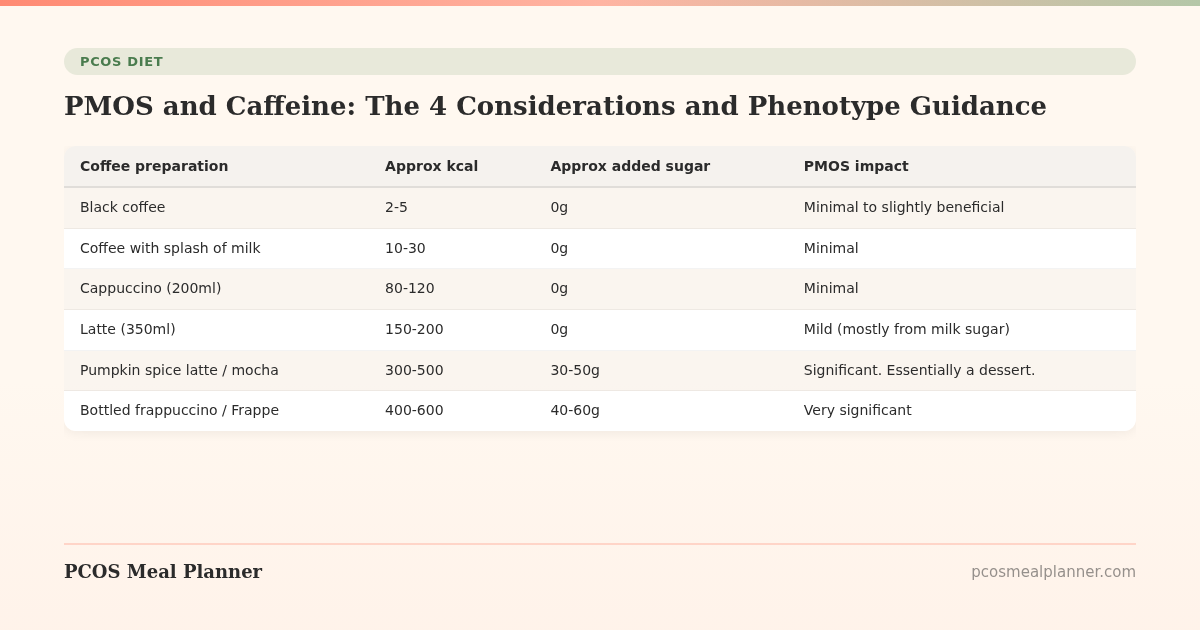
The PMOS impact of coffee varies dramatically by preparation:
| Coffee preparation | Approx kcal | Approx added sugar | PMOS impact |
|---|---|---|---|
| Black coffee | 2-5 | 0g | Minimal to slightly helpful |
| Coffee with splash of milk | 10-30 | 0g | Minimal |
| Cappuccino (200ml) | 80-120 | 0g | Minimal |
| Latte (350ml) | 150-200 | 0g | Mild (mostly from milk sugar) |
| Pumpkin spice latte / mocha | 300-500 | 30-50g | Significant. Essentially a dessert. |
| Bottled frappuccino / Frappe | 400-600 | 40-60g | Very significant |
For PMOS, a daily black coffee or cappuccino is fine. A daily flavoured syrup drink is the problem.
3. Caffeine on an empty stomach amplifies cortisol
Caffeine acutely raises cortisol, particularly on an empty stomach. For most women this is mild and well-tolerated. For adrenal-phenotype PMOS, where cortisol patterns are already disrupted, this matters more. The fix is simple: have caffeine alongside or after a protein-containing breakfast, not as the first thing of the day.
4. Adrenal-phenotype PMOS often tolerates less caffeine
Women with adrenal-phenotype PMOS (around 15 percent of cases, characterised by high DHEA-S and often anxiety) often feel worse on caffeine: more anxiety, worse sleep, more energy crashes. The cumulative dose tolerated is often around 100-200mg per day or none, vs the 200-400mg generally tolerated by insulin-resistant phenotype.
The PMOS coffee timing template
| Time | Caffeine guidance |
|---|---|
| Within 60 min of waking | Skip; cortisol is naturally high. Have breakfast first. |
| 30-90 minutes after breakfast | Best time for first coffee. Pairs with food, supports morning energy. |
| Lunch (around noon) | Second coffee fine if desired |
| 2pm | Caffeine cutoff for sleep protection |
| Afternoon (3-5pm) | Decaf, herbal tea, sparkling water if you want a beverage |
| Evening | Spearmint tea (29% free testosterone reduction in 30 days per 2010 Phytotherapy Research) is the PMOS-specific evening tea |
Decaf options for PMOS
- Decaf coffee: contains around 5-15mg caffeine per cup (vs 80-120mg in regular). Generally fine for PMOS. Look for Swiss water-decaffeinated processes to avoid chemical residues.
- Decaf tea: often 2-10mg caffeine per cup. Fine for evening.
- Herbal teas: zero caffeine. Spearmint, chamomile, peppermint, ginger, fennel, rooibos all work.
- Spearmint tea: direct PMOS benefit for free testosterone. 2 cups per day shown to reduce free testosterone by 29 percent in 30 days.
What about energy drinks and pre-workout supplements?
Energy drinks and pre-workout supplements often contain 200-400mg of caffeine per serving plus added sugar, artificial sweeteners, and other stimulants (taurine, guarana, B-vitamins at very high doses). For PMOS:
- Single-serving caffeine doses above 200mg can amplify anxiety and cortisol, especially in adrenal phenotype
- Added sugar in energy drinks is the bigger metabolic issue than the caffeine
- Pre-workout caffeine (100-200mg) before a strength session is generally fine if it does not push your daily total above 400mg or affect sleep
- Avoid daily energy drinks; occasional pre-workout caffeine is reasonable
What about matcha and green tea?
Matcha and green tea contain L-theanine alongside caffeine, which produces a "calmer alertness" effect than coffee. Many women with PMOS find these better tolerated than coffee, particularly adrenal phenotype. Daily intake of 2-3 cups of green tea or 1-2 matcha drinks fits well in PMOS.
The 2023 Journal of Functional Foods review on green tea and PCOS found small but consistent insulin sensitivity benefits at 2-3 cups per day over 12 weeks.
Common PMOS caffeine mistakes
- Caffeine before breakfast. Amplifies cortisol on empty stomach. Have breakfast first.
- Late-afternoon caffeine. Disrupts sleep that PMOS already disrupts. Stop by 2pm.
- Pre-workout caffeine for evening training. Compounds sleep issues. Train earlier or skip the pre-workout.
- Sugar-sweetened coffee drinks daily. The sugar load is the metabolic issue, not the caffeine.
- Replacing meals with coffee. Common pattern that drives the afternoon crash later.
- Using caffeine to compensate for poor sleep. Treats the symptom, worsens the cause.
Caffeine by PMOS phenotype
| Phenotype | Caffeine tolerance | Recommendation |
|---|---|---|
| Insulin-resistant (70%) | Generally good; 200-400mg/day fine | Black coffee or cappuccino 1-2x/day, before 2pm |
| Adrenal (15%) | Often poor; high cortisol sensitivity | Limit to 100-200mg/day or switch to green tea/matcha. Consider full elimination for 4 weeks to assess. |
| Post-pill (10%) | Variable during recovery | Lower intake during the 6-12 month post-pill window if cycles disrupted |
| Inflammatory | Generally good; some find caffeine triggers gut symptoms | Standard moderate intake; trial elimination if gut symptoms persist |
Often asked questions
Is caffeine bad for PMOS?
Not inherently. Moderate caffeine (200-300mg/day, 2-3 cups of coffee) is well-tolerated by most women with PMOS and may have small metabolic benefits. The PMOS-specific considerations are timing (no caffeine after 2pm), what you add to it (skip sugary syrups), and phenotype (adrenal phenotype tolerates less).
How much coffee can I drink with PMOS?
Most women with PMOS tolerate 2-3 cups of coffee per day (200-300mg caffeine) without issues. Adrenal-phenotype PMOS often does better with 1 cup per day or none. Last caffeine by 2pm to protect sleep.
Does coffee affect PMOS hormones?
Caffeine acutely raises cortisol, particularly on an empty stomach. For most women this is mild. Adrenal phenotype is more sensitive. No consistent effect on androgens or cycles at moderate intake per the 2024 Nutrients systematic review.
Should I cut out caffeine with PMOS?
Not necessarily. If you tolerate moderate caffeine well (no sleep disruption, no anxiety amplification, no afternoon crashes), continue. If you have adrenal-phenotype PMOS, severe insomnia, or anxiety, trial 4 weeks of elimination to assess. Most women find the right level for their phenotype rather than full elimination.
What is the best coffee for PMOS?
Black coffee or coffee with milk (no added syrups), morning to early afternoon, alongside or after breakfast. Latte or cappuccino are fine. Avoid daily sugar-sweetened drinks (mochas, pumpkin spice lattes, frappuccinos) which add 300-500 kcal and 30-50g of sugar per drink.
Does caffeine affect cycle regularity in PMOS?
At moderate intake (under 400mg/day), no consistent effect on cycle regularity. Very high intake (above 600mg/day) is linked to cycle irregularity in some studies, but this is more relevant to non-PMOS women since PMOS cycle irregularity is driven by other mechanisms.
Is decaf coffee okay with PMOS?
Yes. Decaf contains 5-15mg caffeine per cup vs 80-120mg in regular. Fine for PMOS at any time of day. Choose Swiss water-decaffeinated to avoid chemical residues.
What can I drink instead of coffee with PMOS?
Spearmint tea (direct PMOS benefit for free testosterone), green tea or matcha (small insulin sensitivity benefits), decaf coffee, herbal teas (chamomile, peppermint, ginger), or warm water with lemon. Sparkling water for the ritual replacement.
Build a PMOS plan that supports your caffeine pattern
Coffee is not the PMOS problem. What you put in it often is.
A PMOS plan that has you eating before your morning coffee makes the cortisol response milder. Take the free phenotype quiz for a plan that fits your phenotype.
What to read next
- PMOS stress and cortisol
- PMOS sleep
- PMOS and alcohol
- PMOS diet: full food list
- PCOS is now PMOS: full renaming explainer
How this article was researched
Sources include the 2024 Nutrients systematic review of caffeine and PCOS, the 2023 Journal of Functional Foods review on green tea in PCOS, the 2010 Phytotherapy Research spearmint tea trial, the 2023 International Evidence-based Guideline for the Assessment and Management of PCOS, and caffeine pharmacokinetics literature. PCOS was renamed PMOS on 12 May 2026; caffeine evidence is unchanged. This article is informational and not medical advice. See our editorial standards.
Community Comments
Add a comment