Why a PCOS grocery list is different from a generic healthy-eating list
The standard "healthy eating" grocery list is designed around general cardiometabolic health: lots of whole grains, low-fat dairy, lean protein, plenty of fruit. That list is fine for most adults. It is the wrong list for most women with PCOS. Insulin resistance, which is present in about 70 percent of PCOS phenotypes, changes which foods raise insulin (and so worsen androgen excess and ovulatory dysfunction) and which don't. The PCOS-aware grocery list weights protein up, refined carbs down, anti-inflammatory fats and polyphenols up, and pays attention to micronutrients PCOS women are commonly low in (magnesium, vitamin D, zinc, chromium, omega-3s).
What follows is the build-your-own PCOS grocery list, organized by category, with the foods most consistently supported in the Endocrine Society and AE-PCOS Society dietary guidelines, plus the foods to skip and the smart swaps. Use it as a starting cart for any PCOS phenotype; adjust portions for your goals (fertility, symptom control, weight) under your doctor's guidance.
The 9 grocery categories that should make up your PCOS cart
1. Protein staples
Protein is the macronutrient most consistently linked to improved insulin sensitivity and satiety in PCOS. Aim for 25 to 35 grams per meal. Cart staples:
- Eggs (whole, pasture-raised when accessible) — 6g protein each, choline for liver health.
- Wild-caught salmon — protein plus EPA/DHA omega-3s with documented anti-inflammatory effects.
- Sardines (canned in olive oil or water) — high omega-3, calcium, vitamin D, very budget-friendly.
- Chicken thighs (skin-on, bone-in) — more flavor and satiety than breasts at similar protein density.
- Greek yogurt (plain, full-fat, 5%) — 15-20g protein per serving plus probiotics.
- Cottage cheese (full-fat, no added sugar) — 25g protein per cup, excellent snack base.
- Lentils, chickpeas, black beans — plant protein plus 6-8g fiber per half-cup.
- Tempeh and edamame — fermented and minimally processed soy options.
2. Fiber-rich vegetables
Aim for half your plate at most meals. Cruciferous vegetables in particular support estrogen metabolism, which matters for the androgen-to-estrogen ratio in PCOS.
- Leafy greens: spinach, kale, Swiss chard, arugula, romaine.
- Cruciferous: broccoli, cauliflower, Brussels sprouts, cabbage, bok choy.
- Non-starchy: bell peppers, zucchini, asparagus, green beans, mushrooms, cucumber, tomatoes.
- Allium family: garlic, onions, leeks, shallots — anti-inflammatory and gut-supportive.
3. Smart starches
Carbs aren't off the menu for PCOS. The right carbs, in the right amounts, paired with protein and fat, work fine for most phenotypes. Aim for ½ to 1 cup cooked per meal.
- Sweet potato — beta-carotene, fiber, more nutrient-dense than white potato.
- Quinoa — complete plant protein and fiber.
- Steel-cut or rolled oats (not instant) — beta-glucan fiber lowers post-prandial glucose.
- Lentils and split peas — high-fiber starch with protein bonus.
- Wild rice or brown rice in moderate portions.
- Buckwheat and farro for whole-grain variety.
4. Healthy fats
Fat blunts the insulin response of any meal it accompanies. PCOS women often under-eat fat (a holdover from old low-fat dietary advice).
- Extra virgin olive oil — Mediterranean-pattern cornerstone, anti-inflammatory.
- Avocados — monounsaturated fat, fiber, potassium.
- Nuts: almonds, walnuts (omega-3), pistachios, Brazil nuts (selenium).
- Seeds: chia, flax, hemp, pumpkin, sunflower.
- Tahini and nut butters (no added sugar or palm oil).
- Fatty fish (also in protein category): salmon, sardines, mackerel.
5. Hormone-supporting fruits
Whole fruit in modest portions is fine for most PCOS phenotypes. Pair with protein or fat. Skip fruit juice.
- Berries: blueberries, raspberries, blackberries, strawberries (lowest glycemic load).
- Citrus: oranges, grapefruit, lemons, limes — vitamin C and flavonoids.
- Kiwi — high vitamin C, lower glycemic than most fruits.
- Apples and pears with the skin on — pectin fiber.
- Pomegranate seeds — polyphenols.
6. Anti-inflammatory pantry
- Turmeric (paired with black pepper for bioavailability).
- Cinnamon — small studies show modest glucose-lowering effect.
- Ginger (fresh root or dried).
- Green tea (matcha or loose leaf) — EGCG polyphenols.
- Apple cider vinegar — pre-meal use modestly blunts glucose response.
- Dark chocolate (85%+ cacao, in modest portions) — polyphenols.
7. Probiotic foods
Gut microbiome composition is increasingly implicated in PCOS pathophysiology, particularly in the inflammation and estrogen-recycling axes.
- Plain Greek yogurt and kefir (full-fat, no added sugar).
- Kimchi and other fermented vegetables.
- Sauerkraut (refrigerated section, not shelf-stable; live cultures matter).
- Tempeh, miso, and natto for fermented soy.
8. PCOS-specific micronutrient sources
Common deficiencies in PCOS that respond to dietary intake:
- Magnesium: dark leafy greens, pumpkin seeds, almonds, dark chocolate, black beans.
- Zinc: oysters, beef, pumpkin seeds, lentils, cashews.
- Chromium: broccoli, grape juice (small portions only), whole grains.
- Vitamin D: fatty fish, egg yolks, fortified dairy (sun exposure or a supplement is usually needed too).
- B-vitamins (especially B6 and B12): eggs, fish, lentils, nutritional yeast, leafy greens.
- Omega-3 (EPA/DHA): fatty fish, walnuts, chia, flax (ALA conversion is limited; fish or algae oil preferred).
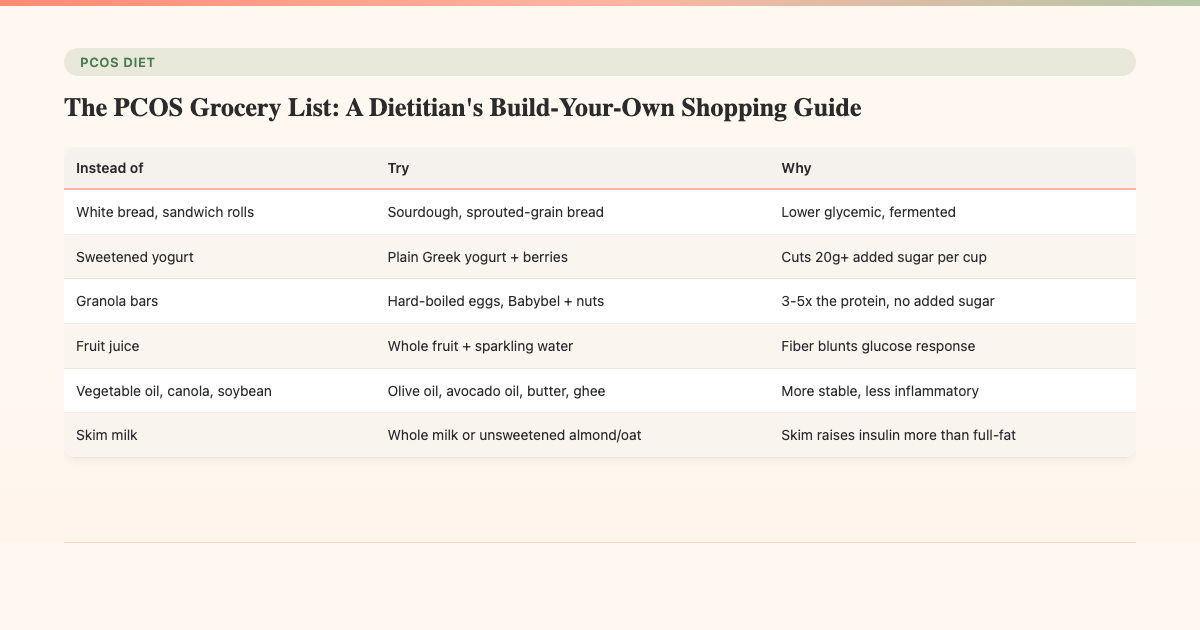
9. Smart swaps
| Instead of | Try | Why |
|---|---|---|
| White bread, sandwich rolls | Sourdough, sprouted-grain bread | Lower glycemic, fermented |
| Sweetened yogurt | Plain Greek yogurt + berries | Cuts 20g+ added sugar per cup |
| Granola bars | Hard-boiled eggs, Babybel + nuts | 3-5x the protein, no added sugar |
| Fruit juice | Whole fruit + sparkling water | Fiber blunts glucose response |
| Vegetable oil, canola, soybean | Olive oil, avocado oil, butter, ghee | More stable, less inflammatory |
| Skim milk | Whole milk or unsweetened almond/oat | Skim raises insulin more than full-fat |
| Energy drinks, sweetened coffee | Black coffee, matcha, herbal tea | Cuts cortisol-spiking sugar load |
| Pasta-only meals | Lentil or chickpea pasta + protein + veg | Higher protein, lower GI |
12 foods to skip (and what to swap them for)
- Sugar-sweetened beverages (soda, sweet tea, lemonade) → unsweetened sparkling water with citrus.
- Fruit juice (even 100% juice) → whole fruit.
- Refined breakfast cereal (frosted, sweetened) → steel-cut oats + protein + nuts.
- Pastries, donuts, sweetened muffins → almond-flour-based or savory egg-based options.
- Flavored yogurt with added sugar → plain Greek yogurt + berries.
- Granola bars and "energy" bars → hard-boiled eggs, jerky, cheese + nuts.
- White bread, white rice in large portions → sourdough, sprouted-grain, or smaller portions of brown rice.
- Vegetable shortening, margarine → butter, ghee, olive oil.
- Highly processed deli meats with nitrates → freshly sliced turkey or chicken, or canned wild fish.
- Fast-food fried items (cooked in seed oils at high heat) → grilled or roasted protein + vegetables.
- Sugar-sweetened lattes and bottled coffees → cold brew or espresso with whole milk or unsweetened plant milk.
- Standard ice cream → Greek-yogurt-based options or 1-2 squares of 85%+ dark chocolate.
How to read nutrition labels with PCOS in mind
- Look at added sugar first. Aim for under 5g added sugar per serving for most packaged foods. Many "healthy" snacks have 10-15g added sugar disguised as cane juice, coconut sugar, agave, or rice syrup.
- Check protein-to-carb ratio. A snack with under 8g protein and over 25g carbs will spike insulin. Aim for at least 1 part protein to 2 parts carbs for snacks.
- Scan for seed oils in long ingredient lists. Soybean, canola, sunflower, safflower, and corn oil are inflammatory in volume. Olive, avocado, butter, and ghee are better.
- Fiber matters. Higher fiber lowers the net glycemic response of any carb. Look for at least 3g fiber per serving in any starch-heavy food.
- Watch ingredient count. If the ingredient list is long and includes things you wouldn't put in your kitchen, the food is highly processed regardless of marketing claims.
Use this list with PCOS Meal Planner
Pair this grocery list with a personalized meal plan that turns the cart into your week. Start a free 7-day trial of PCOS Meal Planner and the app will generate a personalized weekly meal plan, recipe library, and printable grocery list built around your phenotype, preferences, and household size.
Frequently Asked Questions
Is dairy bad for PCOS?
Mixed evidence. Some women with PCOS report symptom improvement with reduced dairy, particularly skim and conventional dairy linked to higher IGF-1, which can drive androgen production. Plain Greek yogurt, kefir, and full-fat dairy in moderate amounts are often well tolerated. If symptoms aren't responding to other diet changes, a structured 6-week dairy elimination trial under guidance is reasonable.
Can I drink coffee with PCOS?
In moderation, yes. One to two cups per day of caffeinated coffee is generally fine for PCOS. Cortisol-sensitive women may benefit from delaying their first cup until 60 to 90 minutes after waking and capping at 1 cup. Skip the sugary lattes; black coffee or coffee with whole milk and a small amount of cinnamon is the better default.
Is gluten bad for PCOS?
For women without celiac disease or non-celiac gluten sensitivity, there is no strong evidence that gluten itself worsens PCOS. The benefit some women get from going gluten-free usually comes from cutting refined wheat products (bread, pasta, baked goods) which reduces refined carbs, not from removing gluten specifically.
What snacks should I buy for PCOS?
Protein-forward snacks: cottage cheese, hard-boiled eggs, edamame, almonds and walnuts, pumpkin and sunflower seeds, plain Greek yogurt with berries, hummus with raw vegetables, jerky (low sugar), nut butter on apple slices, single-serve cheese with a few crackers.
Are there foods I have to avoid completely with PCOS?
No. Sustainable PCOS eating allows essentially all foods in appropriate amounts. The foods to minimize for most phenotypes are sugar-sweetened beverages, fruit juices, ultra-processed snack foods, and refined-flour pastries. A "never" framing tends to backfire and worsen the relationship with food. Aim for 80 to 90 percent of your weekly intake from whole-foods staples and the rest from whatever you genuinely enjoy.
Is fruit OK with PCOS?
Yes for most phenotypes. Whole fruit, especially berries, kiwi, citrus, and apples, is fine and often helpful. Pair with protein or fat (berries with Greek yogurt, apple with nut butter) to blunt the glucose response. Avoid fruit juices, dried fruit in large portions, and most smoothies (often equivalent to multiple servings of fruit at once).
Sources
- Teede HJ, Tay CT, Laven JJE, et al. Recommendations from the 2023 International Evidence-based Guideline for the Assessment and Management of Polycystic Ovary Syndrome. Fertility and Sterility. 2023. PubMed: 37580056
- Moran LJ, Ko H, Misso M, et al. Dietary composition in the treatment of polycystic ovary syndrome: a systematic review to inform evidence-based guidelines. Journal of the Academy of Nutrition and Dietetics. 2013;113(4):520-545. PubMed: 23420000
- Lim SS, Hutchison SK, Van Ryswyk E, et al. Lifestyle changes in women with polycystic ovary syndrome. Cochrane Database of Systematic Reviews. 2019;3(3):CD007506. PubMed: 30921478
- Barrea L, Arnone A, Annunziata G, et al. Adherence to the Mediterranean diet, dietary patterns and body composition in women with polycystic ovary syndrome (PCOS). Nutrients. 2019;11(10):2278. PubMed: 31547562
- National Institutes of Health, Office of Dietary Supplements. Magnesium, Zinc, Vitamin D fact sheets. NIH ODS
Related reading on PCOS Meal Planner
- PCOS Breakfast Ideas: 15 Quick, Hormone-Friendly Recipes
- Inositol vs Metformin for PCOS
- Zinc for PCOS
- Best Bread for PCOS
- PCOS Food Checker
How this article was researched
This grocery list was built from the dietary recommendations in the 2023 International Evidence-based Guideline for the Assessment and Management of PCOS, the AE-PCOS Society dietary guidance, the 2019 Cochrane systematic review on lifestyle changes for PCOS, the Mediterranean-PCOS evidence base, and NIH Office of Dietary Supplements factsheets on micronutrients. This article is being prioritized for medical review by our contracted Registered Dietitian Nutritionist as part of our retroactive review program. See our editorial standards.
Community Comments
Add a comment