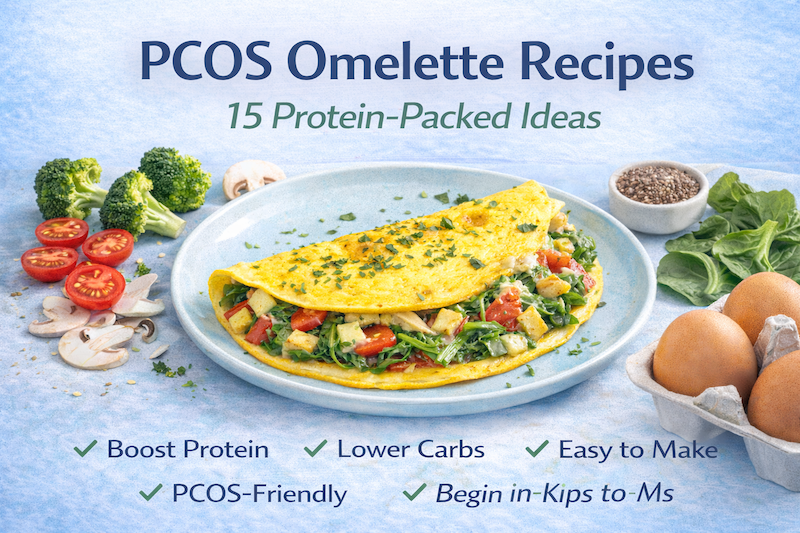
These 15 PCOS omelette recipes are designed with specific, evidence-backed ingredients. Each one targets a different aspect of PCOS care, from lowering inflammation to supporting gut health to reducing androgens. Every recipe includes exact macros, precise measurements, and clear step-by-step instructions.
Whether you need a quick 8-minute weekday breakfast or a meal-prep-friendly option, you will find the right PCOS omelette below. Each recipe delivers at least 25g of protein and uses anti-inflammatory fats and low-glycemic fillings that support insulin sensitivity.
Looking for more PCOS breakfast inspiration beyond omelettes? Check out our complete guide to what to eat for breakfast with PCOS or try our 5 quick hormone-balancing breakfast recipes.
Why Omelettes Are One of the Best PCOS Breakfasts
Omelettes check every box for a PCOS-friendly breakfast. They are naturally low in carbs, high in complete protein, and endlessly customizable with anti-inflammatory ingredients. A 3-egg omelette provides 18-21g of protein, 13 essential vitamins, and zero added sugar.
For women with PCOS, the protein-to-carb ratio matters more than total calories. Research published in the American Journal of Clinical Nutrition shows that meals with 25-30g protein reduce post-meal insulin by up to 40% compared to carb-heavy breakfasts like cereal or toast. Since insulin resistance affects 65-80% of women with PCOS (according to the Endocrine Society), this single meal swap can have a measurable impact.
Eggs themselves are a PCOS powerhouse. Each large pasture-raised egg contains 147mg of choline (essential for estrogen metabolism and liver detox), 41 IU of vitamin D (which 67-85% of women with PCOS lack). 80mg of omega-3 fatty acids when pasture-raised. The key is what you add to your omelette, and that is where these 15 recipes come in.
Eggs per omelette: 3 large (or 2 whole + 2 whites)
Target protein: 25-35g per serving
Best cooking fat: Extra virgin olive oil (1 tbsp)
Ideal pan: 10-inch non-stick, medium-low heat
Cook time: 5-8 minutes per omelette
Eat within: 1 hour of waking for best insulin response
15 PCOS Omelette Recipes with Full Macros
Every recipe below follows the same base technique: whisk eggs for 30 seconds, heat fat in a 10-inch non-stick pan over medium-low heat for 90 seconds, pour eggs, cook undisturbed for 2 minutes, add fillings to one half, fold. Finish cooking 60-90 seconds. Master this method once and all 15 recipes take under 12 minutes.
1. Classic Spinach Feta Omelette for PCOS
Macros: 340 cal | 28g protein | 22g fat | 6g carbs | 2g fiber
Why it works for PCOS: This spinach feta omelette PCOS recipe combines magnesium-rich spinach (1 cup provides 24mg magnesium, about 7% of your daily need) with protein-dense feta. Magnesium deficiency is found in up to 50% of women with PCOS and is linked to higher insulin resistance.
Ingredients:
- 3 large pasture-raised eggs
- 1 cup fresh baby spinach (30g)
- 28g crumbled feta cheese
- 1 tablespoon extra virgin olive oil
- 1/4 teaspoon ground turmeric
- Pinch of black pepper and sea salt
Instructions:
- Whisk eggs with turmeric and black pepper for 30 seconds.
- Heat olive oil in a 10-inch non-stick pan over medium-low heat for 90 seconds.
- Add spinach and stir for 45 seconds until wilted. Spread evenly.
- Pour egg mixture over spinach. Cook undisturbed for 2 minutes.
- Sprinkle feta on one half. Fold and cook 90 seconds more.
Tip: Add a pinch of black pepper to boost turmeric absorption by up to 2,000% (due to piperine activating curcumin).
2. Anti-Inflammatory Turmeric Veggie Omelette
Macros: 310 cal | 26g protein | 20g fat | 9g carbs | 3g fiber
Why it works for PCOS: This veggie omelette for PCOS packs four anti-inflammatory vegetables into a single meal. Turmeric's curcumin, bell pepper's vitamin C (127mg per pepper, 141% daily value). Onion's quercetin work together to reduce the chronic low-grade inflammation that drives many PCOS symptoms.
Ingredients:
- 3 large pasture-raised eggs
- 1/2 teaspoon ground turmeric
- 1/4 cup diced red bell pepper
- 1/4 cup diced zucchini
- 2 tablespoons diced red onion
- 1 tablespoon extra virgin olive oil
- 1/4 teaspoon dried oregano
Instructions:
- Saute bell pepper, zucchini, and onion in olive oil for 3 minutes over medium heat.
- Whisk eggs with turmeric and oregano. Pour over vegetables.
- Cook on medium-low for 2 minutes undisturbed.
- Fold and cook 90 seconds more until center is just set.
3. Salmon and Dill Omega-3 Omelette
Macros: 390 cal | 35g protein | 26g fat | 3g carbs | 0g fiber
Why it works for PCOS: Wild salmon provides 1,200-2,400mg of omega-3 fatty acids per 3oz serving. A 2018 meta-analysis in Reproductive Biology and Endocrinology found that omega-3 supplementation greatly reduced testosterone levels and improved insulin sensitivity in women with PCOS. Getting omega-3s from food alongside eggs maximizes absorption. For more salmon-based PCOS meals, see our 12 easy PCOS salmon recipes.
Ingredients:
- 3 large pasture-raised eggs
- 56g (2oz) leftover cooked wild salmon, flaked
- 1 tablespoon fresh dill, chopped
- 1 tablespoon extra virgin olive oil
- 1 teaspoon lemon juice
- Pinch of sea salt
Instructions:
- Whisk eggs with lemon juice and chopped dill.
- Heat olive oil in pan over medium-low heat for 90 seconds.
- Pour egg mixture. Cook 2 minutes undisturbed.
- Place flaked salmon on one half. Fold and cook 90 seconds.
4. Mediterranean PCOS Omelette
Macros: 360 cal | 27g protein | 24g fat | 8g carbs | 2g fiber
Why it works for PCOS: The Mediterranean diet pattern has the strongest evidence base for PCOS care. A 2022 systematic review in Nutrients found it improved insulin resistance, reduced inflammation markers, and supported weight control in women with PCOS. This omelette captures the key components: olive oil, olives, tomatoes, and herbs.
Ingredients:
- 3 large pasture-raised eggs
- 4 Kalamata olives, sliced (20g)
- 2 tablespoons diced sun-dried tomatoes (not oil-packed)
- 1 tablespoon crumbled feta
- 1 tablespoon extra virgin olive oil
- 1/2 teaspoon dried oregano
- Fresh basil leaves for garnish
5. Mushroom and Thyme Low-GI Omelette
Macros: 295 cal | 25g protein | 19g fat | 5g carbs | 1g fiber
Why it works for PCOS: Mushrooms are one of the few food sources of vitamin D (especially maitake and UV-exposed varieties, providing up to 1,110 IU per cup). They also contain beta-glucans that help improve insulin sensitivity. With virtually zero glycemic impact, mushrooms are an ideal PCOS omelette filling.
Ingredients:
- 3 large pasture-raised eggs
- 3/4 cup sliced cremini mushrooms (70g)
- 1 tablespoon extra virgin olive oil
- 1 small garlic clove, minced
- 1 teaspoon fresh thyme leaves
- Pinch of sea salt and black pepper
6. Broccoli Cheddar Hormone-Support Omelette
Macros: 375 cal | 30g protein | 25g fat | 7g carbs | 3g fiber
Why it works for PCOS: Broccoli contains sulforaphane and indole-3-carbinol (I3C), compounds that support estrogen metabolism through the liver. A study in the Journal of Nutritional Biochemistry showed I3C shifts estrogen metabolism toward less potent forms. This is especially relevant for PCOS, where estrogen dominance is common. Use 1 cup of chopped broccoli florets (steamed 2 minutes before adding to the omelette) and 28g of sharp cheddar.
7. Avocado and Black Bean Omelette
Macros: 420 cal | 28g protein | 26g fat | 18g carbs | 8g fiber
Why it works for PCOS: This is the highest-fiber PCOS omelette on the list. The 8g of fiber from black beans (2 tablespoons) and avocado (1/4 medium) greatly slows glucose absorption. The combination of soluble and insoluble fiber feeds helpful gut bacteria. Emerging research links gut microbiome health to PCOS symptom severity. The monounsaturated fats in avocado also support progesterone production.
8. Spearmint Pesto and Goat Cheese Omelette
Macros: 365 cal | 29g protein | 26g fat | 4g carbs | 1g fiber
Why it works for PCOS: Spearmint is one of the most studied herbs for PCOS anti-androgen effects. The spearmint pesto in this recipe uses 2 tablespoons of fresh spearmint leaves, 1 tablespoon pine nuts, 1 teaspoon olive oil, and 1 small garlic clove blended together. Paired with goat cheese (which contains easier-to-digest A2 casein), this omelette targets excess androgen levels while providing a unique, restaurant-quality flavor. For more anti-androgen recipes, try our anti-androgen spearmint and dark chocolate protein pancakes.
9. Sardine and Roasted Pepper Omelette
Macros: 410 cal | 36g protein | 28g fat | 4g carbs | 1g fiber
Why it works for PCOS: Sardines are the most nutrient-dense fish you can put in an omelette. One small can (about 85g) delivers 1,800mg omega-3s, 325mg calcium (for bone health on a dairy-limited diet), and 8.9mcg vitamin B12 (371% daily value). B12 is especially important if you take metformin, which can deplete B12 levels over time. Use canned wild sardines in olive oil, drained. Pair with roasted red peppers for sweetness and vitamin C. For more sardine-based ideas, see our guide to sardine PCOS meals.
10. Kimchi and Scallion Gut-Health Omelette
Macros: 320 cal | 26g protein | 20g fat | 8g carbs | 2g fiber
Why it works for PCOS: Fermented foods like kimchi are gaining strong research support for PCOS. A 2020 study in the Journal of Translational Medicine found that women with PCOS had greatly different gut microbiome compositions compared to controls. Kimchi provides live Lactobacillus bacteria that help restore gut balance. Use 3 tablespoons (45g) of naturally fermented kimchi (check the label for live cultures). Add it after cooking to preserve the probiotics. For more gut-supporting recipes, try our PCOS gut support butter lettuce and herbs or kombu-infused quinoa.
11. Turkey Sausage and Kale Omelette
Macros: 385 cal | 34g protein | 24g fat | 6g carbs | 2g fiber
Why it works for PCOS: Turkey is a lean protein source that provides selenium (24mcg per 3oz, 44% daily value), a mineral critical for thyroid function. Since PCOS and thyroid disorders commonly overlap (with some estimates suggesting up to 25% co-occurrence), supporting thyroid health matters. Use 1 organic turkey sausage link (brands like Applegate or True Story), sliced and browned before adding to the omelette. Add 1/2 cup chopped kale, which provides additional folate and vitamin K.
12. Smoked Salmon and Cream Cheese Omelette
Macros: 370 cal | 32g protein | 25g fat | 3g carbs | 0g fiber
Why it works for PCOS: This indulgent-tasting omelette is actually deeply functional. Smoked salmon (56g) provides astaxanthin, a powerful antioxidant that gives salmon its pink color. Research in Marine Drugs shows astaxanthin reduces oxidative stress and may improve egg quality, relevant for women with PCOS managing fertility. Use 1 tablespoon of cream cheese (look for grass-fed brands like Organic Valley) and a few capers for added flavor.
13. Asparagus and Gruyere Folate-Rich Omelette
Macros: 380 cal | 31g protein | 26g fat | 6g carbs | 2g fiber
Why it works for PCOS: Asparagus is one of the top food sources of natural folate (134mcg per 1/2 cup, 34% daily value). Folate is essential for methylation pathways that metabolize hormones. Many women with PCOS have MTHFR gene variants that impair folate processing. Getting folate from food sources like asparagus is more effective than folic acid supplements for these women. Trim 4-5 asparagus spears, cut into 1-inch pieces, and saute for 3 minutes before adding to the omelette. Pair with 28g Gruyere for its 8g protein per ounce.
14. Chickpea Flour Vegan PCOS Omelette
Macros: 290 cal | 18g protein | 14g fat | 24g carbs | 6g fiber
Why it works for PCOS: This egg-free option uses chickpea flour (also called besan or gram flour) as the base. Mix 1/2 cup chickpea flour with 1/2 cup water, 1/4 teaspoon turmeric, and a pinch of black salt (kala namak) for an eggy flavor. Chickpea flour provides 10g protein per 1/2 cup and has a lower glycemic index than wheat flour. Fill with sauteed spinach and mushrooms. This is also a great option if you are following a lower-saturated-fat approach to PCOS care.
15. Egg White and Cinnamon Sweet Omelette
Macros: 250 cal | 24g protein | 10g fat | 12g carbs | 3g fiber
Why it works for PCOS: For days when you want something sweet without the blood sugar spike. Use 5 egg whites (for 18g protein) cooked in 1 teaspoon coconut oil. Fill with 1/2 cup mixed berries (blueberries and raspberries have the lowest glycemic impact), 1 tablespoon almond butter, and 1/2 teaspoon ceylon cinnamon. Ceylon cinnamon (not cassia) at 1-6g daily has been shown to improve insulin sensitivity in multiple studies. A 2019 meta-analysis in the Journal of Food Science found ceylon cinnamon specifically reduced fasting blood glucose by an average of 24.59 mg/dL.
| Recipe | Calories | Protein | Fat | Carbs | Fiber |
|---|---|---|---|---|---|
| 1. Spinach Feta | 340 | 28g | 22g | 6g | 2g |
| 2. Turmeric Veggie | 310 | 26g | 20g | 9g | 3g |
| 3. Salmon Dill | 390 | 35g | 26g | 3g | 0g |
| 4. Mediterranean | 360 | 27g | 24g | 8g | 2g |
| 5. Mushroom Thyme | 295 | 25g | 19g | 5g | 1g |
| 6. Broccoli Cheddar | 375 | 30g | 25g | 7g | 3g |
| 7. Avocado Black Bean | 420 | 28g | 26g | 18g | 8g |
| 8. Spearmint Pesto | 365 | 29g | 26g | 4g | 1g |
| 9. Sardine Pepper | 410 | 36g | 28g | 4g | 1g |
| 10. Kimchi Scallion | 320 | 26g | 20g | 8g | 2g |
| 11. Turkey Kale | 385 | 34g | 24g | 6g | 2g |
| 12. Smoked Salmon | 370 | 32g | 25g | 3g | 0g |
| 13. Asparagus Gruyere | 380 | 31g | 26g | 6g | 2g |
| 14. Chickpea Vegan | 290 | 18g | 14g | 24g | 6g |
| 15. Egg White Sweet | 250 | 24g | 10g | 12g | 3g |
PCOS Omelette Cooking Tips That Actually Matter
The Right Pan Makes a Difference
Use a 10-inch non-stick pan or a well-seasoned cast iron skillet. Ceramic-coated pans (like GreenPan or Caraway) avoid the PFAS chemicals found in traditional non-stick coatings. This matters for PCOS because some research suggests PFAS exposure may worsen endocrine disruption. Heat the pan on medium-low (setting 3-4 out of 10 on most stoves) for 90 seconds before adding oil.
Egg Quality Matters More Than You Think
Pasture-raised eggs contain greatly more nutrients than conventional eggs. A 2010 study by Penn State found pasture-raised eggs had 2x more omega-3s, 3x more vitamin E, and 7x more beta-carotene. For PCOS, the omega-3 difference is most impactful. Look for "pasture-raised" on the label (not just "free-range" or "cage-free," which have different and less meaningful standards). Brands like Vital Farms, Handsome Brook Farm, or your local farmers market are reliable sources.
Temperature Control Is Everything
The number one mistake with PCOS omelettes is cooking too hot. High heat creates rubbery eggs and destroys some heat-sensitive nutrients like vitamin B5 and folate. Keep the heat at medium-low. The eggs should gently set, not sizzle aggressively. If the edges brown, your pan is too hot. Turn it down and wait 30 seconds before continuing.
Pair Your Omelette for Maximum Blood Sugar Stability
An omelette alone is excellent, but pairing it with the right side maximizes the PCOS benefit. Add 1/2 cup of berries (for fiber and antioxidants), a small serving of fermented vegetables (for gut health), or a slice of almond flour naan bread (for healthy fats and extra protein). Avoid pairing with orange juice, white toast, or hash browns, which spike blood sugar and undo the insulin-balancing work of your omelette.
The Science Behind PCOS Omelette Ingredients
Every filling in these PCOS omelette recipes was chosen based on published research. Here is a breakdown of the key nutrients and their PCOS-specific effects:
| Nutrient | Found In | PCOS Benefit | Evidence |
|---|---|---|---|
| Omega-3 (EPA/DHA) | Salmon, sardines, eggs | Reduces testosterone, improves insulin sensitivity | Reproductive Biology and Endocrinology, 2018 |
| Choline | Egg yolks (147mg each) | Supports estrogen metabolism via liver | Nutrients, 2019 |
| Curcumin | Turmeric | Reduces CRP and inflammatory markers | Drug Research, 2017 |
| Magnesium | Spinach, dark chocolate | Improves insulin sensitivity, reduces anxiety | Magnesium Research, 2016 |
| Indole-3-Carbinol | Broccoli, kale | Supports healthy estrogen metabolism | Journal of Nutritional Biochemistry |
| Rosmarinic acid | Spearmint | Anti-androgen effects | Phytotherapy Research, 2010 |
| Probiotics | Kimchi, fermented foods | Restores gut microbiome diversity | Journal of Translational Medicine, 2020 |
| Selenium | Turkey, eggs | Thyroid function support | Thyroid, 2017 |
| Vitamin D | Egg yolks, mushrooms | Improves ovulation, reduces inflammation | Nutrients, 2012 |
| Sulforaphane | Broccoli | Reduces oxidative stress | Antioxidants, 2020 |
Common PCOS Omelette Myths Debunked
Myth: Eating eggs raises cholesterol and is bad for PCOS.
Reality: A 2018 BMJ meta-analysis of over 500,000 people found up to 3 eggs daily did not increase heart risk. For most women with PCOS, dietary cholesterol has minimal impact on blood cholesterol levels. Eggs actually raise HDL (good cholesterol).
Myth: You need to remove the yolk to make omelettes healthy.
Reality: The yolk contains most of the egg's nutrients, including choline, vitamin D, and omega-3s. Removing it cuts protein from 6.3g to 3.6g per egg and eliminates the nutrients most helpful for PCOS hormone balance.
Myth: Cheese should be avoided in all PCOS omelettes.
Reality: Small amounts (28g/1oz) of quality cheese like feta, goat cheese, or aged Gruyere add 4-8g protein and helpful nutrients. The issue is quantity and type. Avoid processed cheese slices and large portions. Aged and fermented cheeses are often better tolerated.
Myth: Adding vegetables to an omelette does not matter much for PCOS.
Reality: Specific vegetables provide targeted PCOS benefits that protein alone cannot. Broccoli supports estrogen metabolism. Spinach provides magnesium for insulin sensitivity. Mushrooms offer vitamin D. Each vegetable serves a distinct hormonal function.
Myth: All cooking oils are the same for PCOS omelettes.
Reality: Omega-6-heavy oils (canola, sunflower, vegetable) promote inflammation. Extra virgin olive oil contains oleocanthal, an anti-inflammatory compound. This single swap from vegetable oil to olive oil can measurably reduce inflammatory markers over time.
Myth: A PCOS omelette must be plain to be healthy.
Reality: Herbs and spices are some of the most powerful PCOS tools. Turmeric, cinnamon, spearmint, oregano, and thyme all have studied benefits for inflammation, blood sugar, or androgen levels. Flavor your omelettes generously.
PCOS Omelette Meal Prep System
Consistency matters more than perfection with PCOS nutrition. Here is a practical 5-day system:
Sunday prep (30 minutes):
- Wash and chop all vegetables for the week. Store in separate glass containers.
- Pre-crumble cheeses (feta, goat cheese) into a single container.
- Cook and flake salmon or open and drain sardine cans. Store in glass.
- Make spearmint pesto (recipe #8) and store in a small jar.
- Pre-whisk 15 eggs (for 5 mornings) and store in a mason jar. Shake before each use.
Weekday morning routine (8 minutes):
- Heat pan with olive oil (90 seconds).
- Shake mason jar of pre-whisked eggs. Pour 3 eggs' worth into pan (about 150ml).
- Add pre-chopped filling from containers (1 minute to assemble).
- Cook, fold, plate (4-5 minutes).
Rotate through different recipes each day to get varied nutrients across the week. For example: Monday spinach feta, Tuesday turmeric veggie, Wednesday salmon dill, Thursday kimchi scallion, Friday turkey kale.
For more meal prep ideas, our PCOS-friendly bento box ideas guide shows how to pack omelette slices for on-the-go lunches. You can also pair your morning omelette with overnight oats for PCOS as an afternoon snack.
PCOS Omelette Benefits: What to Expect
Switching to a high-protein PCOS omelette breakfast creates measurable changes over time. Here is a realistic timeline based on what users of PCOS Meal Planner commonly report:
Week 1-2: Reduced mid-morning cravings. Most women notice they are not reaching for snacks by 10 AM. This is the protein effect on ghrelin suppression.
Week 2-4: More stable energy levels throughout the morning. Fewer energy crashes after eating. This reflects improved post-meal insulin response.
Month 1-2: Some women report reduced bloating, especially those adding fermented fillings like kimchi or switching from processed cheese to feta/goat cheese.
Month 2-3: Potential improvements in skin clarity, particularly if consistently using anti-inflammatory ingredients like turmeric, omega-3-rich fish, and spearmint. Reduced acne is one of the earlier visible changes from diet changes.
Month 3-6: Possible improvements in menstrual regularity for some women, especially when the omelette breakfast is part of a broader PCOS-friendly eating pattern. For a complete approach, see our hormone-balancing meal ideas guide.
Your PCOS Omelette Action Checklist
Use this checklist to start today:
- Today: Pick 3 recipes from this list that use ingredients you already have. Make one tomorrow morning.
- This weekend: Do the Sunday meal prep (30 minutes) for your first full week of PCOS omelette breakfasts.
- Week 1: Try at least 4 different recipes. Note which ones you enjoy most and which give you the best energy.
- Week 2: Build your personal 5-day rotation. Shop specifically for those ingredients.
- Month 1: Evaluate how you feel. Check cravings, energy, skin, and bloating compared to before.
Need help building a full PCOS meal plan around these omelette breakfasts? PCOS Meal Planner is a personalized meal planning service that prioritizes your well-being by helping you eat better, feel better. Effectively manage PCOS symptoms in a friendly, trustworthy way. Your omelette breakfast is just the start, and we can help you plan the rest of your day with the same evidence-based approach.
For more PCOS recipe collections, check out our complete PCOS cookbook guide, our kale and quinoa power salad for lunch, or our complete guide to anti-inflammatory PCOS soups for dinner.
Frequently Asked Questions About PCOS Omelettes
Are eggs good for PCOS?
Yes, eggs are one of the best protein sources for PCOS. Each large egg provides 6-7g of complete protein, 13 essential vitamins, and choline (147mg per egg), which supports liver function and hormone metabolism. A 2019 study in Nutrients found that higher choline intake was linked to lower insulin resistance markers. Pasture-raised eggs also contain more omega-3 fatty acids (up to 3x more than conventional eggs), which help reduce the chronic inflammation common in PCOS. Aim for 2-3 eggs per meal to reach the 20-30g protein target that research suggests helps stabilize blood sugar.
How many eggs should I eat per day with PCOS?
Most women with PCOS can safely eat 2-3 eggs per day. A 2018 meta-analysis in the British Medical Journal found that up to 3 eggs daily did not increase heart risk in healthy adults. For PCOS specifically, the protein and healthy fats in eggs help slow glucose absorption and reduce insulin spikes. If you have high cholesterol (common in PCOS), talk to your doctor. Current evidence shows dietary cholesterol has less impact on blood cholesterol than previously thought.
What is the best cheese for a PCOS omelette?
Feta and goat cheese are the top choices. Both are lower in lactose than cheddar or mozzarella, which matters because many women with PCOS have dairy sensitivity. Feta has 4g protein per 28g serving and is naturally lower in calories (75 cal per oz). Goat cheese contains A2 casein protein, which is easier to digest. Gruyere is another good option with 8g protein per oz. Avoid processed cheese slices.
Can I make PCOS omelettes ahead of time for meal prep?
Yes, but with adjustments. Cook omelettes 90% done (slightly underset), cool completely, and refrigerate flat in airtight containers with parchment between layers. They keep 3 days. Reheat in a pan over low heat for 2 minutes per side. For best results, prep fillings separately and make fresh omelettes each morning. Pre-whisked eggs in a mason jar stay good for 48 hours.
What oil should I use for PCOS omelettes?
Extra virgin olive oil is the best choice. It contains oleocanthal, a compound with anti-inflammatory effects. Use 1 tablespoon (14g) per omelette at medium-low heat. Coconut oil is a good second choice. Avocado oil works at higher heat with its 520F smoke point. Avoid canola oil, vegetable oil, and sunflower oil, which are high in omega-6 fatty acids that promote inflammation.
Is a veggie omelette better than a meat omelette for PCOS?
Both can be PCOS-friendly. A veggie omelette with spinach, mushrooms, and peppers gives you more fiber (3-5g) and antioxidants. A meat omelette with salmon or turkey adds more protein (35-40g total) and omega-3s. The best approach for PCOS combines both: vegetables as the base with a small portion of anti-inflammatory protein.
What time should I eat breakfast with PCOS?
Eat your PCOS omelette within 1 hour of waking for the best insulin response. A 2020 study in the Journal of Clinical Endocrinology and Metabolism found that women with PCOS who ate a high-protein breakfast within 60 minutes of waking had 20% lower post-meal insulin levels compared to those who skipped or delayed breakfast.
Can I use egg whites only for a PCOS omelette?
You can, but whole eggs are usually better for PCOS. The yolk contains choline, vitamin D, and omega-3 fatty acids, all essential for hormone health. If you want a lighter option, use 2 whole eggs plus 1-2 whites for 18-22g protein while keeping the helpful yolk nutrients.
Does spearmint in an omelette actually help PCOS symptoms?
Spearmint has promising evidence. A 2010 randomized controlled trial in Phytotherapy Research found that spearmint consumed regularly for 30 days greatly reduced free testosterone levels in women with PCOS. The active compounds, rosmarinic acid and flavonoids, have anti-androgen properties. Use 2 tablespoons fresh spearmint per omelette.
How much protein should a PCOS breakfast have?
Aim for 25-35g. Research from the American Journal of Clinical Nutrition shows that 30g+ protein at breakfast reduces hunger hormones for up to 4 hours. A 3-egg omelette provides 18-21g. To reach 30g, add feta (4g per oz), smoked salmon (5g per oz), or turkey sausage (7g per link). Every recipe in this article hits at least 25g protein.
More PCOS Recipes to Complete Your Day
Your PCOS omelette breakfast sets the foundation, but what you eat for the rest of the day matters too. Here are our most popular resources to help you build a full day of PCOS-friendly meals:
Lunch ideas: Try our 25 easy PCOS sandwich ideas or pack leftover omelette slices with our PCOS bento box ideas.
Dinner options: Our PCOS soup recipes for slow cooker and stovetop pair perfectly with a lighter omelette lunch. For quicker dinners, check out pressure cooker PCOS recipes.
Snacks and sides: Our low-glycemic PCOS banana bread makes a great afternoon snack, and gluten-free PCOS muffins are portable for busy mornings when you cannot sit down for an omelette.
Bread to serve alongside: If you want bread with your omelette, choose from our tested PCOS-friendly bread recipes like almond flour naan bread, Brazilian cheese bread, or Colombian cheese bread. These use almond flour or tapioca-based recipes with much lower glycemic impact than regular bread.
Kitchen tools that help: If you enjoy these omelette recipes, you will also love what you can make with a PCOS-friendly waffle maker, food processor, or food dehydrator.
For more complete recipes including the insulin-balancing buckwheat and maca powder pancakes and collagen protein pancakes, visit our full recipe library. Each recipe includes PCOS-specific macros and ingredient notes.
We also have specialty recipes for gut health including hormone-balance kefir green goddess dressing and hormone-support collagen beauty water that pair beautifully with your morning omelette routine.
For organ meat fans looking to maximize nutrient density, our organ meat recipes for PCOS guide shows how to include liver and other nutrient-dense meats into your weekly rotation.
Community Comments
Add a comment