Last updated: July 27, 2026 · PMOS is the new name for PCOS as of 12 May 2026. Prices are approximate and vary by region and season.
Quick answer
- Costco is one of the best-value places to stock a PMOS (the new name for PCOS) kitchen. Buying protein, frozen vegetables and berries, nuts, olive oil, Greek yogurt, eggs and fish in bulk locks in the insulin-friendly staples cheaply.
- The 25 staples worth the membership: Kirkland organic eggs, Fage 0%, cottage cheese, frozen wild salmon, canned salmon and tuna, frozen shrimp, organic chicken breast, extra-firm tofu, frozen berries, frozen vegetable blends, riced cauliflower, organic spinach, olive oil, almonds, walnuts, organic quinoa, canned chickpeas and beans, rolled oats, and nut butter.
- The traps are predictable: the bakery (a single Costco muffin runs 600+ calories and 40g+ sugar), the sweet drinks (bottled smoothies, orange juice, soda flats), and the giant candy, chip and granola boxes that are impossible to portion.
- Why bulk helps PMOS: insulin resistance sits under most PMOS symptoms, so a fridge full of ready protein and fibre beats a last-minute takeaway every time. Costco makes that fridge cheap to keep.
- A sample stock-up haul comes in under ~$120 and feeds a household for roughly two weeks, with the pantry items (oil, nuts, quinoa) lasting far longer.
Want your Costco haul turned into a week of insulin-friendly meals? Generate a personalised PMOS plan.
Why Costco works for PCOS (and where it bites back)
Insulin resistance sits underneath most PMOS symptoms, from irregular cycles to stubborn weight and cravings (Diamanti-Kandarakis and Dunaif, 2012). The single most useful habit for that is keeping ready protein and fibre in the house, so meals get built instead of ordered. Costco makes that fridge cheap to keep. Buying eggs, fish, chicken, Greek yogurt, frozen produce and nuts in bulk lowers the per-serving cost of every insulin-friendly meal you make.
Eating protein first also blunts the glucose rise from the rest of the plate (Shukla, 2015), which is why a warehouse full of protein is genuinely helpful, not just cheaper. The bite-back is that Costco is designed to move volume. The bakery, the sweet drinks and the giant snack boxes are engineered to be bought in quantity, and those are the ones to leave on the shelf. Prices below are approximate and vary by region and season.
Protein: meat, poultry and seafood
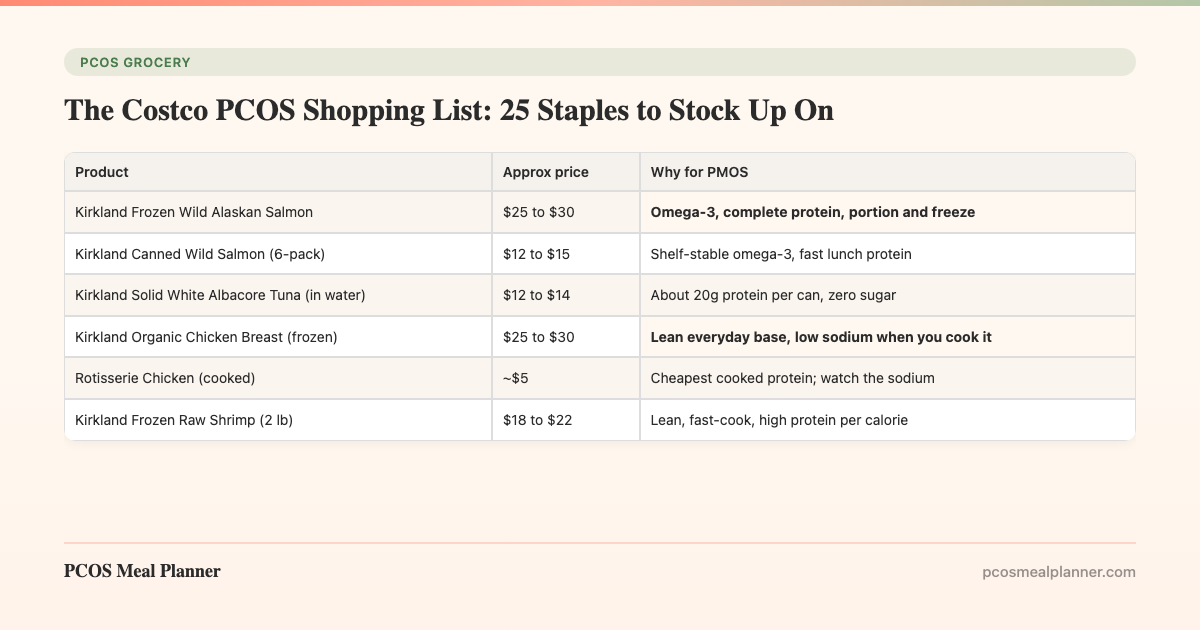
Protein is where Costco earns the membership for PMOS. Buying it in bulk and freezing in portions means there is always a fast, insulin-friendly base ready to cook.
| Product | Approx price | Why for PMOS |
|---|---|---|
| Kirkland Frozen Wild Alaskan Salmon | $25 to $30 | Omega-3, complete protein, portion and freeze |
| Kirkland Canned Wild Salmon (6-pack) | $12 to $15 | Shelf-stable omega-3, fast lunch protein |
| Kirkland Solid White Albacore Tuna (in water) | $12 to $14 | About 20g protein per can, zero sugar |
| Kirkland Organic Chicken Breast (frozen) | $25 to $30 | Lean everyday base, low sodium when you cook it |
| Rotisserie Chicken (cooked) | ~$5 | Cheapest cooked protein; watch the sodium |
| Kirkland Frozen Raw Shrimp (2 lb) | $18 to $22 | Lean, fast-cook, high protein per calorie |
| Kirkland Extra-Firm Organic Tofu (multi-pack) | $6 to $8 | Plant protein, low glycemic load, budget hero |
| Kirkland Lean Ground Beef or Turkey | $4 to $6 per lb | Iron and protein; portion and freeze in patties |
Dairy and eggs
High-protein dairy and eggs are the quiet backbone of a PMOS breakfast. Costco sells the exact versions worth buying, with no added sugar and a low price per serving.
| Product | Approx price | Why for PMOS |
|---|---|---|
| Kirkland Organic Eggs (24 ct) | $7 to $9 | Choline, complete protein, the ultimate fast breakfast |
| Fage Total 0% Greek Yogurt (48 oz tub) | $6 to $8 | About 18g protein per cup, no added sugar |
| Cottage Cheese (2%, large tub) | $5 to $7 | About 14g protein per half cup, slow-digesting |
| String Cheese or Babybel (multi-pack) | $10 to $13 | Portable protein snack, no fridge-raid crash |
| Kirkland Unsweetened Almond Milk (or plain) | $8 to $10 (case) | Low-calorie base; skip the sweetened cartons |
Frozen produce and berries
Frozen is where Costco quietly beats fresh for PMOS. Vegetables and berries are frozen at peak ripeness, so the fibre and polyphenols hold, and the big bag means produce is always on hand without the spoilage that makes fresh so pricey.
| Product | Approx price | Why for PMOS |
|---|---|---|
| Kirkland Three-Berry Blend (frozen, 4 lb) | $11 to $14 | Low glycemic, polyphenol-rich, yogurt topper |
| Kirkland Frozen Wild Blueberries | $10 to $13 | Anthocyanins, low sugar load, smoothie base |
| Frozen Normandy or Stir-Fry Vegetable Blend | $9 to $11 | Fibre and volume, one-pan dinner shortcut |
| Kirkland Organic Riced Cauliflower (frozen) | $8 to $10 | Low-carb swap for rice, high veg volume |
| Frozen Edamame (shelled) | $7 to $9 | Plant protein plus fibre, ready in minutes |
| Organic Spinach or Spring Mix (large clamshell) | $4 to $6 | Folate, magnesium, low-calorie volume |
Pantry: nuts, oils, grains and legumes
The pantry is where Costco pays you back for weeks. Buy these once and the per-meal cost of an insulin-friendly plate keeps dropping, because olive oil, nuts and quinoa outlast several shopping trips.
| Product | Approx price | Why for PMOS |
|---|---|---|
| Kirkland Organic Extra Virgin Olive Oil (2 L) | $18 to $22 | Polyphenol-rich, daily anti-inflammatory fat |
| Kirkland Whole Raw Almonds (3 lb) | $13 to $16 | Magnesium, vitamin E, monounsaturated fat |
| Kirkland Walnuts (3 lb) | $12 to $15 | Omega-3 (ALA), polyphenols, salad crunch |
| Kirkland Organic Quinoa (4.5 lb) | $10 to $13 | Complete protein, moderate glycemic index |
| Kirkland Organic Chickpeas (canned, 8-pack) | $8 to $10 | Fibre plus protein, blunts the glucose rise |
| Kirkland No-Salt Black or Pinto Beans (canned) | $8 to $10 | Resistant starch and fibre, cheap protein |
| Rolled Oats (large bag) | $7 to $9 | Beta-glucan fibre; pair with protein powder |
| Almond Butter or Organic Peanut Butter | $8 to $10 | Protein and fat; check for no added sugar |
Costco snacks that actually pass
Not every Costco snack is a trap. A few pass the PMOS test because they lead with protein, fat or fibre rather than sugar. Keep these in the cart for the 3pm dip.
- Kirkland Roasted Seaweed Snacks: almost no calories, salty crunch, a genuine chip alternative.
- Hard-Boiled Eggs (2-packs): pre-cooked protein for the car, the gym bag or the fridge shelf.
- Wonderful Pistachios (unsalted or lightly salted): the shells slow you down, and the protein-fibre-fat mix satisfies.
- Kirkland Unsalted Mixed Nuts: portion into small bags so the big tub does not become dinner.
- Individual Guacamole Minis: healthy fat and fibre, portion-controlled by design.
- Olives and String Cheese: a fast savoury snack that will not spike blood sugar.
What to skip: the Costco traps
Six areas do most of the damage to a PMOS cart. None are banned forever, but they should not ride along on the regular shop.
- The bakery. A single Costco muffin runs about 600 calories and over 40g of sugar. The croissants, dinner rolls and banana bread are refined-flour blood sugar spikes in family-size quantity.
- Bottled smoothies and juices. The refrigerated smoothies carry 30 to 50g of sugar per bottle, and the orange juice, lemonade and soda flats are worse. Liquid sugar is the fastest way to spike insulin.
- Giant candy and chocolate boxes. The variety candy tubs and holiday assortments are built to be grazed, not portioned. Buy a single good dark chocolate bar instead.
- Mega-bags of chips. Kettle chips and tortilla chips in warehouse sizes disappear fast and hit blood sugar like white bread.
- Granola and granola-bar mega-boxes. Most granola is 12g or more of sugar per serving, and the bars are candy with an oat costume.
- Giant bags of dried fruit. Dried mango, sweetened cranberries and even plain dates are concentrated sugar in an easy-to-overeat bag. Fresh or frozen berries are the PMOS-friendly swap.
The food court is its own trap. The churro, the pizza slice and the soda are engineered to be cheap and huge, which is the opposite of what a PMOS plate needs.
A sample PMOS Costco haul under ~$120
Here is a realistic stock-up that stays insulin-friendly and feeds a household for roughly two weeks. Prices are approximate and vary by region and season. The pantry items last far longer than two weeks, so each future shop costs less.
- Protein (~$80): frozen wild salmon, organic chicken breast, canned albacore tuna, extra-firm tofu, and one rotisserie chicken for the first night.
- Dairy and eggs (~$25): Kirkland organic eggs (24 ct), Fage 0% (48 oz), cottage cheese, and a string-cheese multi-pack.
- Frozen produce and berries (~$20): three-berry blend, a vegetable stir-fry blend, riced cauliflower, and a clamshell of organic spinach.
- Pantry (amortised, ~$20 this trip): olive oil, raw almonds, organic quinoa, and canned chickpeas, all of which outlast the two weeks.
That is roughly $120 for a fridge and freezer that build about two weeks of protein-forward, insulin-friendly meals, with the pantry carrying over into the next shop.
Over to you. What is your must-buy Costco PMOS staple? Save this list, and send it to whoever does the shopping in your house so the cart comes back full of the right stuff.
How the PCOS Meal Planner turns your haul into meals
This list is the inventory. The PCOS Meal Planner turns it into a week of meals built around your PMOS pattern, so the protein-to-carb ratio and the symptom-aware swaps are handled for you. Because the Costco assortment maps cleanly onto the macros the system targets, most of what you carry out of the warehouse slots straight into your plan. If you also want to keep the total down, our guide on a PCOS grocery run under $50 pairs well with a bulk Costco trip, and the evidence on the best diet for PCOS explains why this protein-and-fibre pattern works.
Often asked questions
Is Costco good for PCOS shopping?
Yes. Costco is one of the best-value places to stock a PMOS (the new name for PCOS) kitchen, because the staples that steady insulin, eggs, Greek yogurt, frozen fish, frozen vegetables and berries, nuts, olive oil, quinoa and beans, are the things worth buying in bulk. The catch is the bakery, the sweet drinks and the giant snack boxes, which are the aisles to walk past.
What are the best Kirkland Signature products for PCOS?
The strongest Kirkland picks are the organic eggs, frozen wild salmon, canned salmon and albacore tuna, organic chicken breast, extra-firm tofu, organic olive oil, raw almonds and walnuts, organic quinoa, and canned chickpeas and no-salt beans. Add Fage 0% and cottage cheese for protein. Each is high in protein, fibre or healthy fat and low in added sugar.
What should I avoid at Costco with PCOS?
Three sections do most of the damage: the bakery (a single muffin is about 600 calories and over 40g sugar), the sweet drinks (bottled smoothies carry 30 to 50g sugar, plus orange juice and soda flats), and the giant candy, chip and granola boxes plus huge bags of dried fruit. None are banned forever, but they should not go in the regular cart.
Is Costco rotisserie chicken good for PCOS?
Yes, in moderation. The roughly $5 rotisserie chicken is the cheapest cooked protein in the warehouse, at about 19g protein per 3 oz, and pre-cooked protein prevents a rushed high-carb meal. The one caveat is sodium, so balance it with vegetables and do not eat the skin every day. For lower sodium, the plain chicken breast you cook yourself is the better everyday base.
Are Costco frozen berries good for PCOS?
Yes. The Kirkland three-berry blend and frozen wild blueberries are low on the glycemic scale, rich in polyphenols and fibre, and frozen at peak ripeness so nothing is lost versus fresh. They top Greek yogurt or blend into a protein smoothie, and the big bag means no spoilage. Pair them with protein rather than eating a large bowl alone.
How much does a PCOS Costco haul cost?
A sample stock-up haul comes in under about $120 and feeds a household for roughly two weeks. Prices vary by region and season, but the bulk is protein at around $80, with frozen produce and berries near $20 and pantry staples near $20. The pantry items last far longer, so the true weekly cost drops each time you shop.
Sources and further reading
PCOS mechanism and insulin resistance
- Diamanti-Kandarakis E, Dunaif A. Insulin resistance and the polycystic ovary syndrome revisited. Endocr Rev. 2012
- Shukla AP et al. Food order has a significant impact on postprandial glucose and insulin levels. Diabetes Care. 2015
PCOS clinical guidelines and patient summaries
- International Evidence-Based Guideline for the Assessment and Management of PCOS (Monash)
- NHS: Polycystic ovary syndrome (PCOS)
- Mayo Clinic: PCOS symptoms and causes
Product details
- Costco and Kirkland Signature product details (assortment, pack sizes and approximate pricing), which rotates seasonally and varies by region.
How this article was made
Product names, pack sizes and prices are based on Costco and Kirkland Signature product details and are approximate, since the assortment rotates seasonally and pricing varies by region. The PMOS nutrition guidance follows the International Evidence-Based Guideline for PCOS (Monash), with the insulin-resistance mechanism from Diamanti-Kandarakis and Dunaif (2012) and the protein-first eating pattern from Shukla (2015). PMOS is the new name for PCOS as of 12 May 2026; the underlying biology is unchanged. This article is informational and not medical advice. Talk to your doctor or dietitian about your own plan.
Community Comments
Add a comment