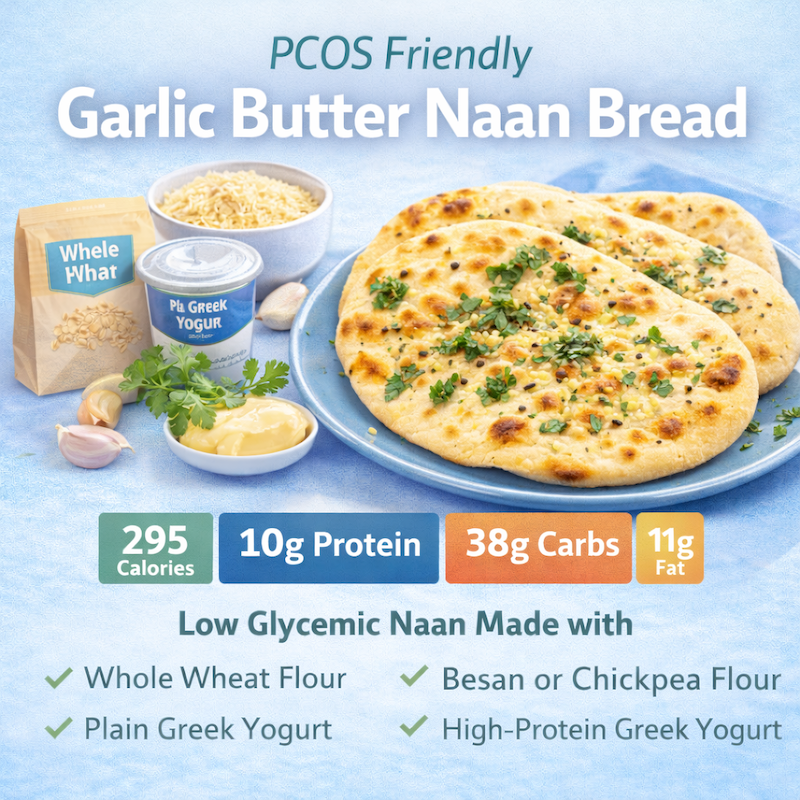
This PCOS Friendly Garlic Butter Naan Bread is a PCOS-friendly recipe with 295 calories, 10g protein, and 38g carbs per serving. Ready in 90 minutes. High in fiber (5g), which supports insulin sensitivity.
Nutrition per Serving
This PCOS-friendly garlic butter naan replaces refined white flour with a combination of whole wheat flour (GI: 54) and chickpea flour (GI: 28-35), creating a delicious flatbread with a lower glycemic impact. The addition of protein-rich Greek yogurt and chickpea flour helps slow carbohydrate absorption, making this naan suitable for insulin-sensitive eating.
Grocery List:
- Whole wheat flour
- Chickpea flour (besan)
- Plain Greek yogurt
- Active dry yeast
- Coconut sugar
- Sea salt
- Extra virgin olive oil
- Grass-fed butter
- Fresh garlic
- Fresh cilantro
- Nigella seeds (optional)
The chickpea flour not only lowers the glycemic index but also adds fiber, protein, and essential minerals that support hormone balance and insulin sensitivity.
Ingredients
Instructions
-
In a small bowl, combine warm water, yeast, and coconut sugar. Stir gently and let sit for 5-7 minutes until the mixture becomes foamy, indicating the yeast is active.In a large mixing bowl, combine whole wheat flour, chickpea flour, and sea salt. Mix thoroughly to distribute ingredients evenly.Add Greek yogurt, olive oil, and the activated yeast mixture to the dry ingredients. Mix with a wooden spoon until a shaggy dough forms.Turn the dough onto a lightly floured surface and knead for 6-8 minutes until smooth and elastic. The dough should be slightly sticky but manageable.Place dough in a lightly oiled bowl, cover with a damp kitchen towel, and let rise in a warm spot for 60 minutes until doubled in size.While dough rises, prepare the garlic butter by combining melted butter, minced garlic, and chopped cilantro in a small bowl. Set aside.After rising, punch down the dough and divide into 2 equal portions. Roll each portion into an oval shape approximately 8-9 inches long and 1/4 inch thick.Heat a cast-iron skillet or heavy-bottomed pan over medium-high heat. No oil is needed.Cook each naan for 2-3 minutes per side until golden brown bubbles appear and the bread puffs up. You should see characteristic charred spots.Immediately brush the hot naan generously with garlic butter mixture and sprinkle with nigella seeds if using.Serve warm alongside curry, dal, or as a side to grilled proteins and vegetables.
This PCOS-friendly Garlic Butter Naan Bread brings the warmth and comfort of traditional Indian cuisine into your hormone-balancing meal plan.
By thoughtfully modifying the classic recipe with whole wheat and chickpea flour, we have created a flatbread that satisfies your cravings while supporting stable blood sugar levels and reducing insulin resistance.
Why This Recipe Works for PCOS
Traditional naan bread is made with refined white flour, which can cause rapid blood sugar spikes and worsen insulin resistance in women with PCOS. This modified version uses whole wheat flour combined with chickpea flour to create a bread with a significantly lower glycemic impact.
Chickpea flour, also known as besan or gram flour, has a glycemic index between 28-35, making it one of the lowest GI flours available.
The protein content in chickpea flour and Greek yogurt transforms this naan from a simple carbohydrate into a more balanced food.
Each serving provides 10 grams of protein, which helps slow the digestion of carbohydrates and prevents the blood sugar rollercoaster that can trigger cravings, fatigue, and hormonal imbalances. This protein boost also supports satiety, helping you feel satisfied with appropriate portions.
The fermentation process from the yeast adds another benefit for PCOS management. Fermented foods can support gut health, and emerging research suggests that gut microbiome balance plays a role in insulin sensitivity and hormone metabolism.
The live cultures from the yeast, combined with the probiotics in Greek yogurt, contribute to a healthier digestive environment.
Understanding the Nutritional Benefits
Chickpea flour is a nutritional powerhouse for women with PCOS. It provides significant amounts of folate, which supports healthy cell division and may help reduce homocysteine levels that can be elevated in PCOS.
The iron content helps address the anemia that some women with PCOS experience, particularly those with heavy menstrual bleeding. With 2.4mg of iron per serving, this naan contributes to your daily iron needs.
The fiber content of 5 grams per serving supports digestive health and helps regulate blood sugar. Fiber slows the absorption of glucose into the bloodstream, preventing the sharp insulin spikes that can worsen PCOS symptoms.
Additionally, adequate fiber intake supports the elimination of excess hormones through regular bowel movements, which is crucial for maintaining hormone balance.
Garlic, the star flavoring of this naan, offers more than just taste. Research indicates that garlic may have insulin-sensitizing properties and can help reduce markers of inflammation.
The sulfur compounds in garlic have been studied for their potential to improve metabolic health, making this aromatic addition both flavorful and functional for PCOS management.
The grass-fed butter provides conjugated linoleic acid (CLA) and vitamin K2, both of which may support metabolic health. While butter should be used in moderation, the small amount used here adds richness and helps with the absorption of fat-soluble vitamins from other foods in your meal.
Potential Considerations
While this naan is designed to be PCOS-friendly, portion control remains important. Each serving contains 38 grams of carbohydrates, which fits well into a balanced PCOS meal plan but should be considered within your total daily carbohydrate intake.
If you are following a very low-carb approach for PCOS management, you may want to have just half a naan or save this recipe for occasional enjoyment.
The recipe contains gluten from wheat flour, making it unsuitable for those with celiac disease or gluten sensitivity.
Women with PCOS have a higher incidence of celiac disease than the general population, so if you experience digestive issues, consider getting tested before consuming gluten-containing foods regularly.
Some individuals may be sensitive to dairy products. While the fermentation process in Greek yogurt breaks down much of the lactose, those with dairy intolerance may need to substitute with coconut yogurt or another plant-based alternative.
This substitution will alter the protein content and may affect the texture slightly.
The yeast fermentation requires time for rising, so this recipe requires advance planning. However, you can prepare the dough ahead and refrigerate it overnight, which actually enhances the flavor and makes weeknight preparation easier.
Research-Based Approach to PCOS Nutrition
Our recipe development is grounded in scientific evidence for PCOS management.
The USDA FoodData Central database confirms that chickpea flour has significantly higher protein and fiber content compared to refined white flour, with approximately 22 grams of protein per 100 grams compared to just 10 grams in white flour.
According to research referenced by the National Institute of Diabetes and Digestive and Kidney Diseases, choosing whole grains and legume-based flours can improve insulin sensitivity in individuals with insulin resistance.
The combination of whole wheat and chickpea flour in this recipe aligns with these evidence-based recommendations.
The Office of Dietary Supplements at the National Institutes of Health notes that adequate iron intake is important for women of reproductive age, particularly those who experience heavy menstrual periods.
The iron from chickpea flour is non-heme iron, which is better absorbed when consumed with vitamin C-rich foods, so consider pairing this naan with tomato-based curries or lentil dal.
Studies published in journals indexed by the National Library of Medicine suggest that garlic supplementation may improve lipid profiles and reduce inflammation markers in women with PCOS.
While cooking reduces some of garlic's beneficial compounds, it still retains meaningful amounts of health-promoting sulfur compounds.
Authoritative Sources:
- USDA FoodData Central - https://fdc.nal.usda.gov/
- National Institute of Diabetes and Digestive and Kidney Diseases - https://www.niddk.nih.gov/
- Office of Dietary Supplements, NIH - https://ods.od.nih.gov/
- National Library of Medicine - https://www.nlm.nih.gov/
Quick Tip: Make a double batch of dough and freeze individual portions. Thaw in the refrigerator overnight and bring to room temperature before rolling and cooking for fresh naan anytime.
Frequently Asked Questions
Can I substitute all-purpose flour for whole wheat flour in this naan recipe?
While you technically can substitute all-purpose flour, doing so would eliminate the PCOS-friendly benefits of this recipe. Whole wheat flour has a glycemic index of 54 compared to 85 for white flour, meaning it causes a much slower rise in blood sugar.
The fiber in whole wheat flour also supports digestive health and hormone elimination. If you find whole wheat flour too dense, try white whole wheat flour, which has a lighter texture while maintaining the nutritional benefits of whole grains.
How does chickpea flour help with insulin resistance in PCOS?
Chickpea flour is exceptionally beneficial for insulin resistance due to its low glycemic index of 28-35 and high protein and fiber content. The protein in chickpea flour slows the digestion and absorption of carbohydrates, preventing rapid blood sugar spikes.
Additionally, chickpea flour contains resistant starch, which acts like fiber in the digestive system and may improve insulin sensitivity over time.
Studies suggest that regular consumption of legume-based foods like chickpea flour can reduce fasting insulin levels and improve glucose metabolism in women with PCOS.
Can I make this naan without yeast for a quicker version?
Yes, you can make a quick version without yeast by increasing the Greek yogurt to 1/2 cup and adding 1 teaspoon of baking powder. Mix the dough and let it rest for just 10-15 minutes before rolling and cooking.
While this version lacks the complex flavors developed through fermentation, it still provides the PCOS-friendly benefits of whole wheat and chickpea flour. The Greek yogurt provides enough leavening when combined with baking powder to create a soft, pliable naan.
What are the best dishes to serve with PCOS-friendly naan?
Pair this naan with protein-rich, low-glycemic dishes to create a balanced PCOS-friendly meal. Excellent options include lentil dal, chickpea curry, palak paneer (spinach with cheese), tandoori chicken, or vegetable korma.
These dishes provide additional protein, fiber, and healthy fats that further stabilize blood sugar. Avoid pairing naan with high-sugar sauces or overly sweet curry dishes, as this combination could cause blood sugar spikes.
A balanced plate should include the naan, a protein source, and plenty of non-starchy vegetables.
How should I store leftover naan and does reheating affect its PCOS benefits?
Store leftover naan in an airtight container at room temperature for up to 2 days, or refrigerate for up to 5 days. For longer storage, freeze individual pieces wrapped in plastic wrap and placed in a freezer bag for up to 3 months.
Reheat in a dry skillet over medium heat for 30-60 seconds per side, or wrap in foil and warm in a 350F oven for 5-7 minutes. Reheating does not significantly affect the glycemic index or nutritional benefits, though freshly made naan will have the best texture and flavor.
Important Note: While this naan recipe is designed to be PCOS-friendly, everyone's carbohydrate tolerance differs. Start with one piece and monitor how you feel.
Some women with severe insulin resistance may need to limit portions or save bread for post-workout meals when insulin sensitivity is highest.
Common Myths and Misconceptions
Myth: All bread must be eliminated from a PCOS diet.
Truth: Bread made with whole grains and protein-rich flours can fit into a PCOS-friendly eating pattern when portions are appropriate and paired with protein. Tweet this
Myth: Indian food is too carb-heavy for PCOS management.
Truth: Indian cuisine offers many PCOS-friendly options with legumes, vegetables, and spices that support insulin sensitivity when prepared mindfully. Tweet this
Myth: Chickpea flour is just a gluten-free substitute with no special benefits.
Truth: Chickpea flour has a low glycemic index, high protein content, and provides minerals that specifically support insulin sensitivity and hormone balance. Tweet this
Myth: Butter should be completely avoided on a PCOS diet.
Truth: Small amounts of grass-fed butter provide beneficial compounds like CLA and fat-soluble vitamins that support metabolic health. Tweet this
Key Benefits of This Recipe
- Lower Glycemic Impact: The combination of whole wheat and chickpea flour creates a naan with a significantly lower glycemic response than traditional versions.
- High Protein Content: Ten grams of protein per serving helps stabilize blood sugar and supports hormone production.
- Rich in Fiber: Five grams of fiber aids digestion, promotes satiety, and supports hormone elimination.
- Anti-Inflammatory Properties: Garlic provides sulfur compounds that may reduce inflammation and improve insulin sensitivity.
- Gut Health Support: Fermentation from yeast and probiotics from Greek yogurt contribute to a healthy microbiome.
- Mineral Dense: Provides iron, magnesium, and zinc that are essential for hormone balance and metabolic health.
- Cultural Connection: Allows you to enjoy traditional Indian cuisine while managing PCOS symptoms effectively.
How This Recipe Supports Your Hormones
The relationship between blood sugar and hormones is fundamental to understanding PCOS. When you eat refined carbohydrates, your blood sugar rises rapidly, triggering a large insulin release.
Chronically elevated insulin signals your ovaries to produce excess androgens, leading to symptoms like irregular periods, acne, and unwanted hair growth. This naan addresses this problem at its source.
By using flours with lower glycemic indices and adding protein through chickpea flour and Greek yogurt, this recipe creates a more gradual blood sugar response. When insulin remains stable, your ovaries receive different signals and reduce androgen production.
Over time, consistently choosing foods with this type of balanced macronutrient profile can help normalize hormone levels and reduce symptoms.
The magnesium in whole wheat and chickpea flour plays a direct role in insulin sensitivity. Magnesium acts as a cofactor for enzymes involved in glucose metabolism, and many women with PCOS have lower magnesium levels than women without the condition.
Each serving of this naan contributes to your daily magnesium needs, supporting better insulin function at the cellular level.
Zinc, also provided by chickpea flour, is essential for reproductive hormone production and may help reduce elevated androgens in PCOS. Studies have shown that zinc supplementation can improve insulin resistance markers and menstrual regularity in women with PCOS.
While this naan is not a substitute for supplementation if you are deficient, it contributes to your overall zinc intake as part of a nutrient-dense diet.
Did You Know? Chickpea flour contains more protein than any other flour except soy flour, making it one of the best choices for adding protein to baked goods and flatbreads.
Your PCOS-Friendly Naan Checklist
Use this checklist to maximize the benefits of this recipe:
- I have used whole wheat flour rather than all-purpose flour
- I have included chickpea flour to lower the glycemic impact
- I am pairing this naan with a protein-rich curry or dal
- I have added non-starchy vegetables to my meal
- I am limiting myself to one piece of naan per meal
- I have chosen grass-fed butter for better nutrient quality
- I am eating this meal at a time when I am genuinely hungry
- I have planned the rest of my day's meals to balance total carbohydrate intake
- I am drinking water with my meal to support digestion
- I will monitor my energy levels and cravings after this meal to understand my response
Take Action Today
Creating this PCOS-friendly garlic butter naan is a meaningful step toward better symptom management and improved quality of life. To build on this progress, consider these next actions:
- Prepare a double or triple batch of dough and freeze portions for convenient future meals
- Research three PCOS-friendly Indian curry recipes to pair with this naan
- Experiment with different herbs in the garlic butter, such as fresh mint or kasuri methi
- Track your blood sugar response to this meal if you have a glucose monitor
- Share this recipe with family members so they can support your dietary needs
Consistency is key to seeing improvements in PCOS symptoms. Each time you choose a thoughtfully prepared, nutrient-dense meal like this naan paired with protein and vegetables, you are supporting your body's natural hormone regulation processes.
Join Our Community
Managing PCOS through nutrition can feel overwhelming, but you do not have to figure it out alone. Thousands of women are successfully managing their symptoms through personalized meal planning and supportive community connections.
PCOS Meal Planner creates a space where your experiences, questions, and victories are valued and understood.
Share your experience making this garlic butter naan with others who are on the same journey. Did you pair it with dal or curry? How did your body respond? What modifications did you make? Your insights might be exactly what another woman needs to hear as she works toward better hormone balance.
Ready to simplify your PCOS nutrition journey? PCOS Meal Planner provides personalized meal plans that take the guesswork out of eating for hormone balance. We help you eat better, feel better, and effectively manage PCOS symptoms in a friendly, trustworthy way.
Our approach prioritizes your well-being while respecting your food preferences and lifestyle. Start building your personalized meal plan today and discover how much easier PCOS management can be with the right support.
Why this PCOS Friendly Garlic Butter Naan Bread works for PCOS
The 38g of carbohydrates here come paired with 5g of fibre, which slows glucose absorption and produces a flatter post-meal blood sugar curve. Fibre is one of the most under-rated tools for PCOS: it feeds gut bacteria that produce short-chain fatty acids linked to improved insulin sensitivity, and it modestly lowers circulating androgens by binding bile acids in the gut.
Evening meals affect overnight insulin and morning blood sugar more than most women realise. Keeping dinner protein-forward and finishing eating at least 2-3 hours before bed gives your body time to clear glucose before the overnight fast, which improves morning fasting insulin readings.
At 295mg of sodium per serving, this PCOS Friendly Garlic Butter Naan Bread fits comfortably within the 1500-2300mg daily target most cardiology and PCOS guidance agrees on. Lower-sodium meals are useful for women with PCOS who also experience bloating or who are managing blood pressure alongside metabolic concerns.
You Have a Recipe. But Do You Have a Full Week?
One great recipe is a start. A complete PCOS meal plan is a system. Here is how to go from one meal to a full week of eating that supports your hormones.
Free. Personalized. No signup required to start.
Frequently Asked Questions
Yes, this PCOS Friendly Garlic Butter Naan Bread recipe is designed to be PCOS-friendly. At 295 calories per serving with 10g of protein, it supports balanced blood sugar and hormonal health. It also provides 5g of fiber, which helps with insulin sensitivity.
This recipe takes about 90 minutes total. Prep time is 75 minutes and cook time is 15 minutes. It makes 2 servings, so you can meal prep for multiple days.
Per serving: 295 calories, 10g protein (14%), 38g carbs, 11g fat. Plus 5g fiber. PCOS meal plans typically aim for 30% protein, 35% fat, 35% carbs to support insulin sensitivity.
Yes, this recipe works well as a PCOS-friendly Dinner. At 295 calories, it fits within typical PCOS meal plan targets for Dinner. Pair it with other PCOS-friendly foods throughout the day for balanced nutrition.
This recipe can be part of a structured PCOS meal plan. It makes 2 servings, making it great for meal prep. For a complete weekly plan tailored to your PCOS type, take our free 60-second quiz at pcosmealplanner.com/pcos-quiz to get a personalized 7-day meal plan.
Cook Another PCOS-Friendly Dinner
Each recipe you add to your rotation makes PCOS management easier. Variety keeps you from getting bored and quitting.
Rate this recipe
Register or log in to rate this recipe