What's the Difference Between PCO and PCOS?
PCO vs PCOS: The Basics
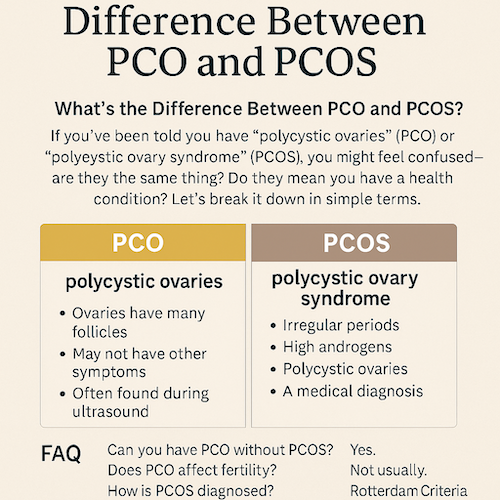
PCO (Polycystic Ovaries) means your ovaries have many follicles—tiny, fluid-filled sacs—but you may not have other symptoms. It’s often discovered during an ultrasound for another reason and doesn’t necessarily mean something is wrong.
PCOS (Polycystic Ovary Syndrome) is a condition where you may have irregular periods, high androgens (male hormones), and polycystic ovaries. It’s a medical diagnosis with hormonal, metabolic, and fertility impacts.
Why the Confusion?
PCO is a finding. PCOS is a diagnosis.
- PCO is common, especially in young women.
- PCOS involves symptoms that affect your health long-term.
How Are They Diagnosed?
PCOS diagnosis uses the Rotterdam Criteria. You need two out of three:
- Irregular or no periods
- Signs of high androgens (like acne or excess hair)
- Polycystic ovaries on ultrasound
PCO alone doesn’t meet the criteria. It may be part of a normal cycle or due to other temporary hormonal changes.
Is One Worse Than the Other?
PCOS can affect fertility, insulin levels, weight, and mood. PCO generally does not. But having PCO doesn’t mean you’ll develop PCOS. They’re different things.
Practical Tips
- If you have PCO, no treatment is needed unless you have symptoms.
- If you have PCOS, talk to your doctor about treatment options like lifestyle changes, supplements, or medication.
- Track your symptoms with a health journal or app.
- Consider a PCOS-friendly recipe to help support hormone health.
Research Methodology
We reference authoritative sources such as the NIH and CDC for accuracy and clarity in defining medical conditions and testing.
FAQ
Can you have PCO without PCOS?
Yes. Many people have polycystic ovaries without having the syndrome. It’s just a feature seen on ultrasound and not a disease.
Does PCO affect fertility?
Not usually. PCO itself doesn’t cause hormonal imbalances. PCOS, on the other hand, can disrupt ovulation and fertility.
How is PCOS diagnosed?
Doctors use the Rotterdam Criteria—two of three: irregular periods, signs of high androgens, or polycystic ovaries seen on ultrasound.
Are all ovarian cysts the same?
No. Functional cysts, dermoid cysts, and cystadenomas are different from the small follicles seen in PCO and PCOS.
Is PCOS always visible on ultrasound?
Not always. You can have PCOS without visible cysts if other symptoms are present.
Community Comments
Add a comment