Who this 7-day plan is for
This is a free, fixed 7-day meal plan built around the dietary principles supported by the 2023 International Evidence-based Guideline for the Assessment and Management of PCOS. It's calibrated for women with the most common PCOS phenotype: insulin-resistant, looking for symptom and cycle support, eating roughly 1,800 kcal/day. It's not personalized; it's a starting template you can use as-is or adapt. If you want a personalized version that adjusts to your phenotype, weight, activity, cycle phase, and food preferences, the PCOS Meal Planner app builds one for you each week.
The principles behind the plan
Macro split: ~30% carbs, 30% protein, 40% fat (and why)
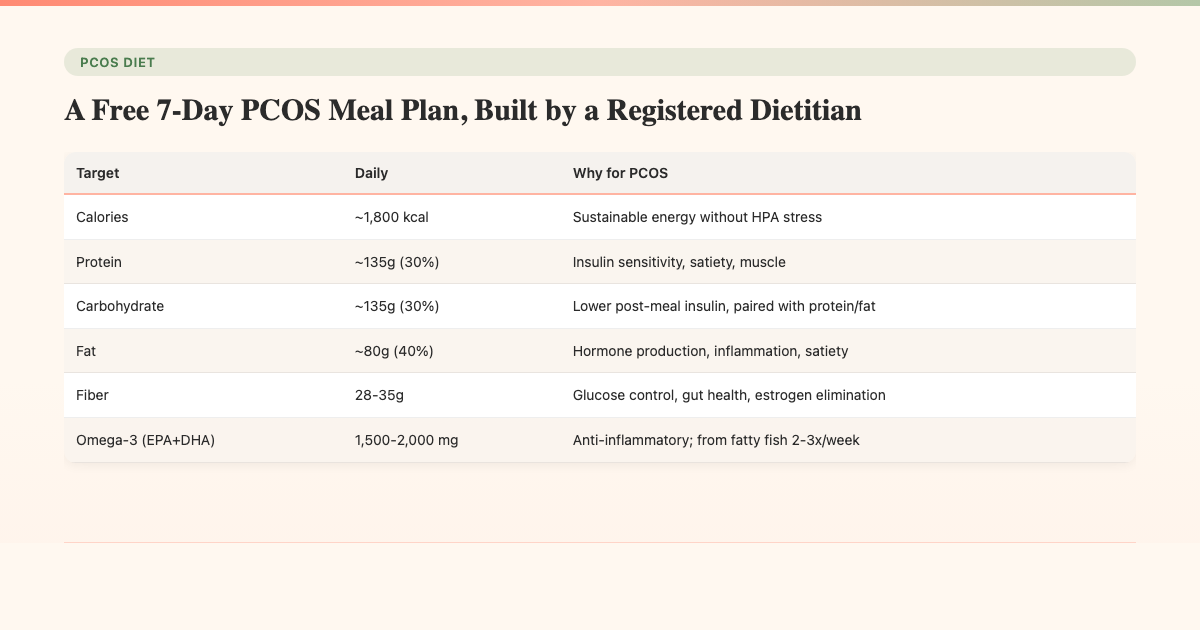
Roughly 70 percent of PCOS phenotypes have insulin resistance, and the dietary lever that moves PCOS markers most reliably is the macro split. The default Western pattern (50 percent carbs, 15 percent protein, 35 percent fat) consistently underperforms a higher-protein, moderate-carb pattern in head-to-head PCOS dietary trials. This plan targets about 1,800 kcal/day with 135g carbs (30 percent), 135g protein (30 percent), and 80g fat (40 percent).
Insulin-aware meal timing
Insulin sensitivity is highest in the morning and declines through the day. The 2013 Jakubowicz et al. trial in obese PCOS women showed that shifting calories toward breakfast (980 kcal breakfast, 640 lunch, 190 dinner) over 12 weeks reduced fasting insulin by 56 percent and testosterone by 50 percent compared to a calorie-matched control with calories shifted toward dinner. This plan front-loads breakfast and lunch.
Anti-inflammatory swaps
Mediterranean-pattern fats (extra virgin olive oil, fatty fish, nuts, avocado) reduce inflammatory cytokines that impair insulin signaling. The plan uses olive oil and fatty fish heavily and skips seed-oil-fried foods.
The 7-day plan, day by day
Day 1 (Monday) — the reset
- Breakfast: 3-egg vegetable scramble with spinach + half avocado + 1 slice sourdough toast. (~30g protein, 25g carbs, 28g fat)
- Lunch: 5 oz grilled salmon over arugula + roasted vegetables + half cup quinoa + olive oil and lemon. (~38g protein, 35g carbs, 22g fat)
- Snack: 1 cup plain Greek yogurt + 12 almonds + half cup berries.
- Dinner: 5 oz baked chicken thigh + sautéed broccoli + half a roasted sweet potato + tahini drizzle. (~35g protein, 30g carbs, 18g fat)
Day 2 (Tuesday) — high-energy day
- Breakfast: Overnight oats: half cup rolled oats + 1 scoop protein powder + 1 tbsp chia + half cup berries + 2 tbsp almond butter. (~32g protein, 38g carbs, 22g fat)
- Lunch: Mediterranean bowl: 5 oz grilled chicken + half cup chickpeas + cucumber, tomato, kalamata olives, feta + half cup quinoa + olive oil. (~40g protein, 38g carbs, 24g fat)
- Snack: 1 small apple + 2 tbsp natural peanut butter.
- Dinner: Sheet-pan: 5 oz sirloin + roasted Brussels sprouts and red onion + half cup wild rice + chimichurri. (~38g protein, 30g carbs, 18g fat)
Day 3 (Wednesday) — make-ahead day
- Breakfast: Smoked salmon plate: 3 oz smoked salmon + 2 hard-boiled eggs + cherry tomatoes + half avocado + 1 slice sprouted-grain toast. (~38g protein, 22g carbs, 26g fat)
- Lunch: Lentil soup (1.5 cups) + side green salad + 1 oz pumpkin seeds. (~28g protein, 40g carbs, 22g fat)
- Snack: 1 cup cottage cheese + half cup pineapple chunks.
- Dinner: Stir-fry: 5 oz tofu or chicken + mixed vegetables + half cup brown rice + sesame oil and tamari. (~32g protein, 35g carbs, 18g fat)
Day 4 (Thursday) — slow-cooker day
- Breakfast: Greek yogurt power bowl: 1.5 cups plain Greek yogurt + half cup low-sugar granola + half cup berries + 2 tbsp ground flax + drizzle of honey. (~35g protein, 38g carbs, 18g fat)
- Lunch: Tuna salad (5 oz canned wild tuna in olive oil) over mixed greens + 1 boiled egg + half cup chickpeas + olive oil and lemon. (~40g protein, 22g carbs, 22g fat)
- Snack: Apple slices + 1 oz cheddar cheese + 12 almonds.
- Dinner: Slow-cooker chicken curry: 5 oz chicken thigh + half cup basmati rice + spinach + coconut milk + turmeric. (~38g protein, 32g carbs, 22g fat)
Day 5 (Friday) — dinner-out-friendly day
- Breakfast: Veggie egg muffins (3) + half cup cottage cheese + half cup berries + 12 walnuts. (~32g protein, 18g carbs, 22g fat)
- Lunch: Bowl: 5 oz shredded chicken + cauliflower rice + black beans + salsa + avocado + lime + cilantro. (~40g protein, 30g carbs, 22g fat)
- Snack: Edamame (1 cup, in pods) + small handful pistachios.
- Dinner (out): Any grilled protein + double vegetables + skip the bread basket. Order the protein you'd actually want, sub the side carb for an extra vegetable.
Day 6 (Saturday) — meal-prep day for next week
- Breakfast: Protein smoothie: 1.5 scoops whey or pea protein + 1 cup unsweetened almond milk + half cup frozen berries + 1 tbsp almond butter + 1 tbsp chia + handful spinach. (~38g protein, 22g carbs, 18g fat)
- Lunch: Sardines (1 tin, in olive oil) + sourdough crackers + cucumber + cherry tomatoes + capers + olive oil. (~28g protein, 28g carbs, 26g fat)
- Snack: Plain Greek yogurt (1 cup) + 1 tbsp dark cocoa powder + 1 tsp honey + walnuts.
- Dinner: Bunless burger: 5 oz grass-fed beef patty + sautéed mushrooms and onions + side salad + half a baked sweet potato + olive oil. (~40g protein, 30g carbs, 22g fat)
Day 7 (Sunday) — flex day
- Breakfast: Vegetable frittata (3 eggs) + side of seasonal fruit + 12 almonds. (~28g protein, 18g carbs, 22g fat)
- Lunch: Grain bowl: 5 oz roasted chicken + half cup farro + roasted vegetables + tahini-lemon dressing. (~38g protein, 38g carbs, 22g fat)
- Snack: 1 oz dark chocolate (85%+) + 12 walnuts + 1 small pear.
- Dinner: Slow-roasted salmon + wild rice pilaf + roasted asparagus + lemon. (~38g protein, 32g carbs, 22g fat)
Macro and micronutrient targets across the week
| Target | Daily | Why for PCOS |
|---|---|---|
| Calories | ~1,800 kcal | Sustainable energy without HPA stress |
| Protein | ~135g (30%) | Insulin sensitivity, satiety, muscle |
| Carb | ~135g (30%) | Lower post-meal insulin, paired with protein/fat |
| Fat | ~80g (40%) | Hormone production, inflammation, satiety |
| Fiber | 28-35g | Glucose control, gut health, estrogen elimination |
| Omega-3 (EPA+DHA) | 1,500-2,000 mg | Anti-inflammatory; from fatty fish 2-3x/week |
| Magnesium | 320 mg | Insulin signaling; from greens, nuts, seeds |
| Hydration | 2-3L | Supports kidney clearance of excess androgens |
Substitutions
Vegetarian
Replace fish, chicken, beef, and shrimp with: tempeh (4 oz = ~22g protein), tofu (5 oz = ~20g protein), Greek yogurt or cottage cheese (1 cup = 18-25g protein), eggs, lentils, chickpeas, edamame, hemp seeds, and a daily 25-30g protein supplement (whey, pea, or rice protein) to hit the protein floor.
Dairy-free
Swap Greek yogurt for coconut yogurt (lower protein) plus a protein bump elsewhere, swap cottage cheese for tofu, swap feta for nutritional yeast or tahini, and use unsweetened almond or oat milk in place of conventional dairy. Add a calcium supplement if dairy is fully eliminated.
Gluten-free
Swap sourdough and sprouted-grain toast for gluten-free toast or omit. Quinoa, brown rice, wild rice, and farro substitutes (millet, buckwheat) are all naturally gluten-free except farro. Verify oats are certified gluten-free if you have celiac.
Grocery list for the week
Protein: 1 dozen eggs, 1.5 lb chicken thighs, 1 lb wild salmon (fresh or frozen), 8 oz smoked salmon, 1 lb sirloin or grass-fed ground beef, 5 oz tofu, 2 tins sardines, 1 tin wild tuna, 1 large container plain Greek yogurt, 1 large container cottage cheese, 1 lb tempeh (optional).
Vegetables: Spinach, arugula, mixed greens, broccoli, Brussels sprouts, asparagus, bell peppers, cucumber, cherry tomatoes, mushrooms, red onion, garlic, ginger, zucchini, cauliflower (or cauliflower rice), spinach for smoothie.
Smart starches: 1 lb sweet potato, quinoa, brown rice, wild rice, farro, rolled oats, sourdough or sprouted-grain bread, sourdough crackers.
Fats: Extra virgin olive oil, 2 avocados, almond butter, peanut butter (natural), tahini, raw almonds, walnuts, pumpkin seeds, chia seeds, flax seeds (ground), pistachios.
Fruit: Berries (fresh or frozen), 2-3 apples, 1-2 pears, 1 small pineapple or canned in juice, lemons.
Pantry: Lentils, chickpeas, black beans, kalamata olives, feta cheese, capers, salsa, tamari, sesame oil, coconut milk, turmeric, cinnamon, dark chocolate (85%+).
For a printable, build-your-own version organized by symptom focus, see our complete PCOS grocery list.
Beyond 7 days: how PCOS Meal Planner builds your week
This 7-day plan is a fixed template. PCOS Meal Planner builds a personalized version of this every week based on your phenotype, current weight, activity, cycle phase, food preferences, allergies, and household size. Recipes auto-swap based on your dislikes; macros auto-adjust based on activity logs; the grocery list builds itself. Start a 7-day trial of PCOS Meal Planner.
Frequently Asked Questions
How many calories is this 7-day PCOS meal plan?
The plan is built at about 1,800 calories per day with the macro and micronutrient breakdowns listed above. Add 200-400 calories per day if you're highly active or premenstrual; subtract 100-200 if you're sedentary, smaller-bodied, or over 50.
Can I follow this plan if I'm vegetarian?
Yes. Substitute the fish, chicken, beef, and shrimp with tempeh, tofu, Greek yogurt, cottage cheese, eggs, lentils, chickpeas, edamame, and hemp seeds. Add a daily 25-30g protein supplement to hit the protein floor. The vegetarian substitutions section above lists swaps for every animal protein in the plan.
Will this PCOS meal plan help me lose weight?
If you're currently eating well above your maintenance calorie level, yes. Weight loss is not the primary goal of the plan; insulin response and cycle support are. Many women see weight loss as a downstream effect within 4 to 6 weeks of consistent adherence, particularly loss of visceral fat which improves insulin signaling even at stable scale weight.
Do I need to count macros if I follow this plan?
No. Macros are pre-built into each day. If you swap meals across days the macro balance still works because all meals are designed to similar targets (35-40g protein, 25-35g carbs, 20-28g fat).
What's the difference between this plan and the PCOS Meal Planner app?
This plan is a fixed 7-day template at one calorie level. The app personalizes daily meals to your weight, activity, cycle phase, food preferences, household size, and allergies; regenerates the plan as you track adherence; and includes a recipe library of 500+ PCOS-tagged meals plus an AI PCOS coach.
Can I drink coffee and alcohol on this plan?
Coffee yes (1-2 cups, ideally 60-90 min after waking, paired with food). Alcohol is not built into the calorie budget; if you drink, count those calories and skip the equivalent in starch or fat that day. Two drinks per week is the typical PCOS-friendly upper bound; daily drinking impairs insulin sensitivity meaningfully.
Sources
- Teede HJ, Tay CT, Laven JJE, et al. Recommendations from the 2023 International Evidence-based Guideline for the Assessment and Management of Polycystic Ovary Syndrome. Fertility and Sterility. 2023;120(4):767-793. PubMed: 37580056
- Jakubowicz D, Barnea M, Wainstein J, Froy O. Effects of caloric intake timing on insulin resistance and hyperandrogenism in lean women with polycystic ovary syndrome. Clinical Science. 2013;125(9):423-432. PubMed: 23688334
- Lim SS, Hutchison SK, Van Ryswyk E, Norman RJ, Teede HJ, Moran LJ. Lifestyle changes in women with polycystic ovary syndrome. Cochrane Database of Systematic Reviews. 2019;3(3):CD007506. PubMed: 30921478
- Barrea L, Arnone A, Annunziata G, et al. Adherence to the Mediterranean diet, dietary patterns and body composition in women with polycystic ovary syndrome (PCOS). Nutrients. 2019;11(10):2278. PubMed: 31547562
- American College of Obstetricians and Gynecologists. ACOG Practice Bulletin No. 194: Polycystic Ovary Syndrome. Obstetrics & Gynecology. 2018;131(6):e157-e171. PubMed: 29794677
Related reading on PCOS Meal Planner
- PCOS 101: Complete Guide
- Insulin Resistance Meal Plan for PCOS
- The PCOS Grocery List
- PCOS Breakfast Ideas
- Inositol vs Metformin for PCOS
How this article was researched
This 7-day plan was built from the dietary recommendations in the 2023 International Evidence-based Guideline for the Assessment and Management of PCOS, the Jakubowicz et al. 2013 calorie-timing trial, the 2019 Cochrane systematic review on lifestyle changes for PCOS, and the Mediterranean-PCOS adherence research. This article is being prioritized for medical review by our contracted Registered Dietitian Nutritionist as part of our retroactive review program. See our editorial standards.
Community Comments
Add a comment