The root cause is DHT — dihydrotestosterone. It is the most potent form of testosterone, and it is what activates the hair follicles on your face. Your body makes DHT from testosterone using an enzyme called 5-alpha reductase. And here is what most people miss: specific foods can slow this entire process down — by lowering insulin, binding free testosterone, and blocking the enzyme that creates DHT.
This guide covers exactly which foods and natural sources can reduce facial hair growth, explains the hormonal science behind why they work. Shows you how to build them into meals you will actually eat.
Why PCOS Causes Facial Hair (The DHT Pathway)
Facial hair in PCOS is not caused by testosterone alone — it is caused by DHT, and understanding this distinction matters for choosing the right foods.
- Insulin spikes (from high-GI foods) → signal the ovaries to produce excess testosterone
- Low SHBG (suppressed by high insulin) → more free testosterone circulates in the blood
- 5-alpha reductase enzyme converts free testosterone → DHT
- DHT binds to androgen receptors in facial hair follicles → triggers coarse, dark hair growth
This means there are four points where food can intervene: reducing insulin, increasing SHBG, blocking 5-alpha reductase, and lowering total testosterone. The most effective dietary approach targets all four simultaneously.
One important thing to understand: diet changes will not remove existing facial hair. But they can slow new growth, make hair finer, and reduce the rate you need to remove it. Think of it as turning down the dial rather than flipping a switch — and over 3-6 months, the difference becomes very noticeable.
10 Foods and Natural Sources That Reduce Facial Hair
1. Spearmint Tea
Why it targets facial hair: Spearmint is the single most evidence-backed natural anti-androgen for hirsutism. A 2010 randomized controlled trial in Phytotherapy Research found that women with PCOS who drank two cups daily for 30 days had much lower free testosterone — and specifically reported improvements in hirsutism. Spearmint appears to directly inhibit androgen activity, making it one of the few natural remedies with clinical trial evidence for facial hair.
How to use it: Brew 1 heaped teaspoon of dried spearmint leaves in boiling water for 5-10 minutes. Drink twice daily — morning and evening. Must be spearmint, not peppermint. Consistency is everything — effects build over weeks, not days.
2. Ground Flaxseeds
Why it targets facial hair: Flaxseeds are packed with lignans — plant compounds that increase SHBG production in the liver. More SHBG means more free testosterone gets bound before it can convert to DHT. A case study in the Journal of Clinical Endocrinology & Metabolism documented a 70% reduction in total testosterone with 30g of flaxseed daily. Less testosterone means less DHT means slower facial hair growth.
How to use it: Add 1-2 tablespoons of ground flaxseed to smoothies, yogurt, oatmeal, or salads daily. Must be ground — whole seeds pass through your body undigested. Store in the fridge to prevent the oils from going rancid.
3. Green Tea (EGCG)
Why it targets facial hair: Epigallocatechin gallate (EGCG), the primary catechin in green tea, directly inhibits 5-alpha reductase — the exact enzyme that converts testosterone to DHT. This makes it uniquely relevant for hirsutism specifically, not just high testosterone in general. A 2017 study found green tea extract reduced testosterone in women with PCOS over 12 weeks. Green tea also improves insulin sensitivity.
How to use it: Drink 2-3 cups of green tea daily. Matcha provides a more concentrated dose of EGCG. Do not add sugar. If caffeine-sensitive, decaf green tea retains most of the EGCG. Pair with lemon — vitamin C improves catechin absorption.
4. Walnuts
Why it targets facial hair: Walnuts increase SHBG more than any other commonly studied nut. A study in the European Journal of Clinical Nutrition found that 36g of walnuts daily for 8 weeks increased SHBG by 12.5% in women with PCOS. More SHBG binds more free testosterone, reducing what is available to convert to DHT and activate facial hair follicles.
How to use it: Eat a small handful (30-35g) of raw walnuts daily — as a snack, tossed into salads, or mixed into overnight oats. Avoid honey-roasted or salted varieties.
5. Fatty Fish (Salmon, Sardines, Mackerel)
Why it targets facial hair: Omega-3 fatty acids reduce chronic inflammation — a key driver of both insulin resistance and androgen production. A 2018 meta-analysis found omega-3 supplementation greatly reduced testosterone in women with PCOS. Fatty fish also provides vitamin D and selenium, both important for hormone regulation. Reducing systemic inflammation helps the entire androgen-DHT pathway calm down.
How to use it: Aim for 2-3 servings per week. Wild-caught salmon, sardines, and mackerel are the best sources. If you do not eat fish, consider a quality fish oil supplement (2-3g EPA+DHA daily).
6. Reishi Mushrooms
Why it targets facial hair: Reishi mushrooms have been shown in laboratory studies to be among the most potent natural 5-alpha reductase inhibitors. A study published in Bioorganic & Medicinal Chemistry tested over 19 species of mushrooms and found reishi had the strongest anti-androgen activity — directly blocking the enzyme that creates DHT from testosterone. While human clinical trials are still building, the mechanism is highly relevant to facial hair.
How to use it: Reishi is too tough and bitter to eat whole. Use dried reishi extract powder (1-2g daily) added to tea, coffee, or smoothies. Look for extracts standardized to triterpenoids — these are the active anti-androgen compounds.
7. Turmeric (Curcumin)
Why it targets facial hair: Curcumin suppresses the enzymes involved in androgen synthesis and is a potent anti-inflammatory. By reducing inflammation and improving insulin sensitivity, turmeric helps lower the testosterone that feeds DHT production. Some emerging research suggests curcumin may also have direct 5-alpha reductase inhibiting properties, though this is still being studied in human trials.
How to use it: Add turmeric to curries, soups, scrambled eggs, or golden milk lattes. Always pair with black pepper — piperine increases curcumin absorption by up to 2000%. Use 1/2 to 1 teaspoon daily.
8. Ceylon Cinnamon
Why it targets facial hair: Cinnamon targets facial hair indirectly through its powerful effect on insulin sensitivity. A study in Fertility and Sterility found cinnamon greatly reduced insulin resistance in women with PCOS. Since insulin is the master switch that drives ovarian testosterone production, improving insulin sensitivity means less testosterone produced, less DHT created. Less stimulation of facial hair follicles.
How to use it: Add 1/2 to 1 teaspoon of Ceylon cinnamon to oats, smoothies, coffee, or yogurt daily. Use Ceylon, not cassia — cassia contains coumarin which can be harmful in large daily amounts.
9. Legumes (Lentils, Chickpeas, Black Beans)
Why it targets facial hair: Legumes are low-glycemic, high-fiber carbs that prevent the insulin spikes that drive testosterone production. Their fiber also supports gut-mediated hormone clearance — helping the body remove excess androgens more efficiently. The mineral content (zinc and magnesium) further supports androgen metabolism. Replacing high-GI carbs with legumes addresses the insulin root cause of hirsutism.
How to use it: Replace white rice, bread, and pasta with lentils, chickpeas, or black beans 3-4 times per week. Add to salads, soups, curries, or make hummus as a snack.
10. Saw Palmetto (Supplement)
Why it targets facial hair: Saw palmetto is a natural 5-alpha reductase inhibitor — it blocks the same enzyme that the prescription drug finasteride targets. By reducing DHT conversion, it directly addresses the hormone that activates facial hair follicles. While most research has been done in men with benign prostatic hyperplasia, the mechanism is identical, and many dermatologists recommend it off-label for female hirsutism.
How to use it: Take 320mg of standardized saw palmetto extract daily. Important: Avoid during pregnancy or if trying to conceive — saw palmetto can affect fetal development. Always consult your doctor before starting.
Foods That Make Facial Hair Worse
Adding anti-androgen foods will only take you so far if you are still eating the foods that drive DHT production in the first place. These are the biggest offenders for hirsutism specifically:
- Sugary drinks and fruit juices — cause rapid insulin spikes that directly increase ovarian testosterone, which converts to DHT
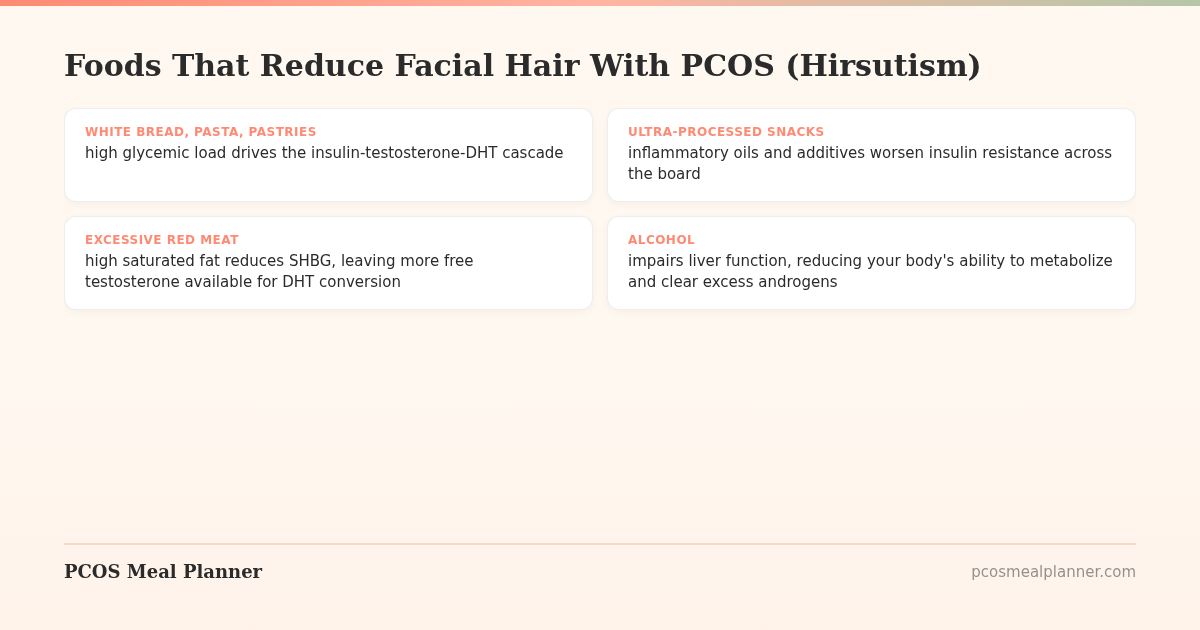
- White bread, pasta, pastries — high glycemic load drives the insulin-testosterone-DHT cascade
- Ultra-processed snacks — inflammatory oils and additives worsen insulin resistance across the board
- Excessive red meat — high saturated fat reduces SHBG, leaving more free testosterone available for DHT conversion
- Alcohol — impairs liver function, reducing your body's ability to metabolize and clear excess androgens
- High-sugar breakfast cereals — one of the worst morning choices for PCOS; starts the insulin-androgen cycle first thing
You do not need to remove everything overnight. Start by replacing the worst offenders — sugary drinks with spearmint or green tea, white bread with lentils or whole grains, processed snacks with walnuts and berries. These swaps alone can shift your hormonal baseline within weeks.
A Sample Day of Anti-Hirsutism Eating
Here is what a day built around facial-hair-reducing foods actually looks like:
Spearmint tea + overnight oats with ground flaxseed, walnuts, Ceylon cinnamon, and blueberries
LunchLarge salad with chickpeas, turmeric-roasted vegetables (with black pepper), olive oil and lemon dressing, side of lentil soup
AfternoonGreen tea (or matcha) + a small handful of walnuts with raspberries
DinnerBaked salmon with sautéed greens and reishi mushroom powder stirred into the sauce, served with black bean and quinoa pilaf
EveningSecond cup of spearmint tea + saw palmetto supplement
That single day hits spearmint (twice), flaxseed, green tea, walnuts, fatty fish, turmeric, cinnamon, legumes (twice), reishi, and saw palmetto. All ten anti-hirsutism foods in one day — without anything feeling forced.
The challenge is doing this consistently. One good day does not shift hormones — weeks and months of consistent eating does. And that is where most women get stuck: not because they do not know what to eat. Because life gets in the way of actually doing it.
The PCOS Meal Planner builds your daily meals around anti-androgen, insulin-friendly foods like these — personalized to your preferences, budget, and schedule. No more wondering what to cook. No more wasted groceries. Just a plan that works with your life, delivered in 24 hours.
The Timeline: When to Expect Results
Diet changes work, but they are not instant. Here is a realistic timeline so you know what to expect and do not give up too early:
- Weeks 1-4: Internal hormonal shifts begin. Insulin sensitivity improves. You may feel better (more energy, fewer cravings) but facial hair will not visibly change yet.
- Weeks 4-8: Blood testosterone levels start to drop. SHBG rises. You might notice slightly less oily skin and fewer breakouts — early signs that androgens are declining.
- Weeks 8-12: Facial hair may start growing back more slowly after removal. Hair may feel finer. The growth cycle is beginning to respond to lower DHT levels.
- Months 3-6: Visible reduction in facial hair density and thickness. Hair removal sessions become less frequent. This is when most women notice a genuine difference.
- Months 6-12: Full effect of sustained hormonal changes. Combined with hair removal methods, many women see a dramatic improvement in hirsutism.
The key word is sustained. A month of good eating followed by two months of processed food will not move the needle. Consistency beats perfection — 80% compliance over six months beats 100% compliance for two weeks.
Combining Diet With Hair Removal
Diet and hair removal are not either/or — they work best together. Diet slows new growth from the inside. Hair removal handles what is already there.
- Laser hair removal is more effective when androgens are lower — because lower DHT means fewer new hairs are being activated between sessions. Starting an anti-androgen diet before or alongside laser treatment improves long-term results.
- Threading and waxing become less frequent as growth slows. Many women report going from weekly to fortnightly removal within 3-4 months of diet changes.
- Prescription options (spironolactone, eflornithine cream) work on the same pathways as these foods — your doctor may find you need lower doses if your diet is already doing part of the work.
You Do Not Need Another Plan. You Need a System.
This article gives you the foods, the science, and the timeline. But knowing that spearmint tea and flaxseeds help means nothing if you are not consistently building meals around them week after week.
The PCOS Meal Planner takes everything in this guide — the anti-androgen foods, the blood sugar strategy, the macro balance — and turns it into a personalized weekly meal plan built for your life. It costs $9, takes 60 seconds to set up, and your plan is delivered within 24 hours.
Your plan includes full daily menus optimized for lowering androgens, a grocery list, prep guides, and nutrient targets tailored to your PCOS type. It is the same evidence-based approach from this article — but personalized, practical, and ready to use.
Because the gap between knowing what to eat and actually eating it consistently is where most women stay stuck. A system closes that gap.
Frequently Asked Questions
Can food really reduce facial hair caused by PCOS?
Yes. Facial hair in PCOS is driven by DHT — a potent form of testosterone created by the enzyme 5-alpha reductase. Certain foods lower insulin (which drives testosterone production), increase SHBG (which binds free testosterone), and directly inhibit 5-alpha reductase (reducing DHT). Diet changes will not remove existing hair, but they can greatly slow new growth within 3-6 months.
What is the best food to reduce facial hair with PCOS?
Spearmint tea has the strongest clinical evidence. A randomized controlled trial found that two cups daily greatly lowered free testosterone and people reported improvements in hirsutism. Ground flaxseeds are also highly effective — their lignans increase SHBG which binds the free testosterone that fuels facial hair growth. Combining multiple anti-androgen foods produces the best results.
How long does it take for diet changes to reduce facial hair?
Hormonal changes begin within 4-8 weeks, but visible changes in facial hair take 3-6 months. Hair follicles have growth cycles lasting several weeks — existing hairs must complete their cycle before reduced androgen levels affect new growth. You may notice hair growing back finer or slower before you see a reduction in overall density.
Does spearmint tea help with PCOS facial hair?
Yes. In a 2010 randomized controlled trial, women with PCOS who drank spearmint tea twice daily for 30 days had much lower free testosterone compared to placebo. Reported subjective improvements in hirsutism. Two cups daily is the studied dose. It must be spearmint — peppermint does not have the same evidence.
Does sugar make PCOS facial hair worse?
Yes. Sugar and refined carbs cause insulin spikes. Insulin directly stimulates the ovaries to produce more testosterone, which converts to DHT — the hormone that activates facial hair follicles. Cutting refined sugar is one of the most impactful changes for hirsutism. Low-glycemic diets reduce free testosterone by up to 20% in women with PCOS.
What foods make PCOS facial hair worse?
Foods that spike insulin: sugary drinks, white bread, pasta, pastries, and ultra-processed snacks. These cause insulin surges that increase testosterone production. Excessive red meat and saturated fat reduce SHBG, leaving more free testosterone available for DHT conversion. Alcohol impairs hormone clearance.
Can losing weight reduce facial hair with PCOS?
Yes. Even 5-10% weight loss greatly reduces androgen levels and improves hirsutism. Weight loss improves insulin sensitivity, reducing insulin-driven testosterone production. However, combining weight loss with anti-androgen foods and blood sugar management produces the best results.
Do supplements help with PCOS facial hair?
Several supplements have evidence: inositol (4000mg myo-inositol + 100mg d-chiro-inositol daily) reduces testosterone via improved insulin sensitivity. Saw palmetto (320mg daily) directly blocks 5-alpha reductase. Zinc (30mg daily) and omega-3 fish oil (2-3g daily) support androgen metabolism. Consult your doctor before starting, especially saw palmetto which must be avoided during pregnancy.
Keep reading on this topic
Start with the pillar guide if you want the full picture: best hirsutism treatments for PCOS.
Or jump to a related question:
Community Comments
Add a comment