The gut-brain axis in PMOS connects three overlapping problems: altered gut microbiome diversity (consistently lower in PMOS per the 2023 Endocrine systematic review of 19 studies), high mood symptoms (depression 3x and anxiety 2.5x more common per the 2023 Lancet review), and chronic low-grade inflammation. The gut bacteria produce around 90 percent of the body's serotonin and significant amounts of GABA, dopamine precursors, and other neurotransmitters. In PMOS, the altered microbiome contributes directly to mood symptoms, brain fog, and food cravings beyond what insulin resistance alone explains.
The 5-pillar gut-brain plan: 28 to 35g of fibre per day, daily fermented foods, omega-3, structured stress practice, and avoiding the things that disrupt the axis (high alcohol, antibiotics without need, ultra-processed food, chronic sleep restriction). Most women see noticeable mood and energy improvements within 4 to 8 weeks. PMOS is the new name for PCOS as of 12 May 2026; gut-brain evidence is identical under both names.
How the gut-brain axis works
The gut and brain communicate through three main pathways:
1. The vagus nerve
The vagus nerve runs directly from the gut to the brain, carrying signals about gut state, microbial activity, and inflammatory markers. Around 80 percent of vagal nerve fibres carry details from gut to brain (not the other way around).
2. Neurotransmitter production by gut bacteria
Gut bacteria produce significant quantities of neurotransmitters that affect brain function:
- Around 90 percent of the body's serotonin is produced in the gut (though gut serotonin does not cross the blood-brain barrier directly, gut serotonin signaling affects mood through indirect pathways)
- Significant GABA (calming neurotransmitter)
- Dopamine precursors
- Short-chain fatty acids (butyrate, propionate, acetate) that affect brain inflammation and energy metabolism
3. Immune system signaling
Around 70 percent of the immune system is housed in the gut. Gut microbiome composition affects systemic inflammation, which crosses the blood-brain barrier and contributes to "inflammatory depression" and brain fog.
The PMOS gut-brain pattern
The 2023 Endocrine systematic review of 19 gut microbiome studies in PCOS found consistent patterns:
- Lower overall microbiome diversity vs women without PCOS
- Lower Bacteroidetes, higher Firmicutes ratio
- Fewer butyrate-producing bacteria (which would normally reduce brain inflammation)
- Reduced Akkermansia (linked to glucose tolerance and gut barrier health)
- Higher Lipopolysaccharide-producing bacteria (which contribute to systemic inflammation)
These changes correlate with the high mood symptoms, brain fog, fatigue, and food cravings that characterise PMOS. Treating the gut microbiome supports the mental health side directly, not just indirectly.
The 5-pillar PMOS gut-brain plan
Pillar 1: 28-35g of fibre per day (built gradually)
Fibre is what gut bacteria eat. Different fibres feed different bacteria:
- Soluble fibre (oats, lentils, chickpeas, ground flaxseed, apples, citrus): feeds butyrate-producing bacteria that reduce brain inflammation
- Insoluble fibre (whole grains, vegetables, nuts): supports overall gut motility and microbiome diversity
- Resistant starch (cooked-and-cooled rice and potatoes, green bananas): feeds specific helpful bacteria
Build gradually over 3-4 weeks to avoid the first bloating that comes with sudden fibre increase.
Pillar 2: Fermented foods daily
Whole-food fermented foods deliver live bacteria that diversify the gut microbiome. The 2021 Stanford fermented food study showed 6 weeks of daily fermented food intake increased microbiome diversity and reduced inflammatory markers. Practical sources:
- Plain kefir or unsweetened yogurt (200g daily)
- Sauerkraut or kimchi (2 tablespoons daily)
- Miso (1 tsp in soups or dressings)
- Kombucha (small glass, watch sugar content)
Whole-food fermented foods generally outperform generic probiotic capsules for microbiome diversity at lower cost.
Pillar 3: Omega-3 (EPA+DHA) 2g/day
Omega-3 directly reduces brain inflammation and supports the gut barrier (less "leaky gut" inflammation crossing into systemic circulation). The 2019 Translational Psychiatry meta-analysis found omega-3 effect on depression similar to mild antidepressants when EPA dose is 1g+. Standard PMOS dose.
Pillar 4: Structured stress practice
Chronic stress directly alters gut microbiome composition within days. The vagus nerve carries stress signals from brain to gut, and the resulting microbiome shift then feeds back to amplify the stress response. Breaking this cycle is essential.
Practices with evidence:
- Slow breathing (4-7-8 pattern) for 5 minutes 1-2x/day
- Meditation 10 minutes daily
- Yoga (the 2020 yoga in PCOS trial showed reduced cortisol and anxiety)
- Time outdoors
- Journaling
Consistency matters more than the specific practice.
Pillar 5: Avoid the gut-brain axis disruptors
- High alcohol intake. Disrupts gut microbiome composition and barrier function within days. Limit to 2-3 drinks per week or fewer for PMOS gut-brain support.
- Unnecessary antibiotics. A 7-day course of broad-spectrum antibiotics can take 6-12 months to fully recover from in terms of microbiome diversity. Use only when clearly necessary.
- Daily ultra-processed food. The additives, emulsifiers, and refined ingredients disrupt the microbiome. Occasional consumption is fine; daily intake is the issue.
- Chronic sleep restriction. Sleep deprivation alters gut microbiome composition within days and disrupts the gut-brain signaling pathways.
- Chronic caloric restriction. Very low calorie intake reduces microbiome diversity. The PMOS eating pattern at maintenance or moderate deficit supports the gut-brain axis better than aggressive deficits.
What gut-brain interventions can do for PMOS
The 2024 Nutrients review of probiotic and dietary interventions in PCOS found:
- Around 25-35 percent improvement in depression scores at 12 weeks of dietary intervention
- Around 20 percent improvement in anxiety scores
- Modest improvement in brain fog and concentration
- Small improvement in insulin sensitivity markers
- Improvement in food cravings, particularly sugar and refined carb cravings
The mental health effects are comparable in magnitude to mild antidepressants in some studies, with the benefit of also addressing the metabolic and gut-symptom pieces of PMOS.
Supplements for the gut-brain axis
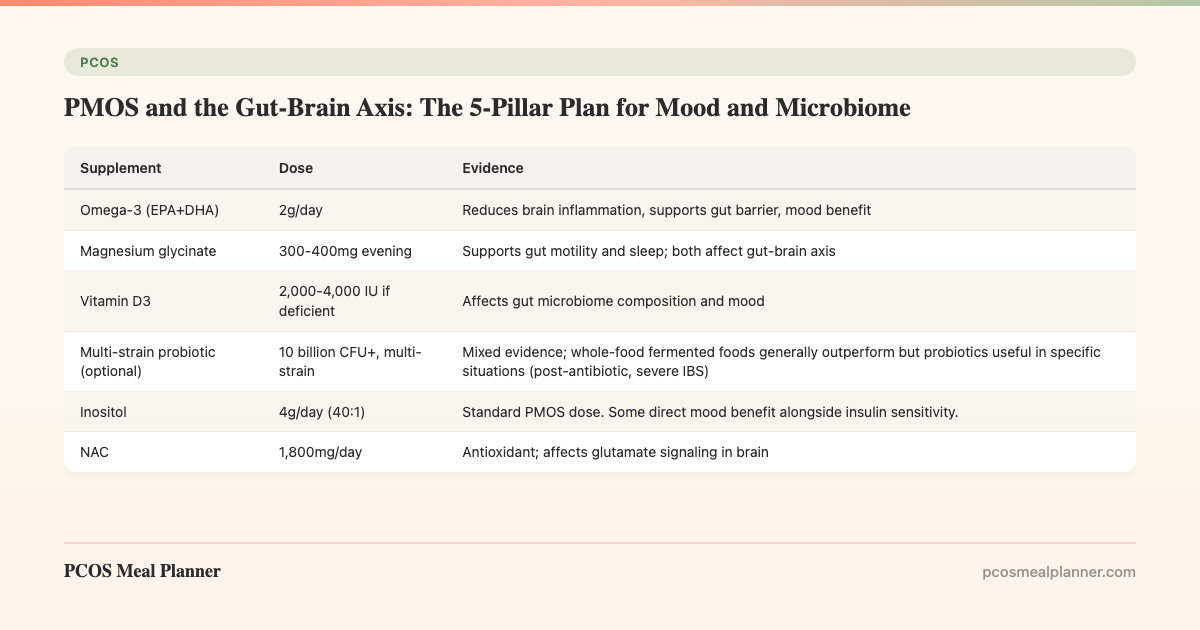
| Supplement | Dose | Evidence |
|---|---|---|
| Omega-3 (EPA+DHA) | 2g/day | Reduces brain inflammation, supports gut barrier, mood benefit |
| Magnesium glycinate | 300-400mg evening | Supports gut motility and sleep; both affect gut-brain axis |
| Vitamin D3 | 2,000-4,000 IU if deficient | Affects gut microbiome composition and mood |
| Multi-strain probiotic (optional) | 10 billion CFU+, multi-strain | Mixed evidence; whole-food fermented foods generally outperform but probiotics useful in specific situations (post-antibiotic, severe IBS) |
| Inositol | 4g/day (40:1) | Standard PMOS dose. Some direct mood benefit alongside insulin sensitivity. |
| NAC | 1,800mg/day | Antioxidant; affects glutamate signaling in brain |
| L-theanine (optional) | 200mg as needed | Calming amino acid; acute stress relief |
| Curcumin (with piperine) | 500-1,000mg/day | Anti-inflammatory; some mood benefit |
The gut-brain timeline
| Timeframe | What often changes |
|---|---|
| 1-2 weeks | Fibre changes start to affect gut transit. Magnesium effects on sleep and stress emerge. |
| 3-4 weeks | Microbiome diversity starts to shift on fermented foods. Mood often noticeably steadier. |
| 4-8 weeks | Omega-3 effects on mood and inflammation visible. Brain fog reduces. |
| 8-12 weeks | Significant mood improvement on consistent plan. Food cravings reduce greatly. |
| 3-6 months | Sustained microbiome and mood changes. Insulin sensitivity markers improve. |
Common PMOS gut-brain mistakes
- Reliance on probiotic capsules alone. Whole-food fermented foods generally outperform. Probiotics are not a substitute for the eating pattern.
- Aggressive elimination diets without proper trial. Removing food groups without structured elimination-and-reintroduction often reduces microbiome diversity further.
- Treating mental health symptoms separately from gut symptoms. The same intervention often improves both.
- Skipping fibre due to bloating without building gradually. Bloating in the first 1-2 weeks of increased fibre is normal and resolves; sticking with it produces the long-term benefit.
- Daily alcohol "to wind down" while expecting mental health improvement. Alcohol disrupts the gut-brain axis even at moderate intake.
- Expecting fast results. Microbiome change takes weeks. Mental health effects emerge over 4-8 weeks. Stay consistent through the early period when changes are not yet visible.
Often asked questions
What is the gut-brain axis in PMOS?
The gut-brain axis is the bidirectional communication between gut microbiome and brain via vagus nerve, neurotransmitter production by gut bacteria, and immune system signaling. In PMOS, the altered gut microbiome (lower diversity, fewer butyrate-producers, higher inflammatory bacteria per 2023 Endocrine systematic review of 19 studies) contributes directly to high depression, anxiety, brain fog, and food cravings.
How do I improve the gut-brain axis with PMOS?
5-pillar plan: 28-35g fibre per day (built gradually), fermented foods daily (kefir, sauerkraut, kimchi, miso), omega-3 (EPA+DHA) 2g/day, structured stress practice 10 minutes daily, avoid gut-brain disruptors (high alcohol, unnecessary antibiotics, daily ultra-processed food, chronic sleep restriction, chronic caloric restriction).
Can the gut affect PMOS mood symptoms?
Yes. Around 90 percent of the body's serotonin is produced in the gut. Gut bacteria produce significant GABA, dopamine precursors, and inflammatory markers that affect brain function. The 2024 Nutrients review of dietary interventions in PCOS found 25-35 percent improvement in depression scores at 12 weeks, comparable in magnitude to mild antidepressants.
Do probiotics help PMOS?
Mixed evidence. The 2024 Nutrients review found small improvements in fasting insulin and CRP but inconsistent mood and androgen effects. Whole-food fermented foods (kefir, sauerkraut, kimchi, miso) deliver more diverse bacteria more reliably than generic probiotic capsules. If using a supplement, multi-strain with at least 10 billion CFU and clinical trial evidence.
Why do I have brain fog with PMOS?
Three main mechanisms: insulin-driven post-meal glucose swings affect cognitive function, chronic low-grade inflammation crosses the blood-brain barrier and affects mood and cognition, and altered gut microbiome reduces neurotransmitter production. The 30/30/40 PMOS eating pattern plus gut-brain interventions address all three.
How long does it take to feel mental health improvement from gut interventions?
Mood often steadies in 3-4 weeks on fermented foods and increased fibre. Significant depression and anxiety score improvements emerge at 8-12 weeks. Sustained changes at 3-6 months. The effects compound with consistency rather than appearing dramatically.
Should I take antidepressants while working on PMOS gut-brain?
Antidepressants and gut-brain interventions are complementary, not competing. For moderate to severe depression or anxiety, medication is appropriate alongside dietary and lifestyle interventions. Many women find they can reduce or discontinue medication over 6-12 months on a sustained gut-brain plan, but this should be done in coordination with the prescribing doctor.
Are the gut-brain mental health benefits really comparable to antidepressants?
Per the 2024 Nutrients review, the magnitude of dietary intervention effects on depression scores in PCOS were similar to those seen with mild antidepressants over 12 weeks. The interventions also address the metabolic and gut-symptom pieces of PMOS that medications do not. For moderate to severe symptoms, medications remain first-line; for mild to moderate symptoms, dietary intervention is reasonable as first therapy.
Build a PMOS plan that supports gut and mental health
The same eating pattern that helps PMOS insulin also feeds the gut bacteria that affect mood.
The 30/30/40 pattern with fibre target and fermented foods is the foundation. Take the free phenotype quiz to start.
What to read next
- PMOS gut health
- PMOS anxiety and depression
- PMOS fatigue
- Best PMOS supplements
- PCOS is now PMOS: full renaming explainer
How this article was researched
Sources include the 2023 Endocrine systematic review of gut microbiome in PCOS (19 studies), the 2024 Nutrients review of probiotic and dietary interventions in PCOS, the 2021 Stanford fermented food study, the 2023 Lancet systematic review on mental health in PCOS, the 2019 Translational Psychiatry omega-3 in depression meta-analysis, and the 2024 Cell Host and Microbe review of gut-brain axis mechanisms. PCOS was renamed PMOS on 12 May 2026; gut-brain evidence is unchanged. This article is informational and not medical advice. See our editorial standards.
Community Comments
Add a comment