Managing PMOS at work involves three main challenges: the mid-afternoon energy crash from insulin swings, the late-luteal-phase mood and focus changes, and the cumulative load of doctor appointments and supplement schedules. The 6-pillar workplace plan: a protein-and-fat breakfast before starting the workday (eliminates the 2-3pm crash), a 30/30/40 packed lunch (skip the canteen carb defaults), 10-15 minute walks after lunch (17 percent glucose spike reduction), structured snacks instead of grazing on office food, cycle-aware scheduling where possible (heavy work in the follicular phase, lighter tasks in the late luteal), and using workplace flexibility for appointments.
Most women see meaningful workplace function improvements within 2 to 4 weeks of implementing the food and walking pieces. PMOS is the new name for PCOS as of 12 May 2026; workplace strategies are unchanged.
The 3 main PMOS challenges at work
1. The mid-afternoon energy crash
The classic 2-3pm slump that hits most workers harder for women with PMOS. The mechanism: insulin resistance produces sharper post-lunch glucose swings. The post-lunch high is followed by a dip 2-4 hours later, producing fatigue, brain fog, and sugar cravings around 3pm. For desk workers, this hits during the afternoon meetings and project work window.
The fix is upstream: the protein-and-fat breakfast before starting work prevents the morning glucose swing that sets up the afternoon crash. 30/30/40 lunch with vegetables-and-protein-first ordering keeps the post-meal glucose response moderate. A 10-15 minute walk after lunch blunts the spike further (17 percent reduction per the 2023 Diabetes Care study).
2. The late-luteal-phase mood and focus changes
The week before a period (or the equivalent window in irregular cycles) often brings lower energy, fragmented sleep, amplified anxiety, and reduced cognitive sharpness. PMDD (premenstrual dysphoric disorder) is 2-3 times more common in PMOS. For workers, this is often when productivity feels lowest and patience shortest.
Practical adaptations:
- Schedule heavy creative or strategic work earlier in the cycle (follicular phase) when possible
- Use the late luteal phase for administrative tasks, routine work, organising
- Reduce non-essential meetings during this window if you have the flexibility
- Prioritise sleep during this week (early bedtime, no late caffeine)
- Treat symptoms (magnesium evening, walking, omega-3) rather than pushing through
3. The cumulative load of medical management
PMOS management often includes 4-8 doctor appointments per year, monthly lab draws during phases of treatment, supplement schedules, dietary planning, and the ongoing mental load of tracking symptoms and cycles. For full-time workers, this load often invisibly extends the workday.
Strategies that help:
- Use workplace healthcare flexibility (FMLA in the US, similar protections in other regions) for appointments
- Schedule lab draws and appointments at the start or end of the day where possible
- Batch supplement routines (morning batch + evening batch with weekly pillbox prep)
- Use a single calendar for medical appointments alongside work calendar
The 6-pillar PMOS workplace plan
Pillar 1: Protein-and-fat breakfast before work
The single most leveraged change for workplace energy. 25-35g of protein and 15-20g of fat eaten within 1 hour of waking sets blood glucose and insulin patterns for the entire workday. Quick options:
- 3-egg vegetable omelette with cheese and avocado on rye (10 min)
- Greek yogurt + nuts + ground flaxseed + berries (3 min)
- Cottage cheese + apple + almond butter (2 min)
- Overnight oats made the night before + protein powder + ground flaxseed (60 seconds in the morning)
- Boiled eggs (batch-cooked Sunday) + half avocado + slice of sourdough (3 min)
Skipping breakfast or eating a carb-only breakfast (toast + jam, sugary cereal) sets up the afternoon crash that derails workday focus.
Pillar 2: Packed lunch over canteen defaults
Most workplace canteens default to high-carb, low-protein meals (pasta, rice dishes, sandwiches). A packed PMOS lunch costs less, takes 5-10 minutes to assemble, and protects the afternoon energy. Options that work:
- Grain bowl (quinoa + grilled protein + roasted vegetables + olive oil dressing)
- Lentil and feta salad (cooked lentils + crumbled feta + cucumber + tomato + olive oil)
- Mediterranean platter (tinned sardines + hard-boiled eggs + olives + cucumber + sourdough)
- Leftover dinner repurposed (the easiest and cheapest option)
- Wraps with protein focus (tortilla + hummus + chicken + greens + tomato)
Aim for 30-40g protein, 15-20g fat, 8-12g fibre. Pack the night before to remove the morning decision.
Pillar 3: 10-15 minute walks after lunch
The highest-leverage non-dietary intervention for the afternoon crash. Post-meal walking reduces glucose spike by around 17 percent per the 2023 Diabetes Care study. Practical implementations:
- Walk outside the office for 10-15 minutes after lunch
- Take phone calls walking instead of sitting
- Use stairs instead of lifts after meals
- Pace during your next meeting if it does not require shared screens
For remote workers, a structured 10-15 minute walk between lunch and the next meeting is one of the easiest workday changes to implement.
Pillar 4: Structured snacks instead of grazing on office food
Open offices often have constant access to biscuits, pastries, doughnuts, and other ultra-processed snacks. Each grazing episode produces a small glucose swing; cumulative across the day, this drives the afternoon crash and evening cravings.
One structured snack between lunch and dinner works better than grazing. Options:
- 1 apple + 30g almonds (kept at desk)
- Greek yogurt cup + ground flaxseed + berries
- 2 boiled eggs + cherry tomatoes
- Cottage cheese + cucumber + seeded crackers
- 30g almonds + small piece of dark chocolate (70%+)
Keep these at your desk so the office snacks are not the default option.
Pillar 5: Cycle-aware scheduling where possible
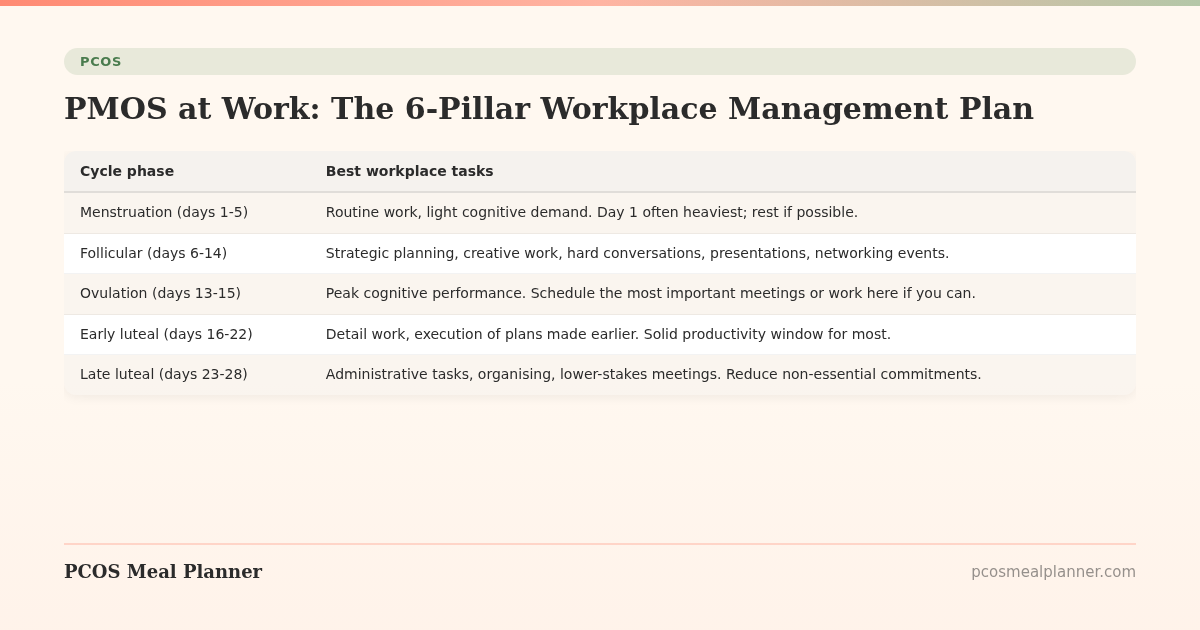
If you have flexibility over your schedule, align work tasks with cycle phases:
| Cycle phase | Best workplace tasks |
|---|---|
| Menstruation (days 1-5) | Routine work, light cognitive demand. Day 1 often heaviest; rest if possible. |
| Follicular (days 6-14) | Strategic planning, creative work, hard conversations, presentations, networking events. |
| Ovulation (days 13-15) | Peak cognitive performance. Schedule the most important meetings or work here if you can. |
| Early luteal (days 16-22) | Detail work, execution of plans made earlier. Solid productivity window for most. |
| Late luteal (days 23-28) | Administrative tasks, organising, lower-stakes meetings. Reduce non-essential commitments. |
For PMOS with irregular cycles, track energy and mood instead and schedule heavy work when energy is good.
Pillar 6: Use workplace flexibility for appointments
Most knowledge workers have some flexibility for medical appointments. Strategies:
- FMLA (Family and Medical Leave Act, US) covers serious health conditions including PMOS-related fertility treatment and pregnancy
- Many employers offer flex-time or remote work options that accommodate medical care
- Schedule appointments at the start (7-9am) or end (4-6pm) of the day where possible
- Batch appointments quarterly (cluster lab draws, follow-ups, supplement refills) to reduce disruption
- If symptoms are significantly impacting work, discuss reasonable accommodations with HR if you have a chronic condition (PMOS often qualifies)
Specific workplace situations
Shift work and PMOS
Shift work, particularly night shifts and rotating shifts, is harder for PMOS due to circadian disruption and cortisol effects:
- Keep a protein-and-fat first meal of your day regardless of when "morning" is for you
- Try to keep a consistent sleep schedule on days off (do not flip to "normal" sleep on weekends)
- Light exposure during your work hours and darkness during your sleep hours
- If possible, request fixed shifts rather than rotating
- Be especially attentive to sleep quality (consider a sleep study; OSA is around 30x more common in PMOS)
Travel for work
Frequent business travel compounds PMOS challenges (sleep disruption, restaurant eating, time zone shifts). See PMOS travel and eating out guide for detailed strategies.
Remote work and PMOS
Remote work generally favours PMOS management: more cycle-aware scheduling possible, easier to walk after meals, less workplace snack temptation, more flexibility for appointments. Risks: more sedentary time (counter with movement breaks), less structured eating times (set them deliberately), social isolation can amplify PMOS mental health symptoms (intentional social connection helps).
High-pressure or long-hours work
Long hours and high stress amplify the cortisol piece of PMOS, which worsens insulin resistance, visceral fat, androgens, and cycles. If your work demands genuinely exceed sustainable hours over months, the PMOS interventions can only partially compensate. Consider whether work load is sustainable.
PMOS and disclosure at work
Whether to disclose PMOS at work is personal. Considerations:
- You are not required to disclose PMOS (or any medical condition) unless you are requesting specific accommodations
- Disclosing to a direct manager can simplify appointment scheduling and accommodations
- Some women find it useful to mention "a chronic condition" without specifying PMOS
- HR conversations should be specific to accommodations (flex time, occasional remote days, longer breaks during the worst symptom windows) rather than open-ended disclosure
- If pregnancy planning involves frequent appointments, disclosure is often necessary
Workplace red flags that compound PMOS
- Constant ultra-processed snacks at desk or in shared kitchen. Convert one drawer to your structured snacks.
- "Lunch at the desk" culture. Try walking outside or to a different room to eat, even if just 15 minutes.
- Late-evening work meetings or calls. Disrupts sleep, which amplifies all PMOS symptoms.
- No flexibility for medical appointments. If this is chronic, consider whether the role is sustainable for PMOS management.
- Heavy alcohol or eating culture for work events. Decline strategically; alternate alcoholic with non-alcoholic drinks at events you do attend.
- Open offices with constant interruption. Compound focus difficulty in the late luteal phase. Headphones, focus blocks, or remote days where possible.
Often asked questions
How do I manage PMOS at work?
6-pillar plan: protein-and-fat breakfast before work, packed PMOS lunch instead of canteen defaults, 10-15 minute walks after lunch, structured snacks instead of grazing on office food, cycle-aware scheduling where possible, and workplace flexibility for medical appointments. Most women see workplace function improvements within 2-4 weeks.
Why do I crash at work in the afternoon with PMOS?
Insulin-resistance-driven post-lunch glucose swing. Post-lunch high followed by sharper dip 2-4 hours later produces fatigue, brain fog, and sugar cravings around 3pm. Fix upstream: protein-and-fat breakfast prevents the morning swing that sets up the afternoon crash. 30/30/40 lunch with vegetables-and-protein-first ordering keeps post-meal glucose moderate. 10-15 minute walk after lunch.
What should I eat for lunch at work with PMOS?
30/30/40 lunch: 30-40g protein, 15-20g fat, 8-12g fibre. Grain bowl (quinoa + grilled protein + roasted vegetables), lentil and feta salad, Mediterranean platter (sardines + eggs + olives + cucumber), leftover dinner repurposed, wraps with protein focus. Pack the night before.
Should I tell my employer I have PMOS?
Personal decision. Not required unless requesting specific accommodations. Disclosing to a direct manager can simplify appointment scheduling. Some prefer to mention "a chronic condition" without specifics. HR conversations should be specific to accommodations rather than open-ended disclosure.
How do I handle PMOS during a busy work week?
Prioritise the 3 highest-leverage interventions even when time-strapped: protein breakfast (even a quick Greek yogurt cup works), packed lunch (leftover dinner), 10-minute walk after lunch. Skip the optional pieces (cycle-aware scheduling, structured stress practice) temporarily. Return to the full plan when the busy period ends.
Can I work shifts with PMOS?
Yes but harder. Shift work, particularly night and rotating shifts, is harder for PMOS due to circadian disruption and cortisol effects. Keep protein-fat first meal of your day regardless of clock time. Consistent sleep schedule on days off. Light exposure during work hours. Get a sleep study if any OSA signs.
Does work stress make PMOS worse?
Yes. Chronic work stress raises cortisol, which amplifies insulin resistance, visceral fat, adrenal androgens, and cycle disruption. If work demands genuinely exceed sustainable hours over months, the PMOS interventions can only partially compensate. Address the underlying load where possible.
What workplace accommodations are reasonable for PMOS?
Flex time for medical appointments, occasional remote work days during high-symptom windows, longer breaks during the late luteal phase if cognitive load is intensive, ergonomic considerations if visceral pain or fatigue is significant. PMOS often qualifies as a chronic condition under disability protections (ADA in US, Equality Act in UK).
Build a PMOS plan that works with a full work week
The PMOS pattern is sustainable through a full work week if you set up the food and movement pillars.
A PMOS meal plan you can pack the night before makes workplace eating easier. Take the free phenotype quiz to start.
What to read next
- PMOS fatigue
- PMOS stress and cortisol
- PMOS budget meal planning
- PMOS travel and eating out
- PCOS is now PMOS: full renaming explainer
How this article was researched
Sources include the 2023 International Evidence-based Guideline for the Assessment and Management of PCOS, the 2023 Diabetes Care post-meal walking trial, the Jakubowicz et al. 2013 calorie-timing trial, the 2024 Journal of Occupational and Environmental Medicine review on chronic conditions and workplace accommodations, and the US ADA and UK Equality Act guidance on chronic conditions at work. PCOS was renamed PMOS on 12 May 2026; workplace strategies are unchanged. This article is informational and not medical or legal advice. See our editorial standards.
Community Comments
Add a comment