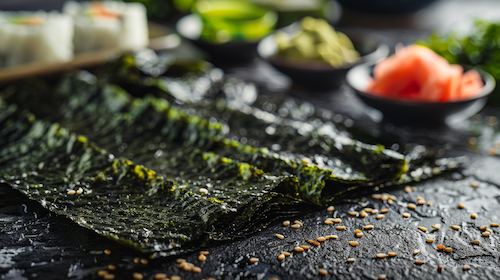
This mineral-rich sea vegetable offers several benefits that specifically address common PCOS challenges.
What Makes Nori Helpful for PCOS?
Nori, the dark, paper-thin seaweed used to wrap sushi, stands out among sea vegetables for its impressive nutritional profile that can support women with PCOS in multiple ways:
- Iodine content: Nori provides natural iodine that supports thyroid function – crucial since thyroid issues often accompany PCOS.
- Rich mineral profile: Contains magnesium, calcium, iron, and potassium that many women with PCOS are deficient in.
- Anti-inflammatory properties: Contains compounds that may help reduce the chronic inflammation linked to PCOS.
- Low carb content: Makes it ideal for blood sugar management, a common concern in PCOS.
- Fiber content: Supports gut health, which is increasingly linked to hormone balance.
The Best Types of Nori for PCOS care
When selecting nori for PCOS benefits, quality matters greatly. Here are the top options to consider:
1. Organic Unflavored Nori Sheets
For PCOS care, organic unflavored nori sheets offer the purest form of this sea vegetable. Look for dark green or black sheets with a subtle sheen – indicators of freshness and nutrient density. Organic certification helps ensure your nori is free from heavy metals and grown in clean waters.
These sheets can be eaten as snacks, used for sushi, or crumbled as garnish over meals for a mineral boost. For maximum PCOS benefits, consume 1-2 sheets daily.
2. Raw Nori (Untoasted)
Raw or minimally processed nori retains more nutrients than heavily toasted varieties. The minimal processing preserves delicate minerals and anti-inflammatory compounds that support hormone balance.
Raw nori has a stronger ocean flavor but provides maximum nutritional benefits for PCOS care. This type works exceptionally well crumbled into soups or salads.
3. PCOS-Friendly Seasoned Nori
If plain nori is too strong for your taste, look for minimally seasoned options with PCOS-friendly ingredients. Choose varieties seasoned with olive oil and sea salt rather than those containing sugar, MSG, or vegetable oils that may worsen inflammation.
Check ingredient lists carefully, as many commercially seasoned nori products contain added sugars or questionable oils that can counteract the PCOS benefits.
How Nori Supports PCOS Hormone Balance
Nori contains several compounds that may directly benefit hormonal health for women with PCOS:
- Fucoxanthin: This carotenoid found in nori has been studied for its potential to improve insulin resistance, a core issue in PCOS.
- Alginate: A fiber that may help with blood sugar regulation and increase feelings of fullness, supporting weight control goals.
- Tyrosine: An amino acid that supports thyroid hormone production, often compromised in women with PCOS.
Regular intake of high-quality nori may contribute to improved hormone balance by supplying these supportive nutrients. For best results, include nori into your diet alongside other PCOS-friendly foods and an anti-inflammatory eating pattern.
Practical Ways to Include Nori in Your PCOS Diet
Adding nori to your meals doesn't have to mean eating sushi every day. Try these practical incorporation methods:
- Crumble sheets over salads for a mineral boost
- Add to soups for umami flavor and nutrients
- Make "nori chips" by lightly toasting with olive oil
- Use as wraps instead of tortillas for lower-carb meals
- Blend into smoothies (start with small amounts)
- Try nori's cousin kombu in quinoa dishes for similar benefits
For optimal results, aim to include sea vegetables like nori several times weekly rather than just occasionally.
What To Look For When Buying Nori for PCOS
Not all nori products offer the same benefits for PCOS care. When shopping, prioritize:
- Organic certification: Ensures the nori was grown in clean waters
- Testing for heavy metals: Some brands verify their products are free from contaminants
- Minimal ingredients: Fewer additives means less potential for inflammation
- Dark color: Indicates higher nutrient content
- Proper storage: Sealed packages protect delicate nutrients
Quality nori should have a clean, oceanic smell without fishy or off-putting odors. Store opened packages in airtight containers with moisture absorbers to keep freshness and nutrient content.
Combining Nori with Other PCOS-Supportive Foods
For maximum benefit, pair nori with other foods that support PCOS care:
- Add to wild-caught salmon dishes for an omega-3 and mineral combination
- Include in seed-rich salads for extra hormone support
- Pair with fermented foods like kefir or kimchi for gut and hormone benefits
- Use as a wrap for avocado and other healthy fats that support hormone production
This complementary approach can amplify the positive effects of nori on PCOS symptoms and overall health.
Frequently Asked Questions About Nori for PCOS
Can nori help with PCOS weight control?
Yes, nori can support PCOS weight control in several ways. Its high fiber content promotes feelings of fullness while its iodine supports thyroid function and metabolism.
Also, the alginate in nori has been shown to reduce fat absorption and may help regulate blood sugar levels, addressing the insulin resistance often behind PCOS-related weight challenges.
For best results, include nori into a balanced diet focused on whole foods and blood sugar management.
How much nori should I eat daily for PCOS benefits?
For PCOS benefits, consuming 1-2 sheets of nori daily provides helpful minerals without excessive iodine intake. Start with smaller amounts (half a sheet) if you're new to sea vegetables and gradually increase.
Consistency matters more than quantity – regular intake several times weekly can help keep mineral levels that support hormone balance. If you have thyroid issues alongside PCOS, consult your doctor about the ideal amount for your specific situation.
Is nori safe to eat with PCOS-related thyroid problems?
Nori is generally considered safe for most women with PCOS and thyroid issues when consumed in moderation. With lower iodine content than many other seaweeds (like kelp), nori provides a gentler source of this essential mineral.
However, if you have diagnosed thyroid disease, especially Hashimoto's thyroiditis which sometimes accompanies PCOS, consult your doctor before adding regular nori intake. They may recommend monitoring your thyroid levels as you include this sea vegetable into your diet.
Does nori contain harmful heavy metals that could worsen PCOS?
Quality nori often contains lower levels of heavy metals compared to other seaweeds due to its cultivation methods and processing. To minimize exposure, choose organic nori from brands that conduct regular testing for contaminants and harvest from clean waters.
Some research suggests that the alginate in seaweeds may actually help bind to heavy metals in the digestive tract, potentially aiding their removal from the body. When purchasing nori for PCOS support, look for products with transparent sourcing details and quality certifications.
Can nori help reduce PCOS-related inflammation?
Yes, nori contains several compounds with anti-inflammatory properties that may help address the chronic inflammation linked to PCOS. Its fucoxanthin content has been studied for anti-inflammatory effects, while its rich mineral profile supports proper cellular function and immune response.
The omega-3 fatty acids in nori, though present in small amounts, contribute to its inflammation-modulating potential.
For maximum anti-inflammatory benefit, combine nori with other anti-inflammatory foods like fatty fish, turmeric, berries. Olive oil as part of a complete approach to managing PCOS-related inflammation.
Community Comments
Add a comment