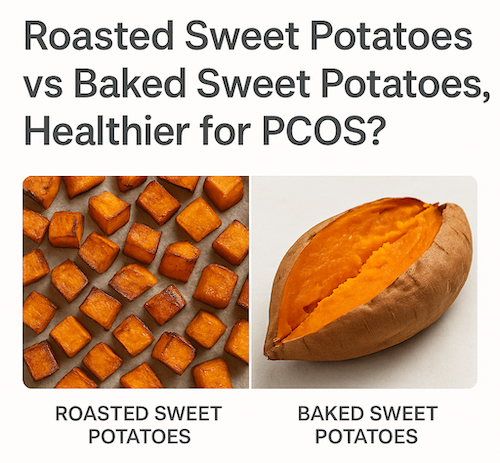
Nutritional Differences: Roasted vs Baked Sweet Potatoes
Both roasted and baked sweet potatoes offer similar nutritional profiles, but cooking methods can influence specific aspects important for PCOS care:
Glycemic Impact
Roasted sweet potatoes often have a slightly lower glycemic index compared to baked ones. The higher heat and shorter cooking time in roasting can help preserve fiber structure, which slows glucose absorption.
This makes roasted sweet potatoes potentially better for blood sugar control in women with PCOS.
Nutrient Retention
Baked sweet potatoes retain more water-soluble vitamins like vitamin C and some B vitamins due to the gentler, enclosed cooking environment. However, roasted sweet potatoes may concentrate certain antioxidants like beta-carotene through moisture reduction.
PCOS-Specific Benefits of Each Cooking Method
Roasted Sweet Potatoes for PCOS
- Lower glycemic response due to caramelization and fiber preservation
- Enhanced flavor without added sugars
- Crispy texture that increases satiety
- Better portion control due to concentrated flavors
Baked Sweet Potatoes for PCOS
- Higher moisture content supports hydration
- Gentler on digestive system
- Preserves more heat-sensitive nutrients
- Easier to digest for those with gut sensitivities
Best Cooking Practices for PCOS care
Optimal Roasting Method
For the best PCOS-friendly roasted sweet potatoes:
- Cut into uniform pieces for even cooking
- Roast at 425°F for 25-30 minutes
- Use minimal oil - try avocado oil for its stability at high heat
- Season with anti-inflammatory spices like cinnamon or turmeric
Optimal Baking Method
For PCOS-friendly baked sweet potatoes:
- Pierce skin several times before baking
- Bake at 400°F for 45-60 minutes depending on size
- Don't wrap in foil to keep skin nutrients
- Test doneness with a fork - they should be tender throughout
Including Sweet Potatoes into Your PCOS Meals
Both roasted and baked sweet potatoes work well in PCOS meal planning. Try these insulin-control roasted sweet potatoes or stuffed sweet potatoes for balanced PCOS meals.
Consider pairing your sweet potatoes with:
- Lean proteins to slow glucose absorption
- Healthy fats like those found in ghee or nuts
- Anti-inflammatory spices and herbs
Making the Right Choice for Your PCOS Journey
The choice between roasted sweet potatoes vs baked sweet potatoes for PCOS depends on your individual needs:
- Choose roasted if you need better blood sugar control and prefer more intense flavors
- Choose baked if you have digestive sensitivities or want maximum nutrient retention
- Rotate both methods for variety and balanced nutrition
Whether you choose roasted or baked, sweet potatoes remain an excellent choice for PCOS care. Their fiber, vitamins, and minerals support hormone balance and blood sugar stability. The key is finding the preparation method that you enjoy and will eat consistently.
For personalized meal planning that includes both roasted and baked sweet potatoes into your PCOS diet, consider using a specialized service like PCOS Meal Planner - a personalized meal planning service that prioritizes well being by helping you eat better, feel better. Effectively manage PCOS symptoms in a friendly, trustworthy way.
Research Methodology
This article is based on peer-reviewed research on glycemic index, nutrient retention in cooking methods, and PCOS dietary management. Key sources include studies from the National Institutes of Health (NIH) and registered dietitian recommendations for PCOS care.
Frequently Asked Questions
Are roasted sweet potatoes better than baked for blood sugar control?
Roasted sweet potatoes may have a slightly lower glycemic index due to reduced moisture and preserved fiber structure, making them potentially better for blood sugar control in women with PCOS.
How often can I eat sweet potatoes with PCOS?
You can enjoy sweet potatoes daily as part of a balanced PCOS diet. They provide sustained energy and important nutrients that support hormone balance.
Should I eat sweet potato skin for PCOS benefits?
Yes, sweet potato skin contains additional fiber and nutrients that can help with blood sugar control and provide extra antioxidants helpful for PCOS care.
What's the best way to season sweet potatoes for PCOS?
Use anti-inflammatory spices like cinnamon, turmeric, or ginger. Avoid high-sugar seasonings and opt for herbs and spices that support hormone balance.
Can I meal prep roasted and baked sweet potatoes for PCOS?
Absolutely! Both roasted and baked sweet potatoes store well in the refrigerator for up to 5 days and can be reheated easily for quick PCOS-friendly meals.
Myths and Misconceptions
Truth: Sweet potatoes are complex carbs that provide sustained energy and important nutrients for PCOS care.
Truth: While some water-soluble vitamins may decrease, roasting concentrates other nutrients and creates helpful compounds.
Truth: Sweet potatoes are naturally sweet and develop more flavor through proper roasting or baking techniques.
Benefits of Sweet Potatoes for PCOS
Nutritional Benefits
- High in fiber for blood sugar stability
- Rich in beta-carotene for antioxidant support
- Good source of potassium for heart health
- Contains vitamin C for immune function
- Provides complex carbs for sustained energy
Hormone Impact Benefits
- Supports insulin sensitivity through fiber content
- Provides nutrients that support adrenal function
- Anti-inflammatory properties may help reduce PCOS symptoms
- Supports healthy cortisol levels through B vitamins
- May help regulate menstrual cycles through nutrient density
Quick Assessment: Which Cooking Method is Right for You?
Take this quick assessment:
- Do you struggle with blood sugar spikes? → Choose roasted
- Do you have digestive sensitivities? → Choose baked
- Do you prefer crispy textures? → Choose roasted
- Do you want maximum vitamin retention? → Choose baked
- Are you meal prepping? → Both work well
Next Steps for Your PCOS Journey
Now that you understand the differences between roasted sweet potatoes vs baked sweet potatoes for PCOS, here are your next steps:
- Try both cooking methods to see which you prefer
- Experiment with healthy sweet potato recipes that include protein and healthy fats
- Track how different preparations affect your blood sugar and energy levels
- Consider working with a registered dietitian familiar with PCOS for personalized guidance
Join Our PCOS Community
Managing PCOS is easier when you're not alone. Share your favorite sweet potato recipes and cooking tips with other women who understand your journey. Your experiences with roasted vs baked sweet potatoes could help someone else make the best choice for their PCOS care.
Remember, the best PCOS diet is one you can stick to long-term. Whether you choose roasted, baked, or both, sweet potatoes can be a delicious and nutritious part of your PCOS meal planning strategy.
Community Comments
Add a comment