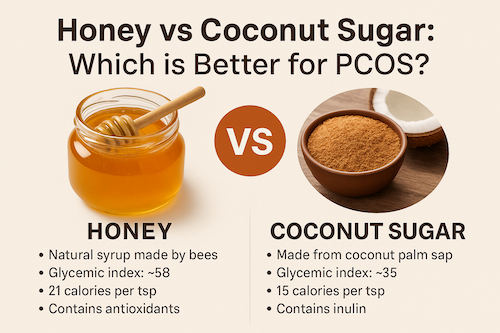
Honey vs Coconut Sugar: Quick Overview
- Honey is a natural syrup made by bees. It contains antioxidants and small amounts of vitamins and minerals, but also has a higher glycemic index.
- Coconut sugar is made from the sap of coconut palms. It’s lower on the glycemic index and contains inulin, a type of fiber that may help blood sugar regulation.
PCOS Sweeteners: Nutritional Comparison
| Sweetener | Glycemic Index | Calories (per tsp) | Notable Nutrients |
|---|---|---|---|
| Honey | ~58 | 21 | Antioxidants, trace vitamins |
| Coconut Sugar | ~35 | 15 | Inulin, potassium, zinc |
Which is Better for Blood Sugar Balance?
For women with PCOS, maintaining steady blood sugar levels is key to managing insulin resistance and hormone imbalances. While both are more nutrient-dense than white sugar, coconut sugar's lower glycemic index and presence of inulin give it a slight edge over honey for most people with PCOS.
When Might Honey Be a Better Choice?
- You need quick energy before a workout.
- You’re fighting a sore throat or mild infection (honey’s antimicrobial properties can help).
- You use small amounts occasionally in tea or dressings.
Tips for Choosing Healthier PCOS Sweeteners
- Limit all added sugars—even natural ones.
- Pair sweeteners with protein or fiber to reduce blood sugar spikes.
- Try honey in moderation for flavor, not as a health food.
- Use coconut sugar in baking as a 1:1 replacement for white sugar.
FAQ
Is honey anti-inflammatory for PCOS?
Raw honey contains antioxidants and may offer mild anti-inflammatory benefits. However, it still raises blood sugar and should be used sparingly.
Is coconut sugar good for insulin resistance?
Coconut sugar contains inulin, a prebiotic fiber that may help support insulin sensitivity. It's lower GI than regular sugar but still should be limited.
Can I use honey in PCOS-friendly recipes?
Yes, in moderation. Try using it in recipes like kefir dressings or golden milk.
Which sweetener has more nutrients—honey or coconut sugar?
Both offer trace nutrients. Honey has antioxidants, while coconut sugar contains potassium and inulin. Neither should be considered a nutrient source.
Should I avoid all sweeteners with PCOS?
Not necessarily. Small amounts of natural sweeteners can be part of a balanced PCOS diet when paired with fiber, fat, or protein.
Community Comments
Add a comment