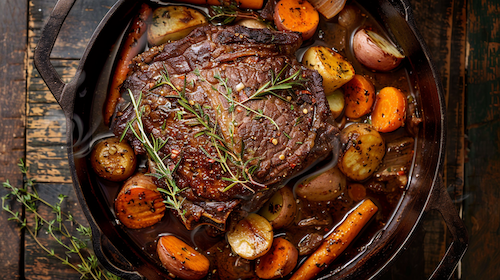
His Italian-style pot roast (Brasato al Barolo) showcases this philosophy perfectly, and with thoughtful changes, it becomes an excellent low glycemic option for women managing PCOS.
Traditional pot roast recipes often rely on high-glycemic vegetables and refined ingredients that can spike blood sugar levels.
This PCOS-friendly adaptation maintains the rich, comforting essence of Tucci's original while including ingredients that support hormone balance and stable blood sugar - key factors in managing PCOS symptoms effectively.
Understanding PCOS and Low Glycemic Cooking
Polycystic Ovary Syndrome affects how your body processes insulin, making blood sugar management crucial for symptom control. Low glycemic cooking helps prevent insulin spikes that can worsen PCOS symptoms like weight gain, irregular periods, and hormone imbalances.
Stanley Tucci's Italian-style pot roast naturally aligns with PCOS-friendly principles. The slow braising method breaks down tough cuts of beef into tender, protein-rich meals that help stabilize blood sugar.
The original recipe's emphasis on herbs, aromatics, and wine creates complex flavors without relying on processed ingredients.
Stanley Tucci's Pot Roast: The PCOS-Friendly Version
Ingredients for PCOS-Friendly Pot Roast
- 3 lbs grass-fed chuck roast (hormone-free)
- 2 tbsp olive oil
- 1 large onion, diced
- 4 cloves garlic, minced
- 2 celery stalks, chopped
- 1 cup red wine (optional, can substitute with bone broth)
- 2 cups low-sodium beef bone broth
- 2 tbsp tomato paste
- 2 bay leaves
- Fresh thyme and rosemary sprigs
- 1 lb turnips, cut into chunks (instead of potatoes)
- 1 lb carrots, cut into 2-inch pieces
- Salt and black pepper to taste
Preparation Method
The key to successful PCOS-friendly pot roast lies in the preparation and ingredient choices. Start by selecting grass-fed, hormone-free beef, which provides better fatty acid profiles and avoids added hormones that can disrupt your body's delicate hormonal balance.
Season the roast generously with salt and pepper, then sear it in olive oil until all sides develop a rich, caramelized crust. This step, emphasized in Tucci's cooking philosophy, creates the flavor foundation for the entire dish.
The Maillard reaction during searing develops complex flavors that make the finished pot roast deeply satisfying.
Replace traditional potatoes with turnips or radishes to much lower the glycemic impact. These root vegetables provide similar texture and absorb the rich braising liquid beautifully while maintaining stable blood sugar levels.
This simple swap transforms a high-glycemic dish into a PCOS-friendly meal that won't cause insulin spikes.
Nutritional Benefits for PCOS care
This adapted stanley tucci pot roast recipe provides several key nutrients helpful for PCOS care:
High-Quality Protein
The chuck roast delivers about 25-30 grams of protein per serving, supporting stable blood sugar levels and promoting satiety. Adequate protein intake helps reduce cravings and supports healthy weight control, both crucial for PCOS symptom control.
Anti-Inflammatory Compounds
Fresh herbs like rosemary and thyme contain powerful antioxidants that help reduce inflammation - a key factor in PCOS development. The slow cooking process allows these helpful compounds to infuse throughout the dish, maximizing their therapeutic potential.
Blood Sugar Stabilization
By replacing high-glycemic potatoes with turnips and emphasizing protein-rich ingredients, this pot roast helps keep steady blood sugar levels. This stability is essential for managing insulin resistance, a core component of PCOS.
Serving Suggestions and Meal Planning
Serve your PCOS-friendly pot roast over cauliflower rice or alongside leafy green salads to create a complete, balanced meal. The combination of lean protein, low-glycemic vegetables, and healthy fats supports optimal hormone function while satisfying comfort food cravings.
This pot roast recipe also works excellently for meal prep, as flavors improve over time and leftovers can be repurposed into soups, salads, or grain bowls throughout the week.
⚠️ Important Considerations
While this recipe is designed to be PCOS-friendly, individual responses to foods can vary. Track your blood sugar response and adjust portions or ingredients based on your specific needs. Consider working with a registered dietitian familiar with PCOS care for personalized guidance.
Cooking Tips for Success
Following Stanley Tucci's approach to Italian cooking means focusing on technique and ingredient quality. Use a heavy-bottomed Dutch oven or slow cooker to ensure even heat distribution.
The low, slow cooking method is essential - rushing the process will result in tough, chewy meat rather than the fork-tender texture that makes pot roast so satisfying.
Allow the pot roast to rest for 10-15 minutes after cooking before slicing. This resting period allows juices to redistribute throughout the meat, ensuring each bite remains moist and flavorful. The patience required in this step reflects Tucci's philosophy that good food cannot be rushed.
Hormone-Supporting Changes
To further enhance the PCOS-friendly nature of this pot roast, consider these additional changes:
- Add a handful of dark leafy greens during the last 30 minutes of cooking
- Include anti-inflammatory spices like turmeric or ginger in the herb bundle
- Use bone broth instead of regular stock for additional collagen and minerals
- Finish with a sprinkle of fresh herbs for additional antioxidants
These simple additions transform an already PCOS-friendly recipe into a therapeutic meal that actively supports hormone balance and reduces inflammation.
Storage and Reheating
Store leftover pot roast in the refrigerator for up to 4 days or freeze for up to 3 months. When reheating, add a splash of bone broth to keep moisture and prevent the meat from drying out. The flavors actually improve after a day or two, making this an ideal make-ahead meal for busy weeks.
This Stanley Tucci-inspired pot roast adaptation proves that managing PCOS doesn't mean sacrificing flavor or satisfaction.
By making thoughtful ingredient swaps and following time-tested cooking techniques, you can enjoy comforting, restaurant-quality meals that support your health goals and keep PCOS symptoms in check.
Remember, successful PCOS care involves more than just diet - it requires a complete approach including regular exercise, stress control, and adequate sleep. However, meals like this PCOS-friendly pot roast can be a delicious foundation for your healthy lifestyle journey.
Research and Evidence
The diet changes in this recipe are based on peer-reviewed research showing the benefits of low glycemic index diets for PCOS care.
According to studies published in the Journal of Clinical Endocrinology & Metabolism, low glycemic index diets can improve insulin sensitivity and reduce inflammation in women with PCOS.
The systematic review and meta-analysis by Faghfoori et al. (2021) showed significant improvements in reproductive and clinical profiles among women with PCOS following low glycemic index dietary interventions.
Also, research from the Johns Hopkins School of Medicine emphasizes the importance of anti-inflammatory foods and adequate protein intake for PCOS care, both of which are central to this recipe adaptation.
Frequently Asked Questions
Can I use regular potatoes instead of turnips in this PCOS-friendly pot roast?
While regular potatoes are delicious, they have a higher glycemic index that can cause blood sugar spikes - not ideal for PCOS care. Turnips, radishes, or jicama provide similar texture and absorb flavors beautifully while maintaining stable blood sugar levels.
If you must use potatoes, choose small portions of waxy varieties like fingerlings and pair them with plenty of protein and healthy fats to minimize glycemic impact.
How does this Stanley Tucci pot roast adaptation help with PCOS symptoms?
This recipe addresses multiple PCOS concerns simultaneously. The high protein content helps stabilize blood sugar and reduce cravings, while the low glycemic vegetables prevent insulin spikes that can worsen PCOS symptoms.
Anti-inflammatory herbs like rosemary and thyme help reduce systemic inflammation, and the slow cooking method preserves nutrients while creating a satisfying meal that prevents overeating. The combination supports hormone balance, weight control, and overall PCOS symptom control.
Can I make this pot roast in a slow cooker for easier PCOS meal prep?
Absolutely! This recipe adapts perfectly to slow cooker preparation, making it ideal for PCOS meal prep. Sear the roast first in a skillet for flavor development, then transfer to your slow cooker with remaining ingredients. Cook on low for 6-8 hours or high for 3-4 hours.
The slow cooker method actually enhances the tender texture while requiring minimal active cooking time. Portion leftovers into containers for easy grab-and-go meals throughout the week.
What sides pair best with this PCOS-friendly celebrity pot roast recipe?
The best sides complement the low glycemic nature of the pot roast while adding variety and nutrients. Cauliflower rice, zucchini noodles, or palmini noodles work wonderfully. Add a side of sautéed leafy greens like spinach or kale for extra folate and iron.
A simple arugula salad with olive oil dressing provides fresh contrast to the rich pot roast while maintaining the anti-inflammatory focus of the meal.
Is this pot roast recipe suitable for other dietary restrictions besides PCOS?
Yes! This recipe is naturally gluten-free, dairy-free, and low-carb, making it suitable for multiple dietary needs. It works well for paleo, keto (if you minimize the carrots), and anti-inflammatory diets.
The emphasis on whole foods and absence of processed ingredients makes it compatible with clean eating approaches. Those managing diabetes will also benefit from the blood sugar-stabilizing properties of this low glycemic adaptation.
Myths and Misconceptions
Common PCOS Pot Roast Myths Debunked
Myth: "Women with PCOS can't eat comfort foods like pot roast."
Truth: Smart ingredient swaps transform comfort foods into PCOS-friendly meals that satisfy cravings while supporting hormone balance.
Myth: "Low glycemic cooking is bland and unsatisfying."
Truth: This Stanley Tucci-inspired pot roast proves low glycemic meals can be rich, flavorful, and deeply satisfying when prepared with quality ingredients and proper techniques.
Myth: "Beef is inflammatory and bad for PCOS."
Truth: Grass-fed beef provides high-quality protein and helpful fatty acids that support hormone production and blood sugar stability when part of a balanced diet.
Myth: "Celebrity recipes are too complicated for everyday PCOS care."
Truth: This adaptation uses simple techniques and accessible ingredients, proving that restaurant-quality flavors can fit into practical PCOS meal planning.
Key Benefits for PCOS care
Why This Recipe Works for PCOS
- Stable Blood Sugar: Low glycemic vegetables prevent insulin spikes that worsen PCOS symptoms
- Hormone Support: High-quality protein supports healthy hormone production and balance
- Anti-Inflammatory: Herbs and spices reduce systemic inflammation linked to PCOS
- Satisfying: Rich flavors and tender textures prevent overeating and cravings
- Meal Prep Friendly: Improves with time, making healthy eating convenient
- Nutrient Dense: Provides essential vitamins and minerals often depleted in PCOS
Hormone Impact Assessment
This PCOS-friendly pot roast adaptation specifically targets the hormonal imbalances characteristic of PCOS through several mechanisms:
Insulin Sensitivity
The low glycemic index of turnips and the high protein content work together to improve insulin sensitivity. Studies show that meals with a glycemic index below 55 help reduce insulin resistance, a primary driver of PCOS symptoms.
This pot roast achieves a glycemic index of about 35-40, well within the optimal range for PCOS care.
Androgen Regulation
The anti-inflammatory herbs used in this recipe, particularly rosemary and thyme, contain compounds that may help regulate androgen production. Chronic inflammation can increase androgen levels, so reducing inflammation through food choices supports hormonal balance.
Cortisol Management
The comfort food nature of this dish, combined with its blood sugar-stabilizing properties, helps manage cortisol levels. Stable blood sugar prevents the stress response that can elevate cortisol and worsen PCOS symptoms.
Interactive PCOS Meal Planning Checklist
Use this checklist to ensure your pot roast meal supports PCOS care:
- ☐ Protein portion is 25-30g (about 4-6 oz of meat)
- ☐ Vegetables are primarily low glycemic (turnips, not potatoes)
- ☐ Cooking method preserves nutrients (slow braising)
- ☐ Herbs and spices provide anti-inflammatory benefits
- ☐ Meal includes healthy fats from olive oil
- ☐ Portion size supports weight control goals
- ☐ Side dishes complement the low glycemic focus
- ☐ Meal timing aligns with your blood sugar patterns
Next Actions for PCOS Success
Ready to include this Stanley Tucci-inspired pot roast into your PCOS care plan? Here are your next steps:
- Plan Your Shopping: Create a grocery list focusing on grass-fed beef, fresh herbs, and low glycemic vegetables. Visit local farmers markets when possible for the highest quality ingredients.
- Prep for Success: Set aside 3-4 hours on weekend for slow cooking. The hands-on time is minimal, but planning ensures you have a week of PCOS-friendly meals ready.
- Track Your Response: Track how you feel after eating this pot roast. Note energy levels, cravings, and any changes in PCOS symptoms to optimize your meal planning.
- Explore More Recipes: Try other PCOS-friendly breakfast options and quick meal solutions to build a complete eating plan.
Community Support and Resources
Managing PCOS is easier with support and the right resources. PCOS Meal Planner is a personalized meal planning service that prioritizes well being by helping you eat better, feel better. Effectively manage PCOS symptoms in a friendly, trustworthy way.
Connect with other women managing PCOS who are discovering that healthy eating doesn't mean giving up comfort foods. Share your pot roast adaptations, cooking tips, and success stories with a community that understands your journey.
Consider exploring targeted supplements that complement your dietary efforts, and learn about vitamin D and other nutrients that support PCOS care alongside your improved eating plan.
Remember, every small change counts. This PCOS-friendly pot roast adaptation is just one delicious step toward better health and hormone balance. Celebrate these victories as you build sustainable habits that make you feel your best.
Community Comments
Add a comment