PMOS (Polyendocrine Metabolic Ovarian Syndrome, the new name for PCOS as of 12 May 2026) is a relatively isolating condition: 7-year average diagnostic delay, frequent dismissal by doctors, complex management, mental health load. Connecting with other women managing PMOS reduces isolation, surfaces practical tips that do not appear in clinical guidelines, and provides emotional support.
The 4 main types of PMOS community: subreddits (r/PCOS is the largest at around 500K members in 2026; r/PMOS is newer and growing fast post-rename), Facebook groups (often more curated and supportive than reddits), online forums hosted by patient advocacy organizations (PCOS Awareness Association, Verity in the UK), and in-person support groups (less common but valuable where they exist). Quality varies dramatically; use community as a complement to professional care, not a substitute. PMOS-specific cautions: misinformation is common (especially around diet and supplements), comparison to "transformation stories" can amplify body image issues, and parasocial relationships with PMOS influencers can replace actual medical care.
The 4 main types of PMOS community
1. Subreddits
- r/PCOS: the largest English-language PMOS community in 2026 (around 500,000 members). Active daily threads on symptoms, treatments, frustrations, wins. Pros: large size means broad experience base. Cons: high volume can be overwhelming; misinformation common; "what worked for me" often presented as universal truth.
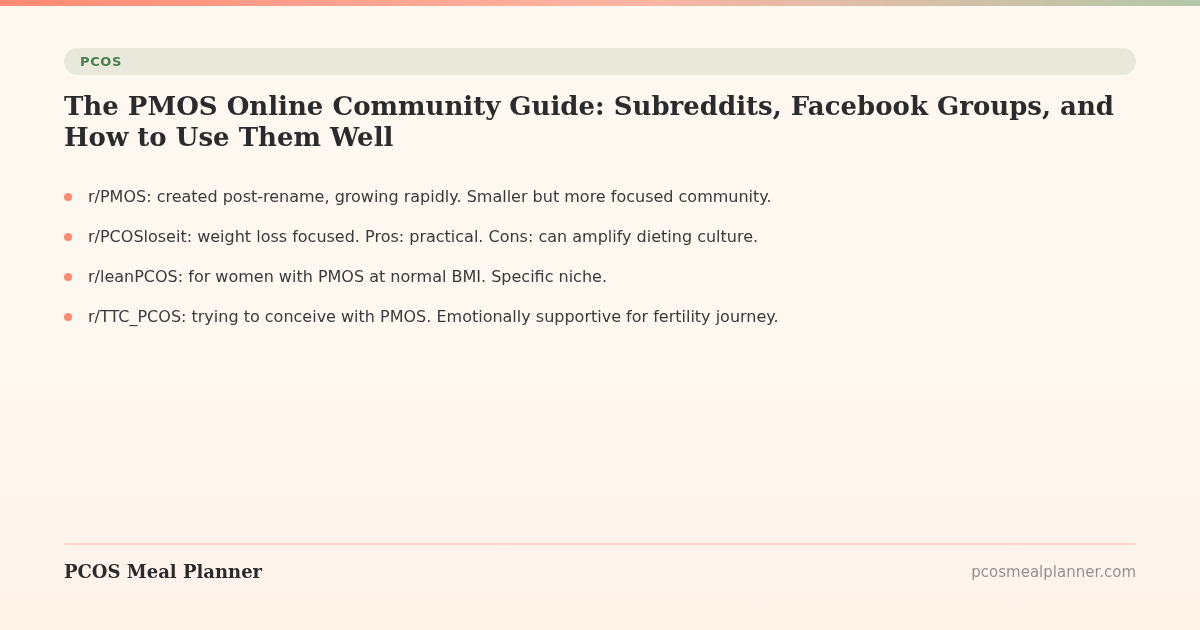
- r/PMOS: created post-rename, growing rapidly. Smaller but more focused community.
- r/PCOSloseit: weight loss focused. Pros: practical. Cons: can amplify dieting culture.
- r/leanPCOS: for women with PMOS at normal BMI. Specific niche.
- r/TTC_PCOS: trying to conceive with PMOS. Emotionally supportive for fertility journey.
2. Facebook groups
Many Facebook groups dedicated to PMOS/PCOS exist, often country-specific or symptom-specific. Generally smaller and more curated than subreddits. Some are run by patient advocacy organizations; others by individual women. Quality varies widely; lurk for a week before posting to assess culture.
3. Patient advocacy organization forums
- PCOS Awareness Association (US): forum, resources, awareness campaigns.
- Verity (UK): the UK PCOS charity, with forums, helpline, and clinical advisory.
- PCOS Australia Alliance: support and advocacy.
- Various national equivalents.
These tend to be the most reliable sources for evidence-based PMOS details online.
4. In-person support groups
Less common but valuable where they exist. Some endometriosis support groups also accept PMOS women due to overlap. Hospital-based patient programs sometimes include PMOS-specific groups.
How to use online community well
- Lurk before participating. Read for 1-2 weeks to learn the culture and norms.
- Cross-reference advice. What works for one woman may not work for you. Check claims against medical sources.
- Notice your emotional response. If a community leaves you anxious or worse about your body, leave it.
- Find specific subgroups that match your situation. Lean PMOS, TTC, midlife, vegan, specific symptom focus.
- Contribute when you can. Communities work when members reciprocate.
- Keep medical care. Community is complementary, not a substitute.
Red flags in PMOS online communities
- Claims to "cure" PMOS: PMOS is not curable. Anyone selling a cure is selling something else.
- Heavy supplement promotion: especially branded supplements with discount codes.
- Universal dietary prescriptions: "everyone with PCOS must do keto/carnivore/raw vegan" patterns. Individual response varies.
- Discouraging medical treatment: framing all medications as poison or unnecessary.
- "Transformation" before/after content as central: can amplify body image issues.
- Aggressive members shutting down dissent: healthy communities tolerate different experiences and opinions.
Specific online resources worth knowing
- PCOS Challenge: US patient advocacy with resources and annual conference.
- The Mighty: chronic illness platform with PCOS/PMOS content.
- Endocrine Society patient details: reliable clinical reference.
- 2023 International PCOS Guideline patient summary: evidence-based reference for treatment options.
The Telegram channel and Facebook page
PCOS Meal Planner runs:
- A Telegram channel with daily PMOS-relevant tips, recipes, and research
- A Facebook page for community connection
Both are free and editorially curated for accuracy.
Often asked questions
What is the best PMOS subreddit?
r/PCOS is the largest with around 500,000 members in 2026. r/PMOS is growing post-rename. r/TTC_PCOS for fertility, r/leanPCOS for normal-BMI PMOS, r/PCOSloseit for weight loss focus.
Is the PCOS subreddit reliable for medical details?
Useful for community and experience-sharing. Not reliable as a primary medical source. Cross-reference claims against evidence-based sources (Endocrine Society, 2023 PCOS Guideline). Use community for emotional support and practical tips; use medical professionals for treatment decisions.
Should I join a PMOS Facebook group?
Many are valuable for support and community. Lurk for 1-2 weeks before joining to assess culture. Look for groups with clear moderation, evidence-based posting culture, and member experiences that match yours (country, phenotype, life stage).
How do I avoid PMOS misinformation online?
5 strategies: cross-reference against medical sources, be skeptical of "cure" claims, watch for supplement promotion patterns, leave communities that make you feel worse, prioritise evidence-based patient advocacy organizations (PCOS Awareness Association, Verity).
Are PMOS influencers reliable?
Varies enormously. Some PMOS-focused dietitians and doctors provide evidence-based content. Many influencers monetise through supplements and programs and frame their personal experience as universal. Cross-reference advice against evidence sources.
What to read next
- What is PMOS
- PMOS anxiety and depression
- PMOS for partners and family
- PCOS is now PMOS: full renaming explainer
How this article was researched
Sources include the 2024 Journal of Health Communication review of online health communities, patient advocacy organization websites (PCOS Awareness Association, Verity, PCOS Australia Alliance), and the 2023 International Evidence-based Guideline for the Assessment and Management of PCOS. PCOS was renamed PMOS on 12 May 2026. This article is informational. See our editorial standards.
Community Comments
Add a comment