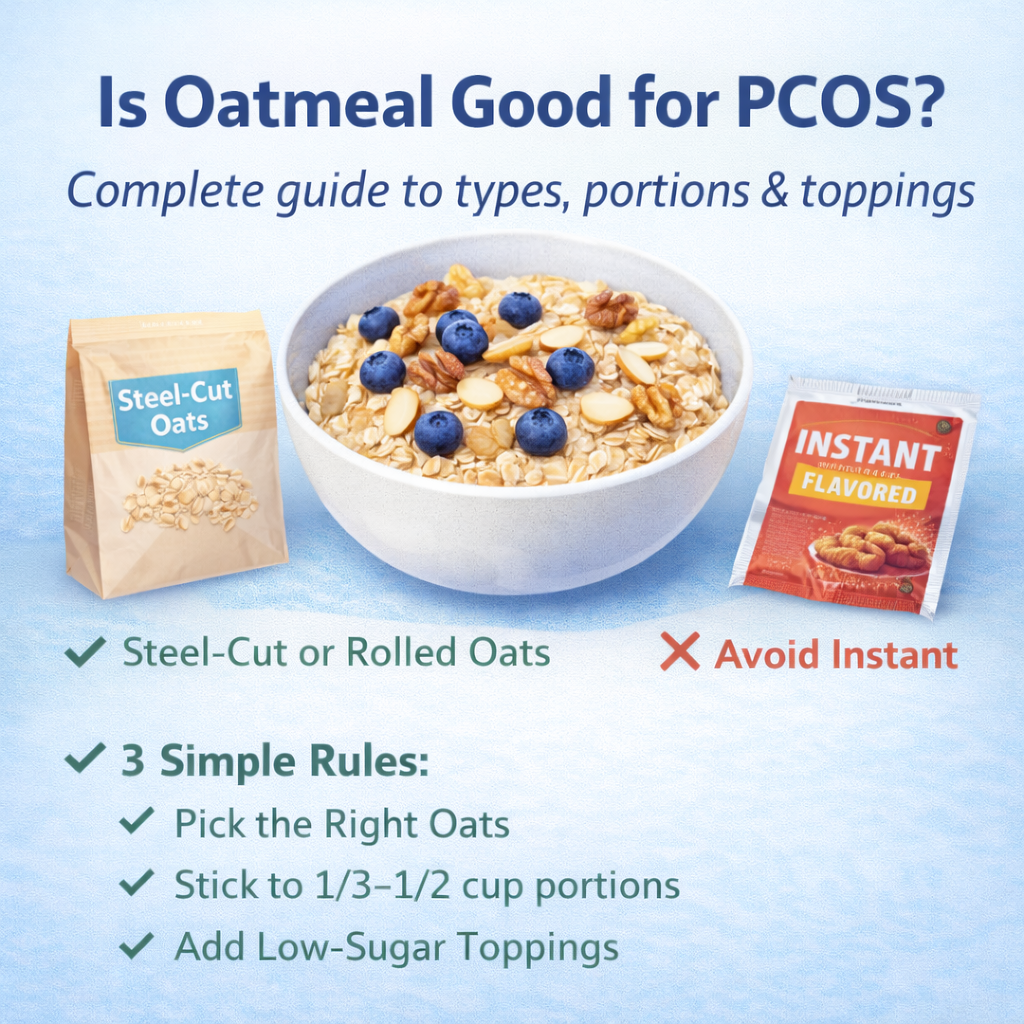
Get it right and oatmeal delivers beta-glucan fiber that directly improves insulin sensitivity. Get it wrong — a bowl of instant maple-flavored oats with banana and honey — and you are looking at a blood sugar spike worse than white toast.
This guide gives you the exact type of oats to buy, the precise portion for PCOS. Specific topping combinations that keep your blood sugar flat. No vague advice. Just the numbers. If you are building a complete PCOS breakfast strategy, our best breakfast for PCOS guide covers all your morning options.
Why Oatmeal Can Work for PCOS (When Done Right)
The reason oatmeal gets recommended for PCOS comes down to one compound: beta-glucan. This soluble fiber is unique to oats and has more clinical research behind it than almost any other dietary fiber.
Beta-Glucan and Insulin Sensitivity
Beta-glucan dissolves in your digestive tract and forms a thick gel that physically slows the absorption of glucose from your meal. A meta-analysis published in the Journal of Functional Foods (2022) found that consuming 3g or more of oat beta-glucan per meal reduced post-meal blood glucose by 20% and insulin response by 24% compared to meals without beta-glucan. One-third cup of dry steel-cut oats contains about 2.5g of beta-glucan, and half a cup provides 3.7g — enough to hit that clinically effective threshold.
Gut Health Benefits
Beta-glucan is also a prebiotic. It feeds Bifidobacterium and Lactobacillus species in your gut, which are the same helpful bacteria found in probiotic supplements. Research increasingly links gut microbiome diversity to better hormone regulation in PCOS. Women with PCOS tend to have lower gut bacteria diversity, and prebiotic fibers like beta-glucan help restore it. For more on gut-supporting foods, see our best yogurt for PCOS guide.
Anti-Inflammatory Compounds
Oats contain avenanthramides, a group of antioxidants unique to oats that have showed anti-inflammatory properties in research. Chronic low-grade inflammation drives many PCOS symptoms including acne, hair thinning, and weight gain. While you will not get a therapeutic dose from oatmeal alone, it adds to your overall anti-inflammatory eating pattern. Combine it with other anti-inflammatory spices for a stronger effect.
Steel-Cut vs Rolled vs Instant: Which Oats Are Best for PCOS?
Not all oatmeal is the same. The processing method dramatically changes how oats affect your blood sugar. Here is the complete comparison.
| Type | Glycemic Index | Beta-Glucan (1/3 cup dry) | Cook Time | PCOS Rating |
|---|---|---|---|---|
| Steel-Cut (Irish) Oats | 42 | 2.5g | 20-30 min | Best |
| Rolled (Old-Fashioned) Oats | 55 | 2.3g | 5 min | Good |
| Quick Oats | 66 | 2.0g | 1-3 min | Fair |
| Instant Oats (plain) | 75 | 1.8g | 1 min | Poor |
| Instant Flavored Packets | 75-82 | 1.5g | 1 min | Avoid |
Why Steel-Cut Oats Win
Steel-cut oats are whole oat groats chopped into 2-3 pieces with a steel blade. They are minimally processed, which means your body has to work harder to break them down. This slower digestion translates directly to a slower, lower blood sugar rise. The glycemic index of 42 puts steel-cut oats in the low-GI category, which is where you want to be with PCOS.
Why Rolled Oats Are Still Acceptable
Rolled oats are steamed and flattened, which partially breaks down the structure but preserves most of the beta-glucan fiber. With a GI of 55, they are at the top of the low-GI range. If you add protein and fat (which you always should with PCOS), the effective glycemic impact drops further. Rolled oats are the practical daily choice for most women with PCOS.
Why Instant Oats Are a Problem
Instant oats are pre-cooked, dried, and rolled extremely thin. This processing pre-digests the starch, making it much faster for your body to convert to glucose. The GI of 75 puts instant oats in the high-GI category — the same range as white bread. Flavored instant packets are worse: they add 10-15g of sugar per serving on top of the already fast-digesting starch.
Exact Portions for PCOS: How Much Oatmeal to Eat
Portion size matters more than most people realize. Even steel-cut oats will raise your blood sugar too much if you eat a full cup. Here are the specific portions based on your PCOS situation.
| Your Situation | Dry Oats | Carbs (oats only) | Notes |
|---|---|---|---|
| Insulin resistant, losing weight | 1/3 cup (27g) | 18g | Must pair with 15-20g protein and 10g fat |
| Stable weight, moderate activity | 1/2 cup (40g) | 27g | Pair with 10-15g protein and fat |
| Active, strength training | 1/2 cup (40g) | 27g | Can go up to 2/3 cup on training days |
| Lean PCOS, no insulin resistance | 1/2 cup (40g) | 27g | More flexibility but still pair with protein |
A critical mistake is measuring oatmeal after cooking. Oats absorb water and expand 2-3 times. A bowl that looks like "half a cup" of cooked oatmeal may only be 2-3 tablespoons of dry oats. Always measure dry, before cooking.
The PCOS Oatmeal Formula: Protein + Fat + Fiber
Oatmeal alone is mostly carb. To make it a proper PCOS meal, you need to follow this formula for every bowl. The protein and fat slow glucose absorption, and the added fiber extends the blood sugar benefit.
Step 1: Pick Your Protein (10-20g)
| Protein Source | Amount | Protein | Notes |
|---|---|---|---|
| Collagen peptides (unflavored) | 1 scoop | 10-12g | Dissolves completely, no taste change |
| Whey or plant protein powder | 1/2 scoop | 12-15g | Stir into cooked oats; vanilla flavor works well |
| Hemp hearts | 3 tbsp | 10g | Also adds omega-3 fat; nutty flavor |
| Greek yogurt (plain, full-fat) | 1/4 cup | 6g | Adds creaminess; skip if dairy-sensitive |
| Egg (cooked on the side) | 2 eggs | 12g | Hard-boiled or fried; eat alongside oatmeal |
Step 2: Pick Your Fat (8-15g)
| Fat Source | Amount | Fat | PCOS Benefit |
|---|---|---|---|
| Almond butter | 1 tbsp | 9g | Vitamin E, magnesium |
| Walnuts (chopped) | 2 tbsp | 9g | Omega-3 ALA, anti-inflammatory |
| Pumpkin seeds | 2 tbsp | 8g | Zinc for androgen regulation |
| Coconut oil or MCT oil | 1 tsp | 5g | Quick energy, may support metabolism |
Step 3: Pick Your Fiber Boosters and Toppings
| Good Toppings | Amount | Why |
|---|---|---|
| Chia seeds | 1 tbsp | 5g fiber, omega-3s, slows glucose absorption |
| Ground flaxseed | 1 tbsp | 3g fiber, lignans may help balance estrogen |
| Blueberries (fresh) | 1/4 cup | Low sugar, high antioxidants, 1g fiber |
| Raspberries (fresh) | 1/4 cup | Only 1.5g sugar, 2g fiber per serving |
| Cinnamon | 1 tsp | May improve insulin sensitivity by 10-29% |
| Unsweetened cocoa powder | 1 tsp | Magnesium, antioxidants, chocolate flavor |
| Toppings to Avoid | Why |
|---|---|
| Honey (1 tbsp) | 17g sugar, GI of 58, spikes blood sugar quickly |
| Maple syrup (1 tbsp) | 12g sugar, adds empty carbs to an already carb meal |
| Banana (1 medium) | 14g sugar, 27g total carbs, GI of 51 — doubles the carb load |
| Dried cranberries or raisins | 26-29g sugar per 1/4 cup, concentrated fructose |
| Granola | 12-16g sugar per 1/3 cup, usually contains seed oils |
| Brown sugar | 12g sugar per tablespoon, no nutritional value |
| Agave nectar | 16g sugar per tablespoon, 85% fructose stresses the liver |
5 PCOS-Friendly Oatmeal Recipes
Each recipe uses 1/3 cup dry steel-cut or rolled oats as the base. Macros are listed so you can fit them into your daily plan.
1. Anti-Inflammatory Berry Oats
- 1/3 cup rolled oats cooked in water
- 1 scoop collagen peptides (stirred in while hot)
- 1 tbsp almond butter
- 1/4 cup fresh blueberries
- 1 tbsp chia seeds
- 1 tsp cinnamon
Macros: 340 cal | 22g protein | 30g carbs | 16g fat | 10g fiber
2. Chocolate Peanut Butter Power Oats
- 1/3 cup rolled oats cooked in unsweetened almond milk
- 1/2 scoop chocolate protein powder
- 1 tbsp natural peanut butter
- 1 tsp unsweetened cocoa powder
- 1 tbsp ground flaxseed
- Pinch of sea salt
Macros: 365 cal | 25g protein | 32g carbs | 15g fat | 8g fiber
3. Pumpkin Spice Oats (Seasonal Favorite)
- 1/3 cup steel-cut oats cooked in water
- 2 tbsp canned pumpkin puree (not pumpkin pie filling)
- 1 scoop vanilla collagen peptides
- 2 tbsp chopped walnuts
- 1/2 tsp pumpkin pie spice
- 1/2 tsp cinnamon
Macros: 330 cal | 20g protein | 28g carbs | 14g fat | 7g fiber
4. Savory Egg and Cheese Oats
- 1/3 cup steel-cut oats cooked in water with a pinch of salt
- 1 fried egg on top
- 1 tbsp grated Parmigiano Reggiano
- 1/4 avocado, sliced
- Red pepper flakes and black pepper
Macros: 320 cal | 16g protein | 25g carbs | 17g fat | 7g fiber
5. Overnight Oats (No-Cook Option)
- 1/3 cup rolled oats
- 1/3 cup unsweetened coconut milk
- 1/3 cup water
- 1 tbsp chia seeds
- 1 scoop collagen peptides
- 1 tbsp almond butter (swirl on top in the morning)
- 1/4 cup raspberries (add in the morning)
Mix everything except the almond butter and raspberries in a jar. Refrigerate overnight. Add toppings in the morning.
Macros: 350 cal | 23g protein | 28g carbs | 17g fat | 12g fiber
When to Eat Oatmeal with PCOS (Timing Matters)
Blood sugar management is not just about what you eat but when. Oatmeal timing can make or break its effectiveness for PCOS.
Best: Post-Exercise Breakfast
After a morning workout, your muscles are primed to absorb glucose from your bloodstream. Eating oatmeal within 60 minutes of exercise means the carbs go to refueling muscle glycogen rather than spiking blood sugar. If you exercise in the morning, oatmeal is your best carb choice. For exercise ideas, see our best exercises for PCOS guide.
Good: Standard Breakfast (7-9am)
Cortisol is naturally highest in the morning. Cortisol raises blood sugar. Eating a balanced oatmeal with protein and fat early in the day provides sustained energy and prevents the mid-morning crash that triggers sugar cravings. Make sure you pair the oatmeal with protein — never eat it plain first thing in the morning.
Acceptable: Late Morning Brunch (10-11am)
If you practice time-restricted eating or intermittent fasting, having oatmeal as your first meal around 10-11am can work well. By this time, cortisol levels have dropped and insulin sensitivity is slightly better than at 7am for many women with PCOS.
Avoid: Late Evening
Do not eat oatmeal within 3 hours of bedtime. Insulin sensitivity decreases at night, meaning the same bowl of oats produces a higher blood sugar response in the evening than in the morning. Carb-heavy meals before bed also interfere with sleep quality, which is already compromised in many women with PCOS.
Oatmeal and PCOS Medications
If you take PCOS medications, timing and type of oatmeal matters for absorption and effectiveness.
Metformin
Oatmeal is actually a good meal to take with metformin. The fiber content slows absorption and may reduce the gastrointestinal side effects (nausea, diarrhea) that many women experience. Take metformin with your oatmeal, not on an empty stomach. The combination of slow-digesting carbs and fiber is gentler on the stomach than many other breakfast options. For more on managing metformin, see our inositol vs metformin guide.
Inositol
If you take myo-inositol or D-chiro-inositol, these are often taken on an empty stomach 15-30 minutes before eating. Take your inositol first, then eat your oatmeal. The fiber in oats will not interfere with inositol absorption if taken in this order.
Spironolactone
Spironolactone should be taken with food to improve absorption. Oatmeal with healthy fats is a good pairing. Note that spironolactone can increase potassium levels. If your oatmeal toppings include banana (which we advise against anyway), the potassium combination could be an issue. Stick to berries instead.
Best Oatmeal Brands for PCOS
These recommendations prioritize minimal processing, no added sugars, and availability at major grocery stores.
| Brand | Type | Price (approx) | Notes |
|---|---|---|---|
| Bob's Red Mill Steel Cut | Steel-cut | $5-6 / 24oz | Widely available, certified GF option exists |
| Trader Joe's Steel Cut | Steel-cut | $3-4 / 24oz | Best value, single ingredient |
| McCann's Irish Oats | Steel-cut | $6-7 / 28oz | Traditional quality, slightly chewier texture |
| Bob's Red Mill Old Fashioned | Rolled | $4-5 / 32oz | Best rolled option, thick cut |
| 365 by Whole Foods Organic | Rolled | $4-5 / 18oz | Organic, good for overnight oats |
| GF Harvest Gluten-Free | Rolled | $7-9 / 20oz | Purity protocol GF, best for gluten-sensitive |
Quaker Instant Oatmeal (any flavored variety), Nature Valley Oatmeal Cups, Kodiak Cakes Oatmeal Packets, and any "protein oatmeal" that uses sugar or artificial sweeteners as primary ingredients. Check the label: if sugar is in the first 5 ingredients, skip it.
Common Myths About Oatmeal and PCOS
Reality: One-third cup of dry oats has just 18g of net carbs — less than a single slice of bread. The beta-glucan fiber in oats actively improves insulin sensitivity. Carbs are not the enemy in PCOS; the type, amount, and pairing of carbs is what matters. Avoiding all carbs is not necessary and not sustainable.
Reality: The glycemic index ranges from 42 (steel-cut) to 82 (flavored instant). That is nearly double the blood sugar impact. Steel-cut and rolled oats are fundamentally different foods from instant oats in terms of how your body processes them. This distinction is critical for insulin-resistant PCOS.
Reality: Honey has a glycemic index of 58 and 17g of sugar per tablespoon. Maple syrup has 12g of sugar per tablespoon. Adding either to oatmeal defeats the purpose of choosing a low-GI breakfast. Natural does not mean blood-sugar-friendly. Use cinnamon, berries, or a small amount of stevia if you need sweetness. See our sweetener comparison guide for better alternatives.
Reality: Oat milk removes most of the beta-glucan fiber during processing and adds oils and sugars. One cup of commercial oat milk has 7g of sugar and minimal fiber. Eating actual oats gives you 4-5g of beta-glucan fiber per serving — the compound that provides the insulin-sensitizing benefits. They are not interchangeable. For milk alternatives, see our PCOS milk alternatives ranking.
Reality: Research shows that beta-glucan benefits begin with just 3 servings per week. Eating oatmeal 3-5 times per week gives you the blood sugar and gut health benefits while allowing variety in your diet. Rotating with other PCOS-friendly breakfasts like eggs, chia pudding, or savory options supports a more diverse gut microbiome.
What the Research Says About Oats and PCOS
These recommendations are grounded in peer-reviewed research on oats, glycemic response, and metabolic health.
- Beta-glucan and blood sugar: Zurbau et al., Journal of Functional Foods (2022), meta-analysis of 103 trials found 3g+ of oat beta-glucan per meal reduced post-meal glucose by 20% and insulin by 24%.
- Oats and insulin sensitivity: Thongoun et al., Nutrients (2013), showed that regular oat intake improved insulin sensitivity markers in people with type 2 diabetes, a condition with similar metabolic pathology to PCOS insulin resistance.
- Resistant starch in cooled oats: Fernandes et al., European Journal of Clinical Nutrition (2015), showed that cooled starchy foods develop 30-50% more resistant starch, reducing glycemic impact. This supports overnight oats as a PCOS strategy.
- Cinnamon and insulin: Allen et al., Journal of the Academy of Nutrition and Dietetics (2013), found cinnamon intake improved fasting blood glucose and insulin sensitivity in controlled trials.
- Gut microbiome and PCOS: Qi et al., Journal of Clinical Endocrinology and Metabolism (2019), confirmed that women with PCOS have lower gut bacteria diversity and that prebiotic fiber intake was inversely linked to PCOS severity.
- Avenanthramides: Sur et al., Free Radical Biology and Medicine (2008), identified anti-inflammatory and antioxidant properties of avenanthramides unique to oats.
Frequently Asked Questions
Is oatmeal good for PCOS?
Yes, oatmeal can be good for PCOS when you choose the right type and portion. Steel-cut and rolled oats have a glycemic index of 42-55, which is low enough to avoid sharp blood sugar spikes. Oats contain beta-glucan fiber that slows glucose absorption and improves insulin sensitivity. The key is keeping portions to 1/3 to 1/2 cup dry, choosing steel-cut or rolled oats over instant, and always pairing with protein and healthy fat. Instant flavored oatmeal packets are not recommended for PCOS. For a complete morning strategy, check our best breakfast for PCOS guide.
What is the best type of oatmeal for PCOS?
Steel-cut oats are the best type of oatmeal for PCOS. They have the lowest glycemic index (42), the highest fiber content, and take the longest to digest, which means the slowest blood sugar rise. Rolled oats are the second-best choice with a GI of 55. Avoid instant oats (GI 75-82) and flavored oatmeal packets which contain 10-15g of added sugar per serving.
How much oatmeal should I eat with PCOS?
Stick to 1/3 to 1/2 cup of dry oats per serving with PCOS. This equals 18-27g of carbs from the oats alone. One-third cup is better if you are actively managing insulin resistance or trying to lose weight. Half a cup works if you are at a stable weight and exercise regularly. Always measure dry oats before cooking — cooked oatmeal expands 2-3 times, making visual estimates unreliable.
Does oatmeal spike blood sugar with PCOS?
Plain steel-cut or rolled oats produce a moderate, gradual blood sugar rise rather than a spike. The beta-glucan fiber forms a gel in your digestive tract that slows glucose absorption. However, instant oats and flavored oatmeal packets can spike blood sugar greatly. To minimize any blood sugar impact, keep portions to 1/3 cup dry, add protein, include healthy fat. Consider adding 1 tablespoon of chia seeds for extra fiber.
Is overnight oats good for PCOS?
Yes, overnight oats can be excellent for PCOS and may actually be better than cooked oatmeal. Soaking oats overnight increases resistant starch content, which feeds helpful gut bacteria and produces a lower blood sugar response than freshly cooked oats. Use rolled oats soaked in unsweetened almond or coconut milk, add chia seeds for extra fiber, and include protein powder or collagen. Avoid recipes that call for maple syrup, honey, or flavored yogurt.
Can I eat oatmeal every day with PCOS?
You can eat oatmeal 3-5 times per week with PCOS. Research shows beta-glucan benefits start with just 3 servings weekly. Eating it every single day is not ideal because variety supports gut microbiome diversity, which is important for hormone regulation. Rotate oatmeal with other PCOS-friendly breakfasts like eggs with vegetables or chia pudding.
Are oats gluten-free for PCOS?
Oats are naturally gluten-free, but most commercial oats are cross-contaminated with wheat during processing. If you have PCOS and are also gluten-sensitive, buy certified gluten-free oats from brands like Bob's Red Mill, GF Harvest, or Quaker Gluten-Free. Some women with PCOS report reduced bloating when switching to certified gluten-free oats even without a celiac diagnosis.
What should I put on oatmeal with PCOS?
The best PCOS oatmeal toppings combine protein, healthy fat, and fiber. Add 1-2 tablespoons of nut butter or walnuts for fat. Include collagen peptides or protein powder for 10-20g of protein. Use 1/4 cup of berries — not banana or dried fruit which are high sugar. Sprinkle 1 teaspoon of cinnamon which may improve insulin sensitivity. Add 1 tablespoon of chia or flax seeds for omega-3s. Avoid honey, maple syrup, brown sugar, granola, and agave nectar.
Take Action Today
You now know exactly which oats to buy, how much to eat, and what to put on top. Here are your next steps:
- Buy steel-cut or rolled oats this week — Bob's Red Mill, Trader Joe's, or McCann's are all excellent. A $5 bag lasts 2-3 weeks at recommended portions.
- Start with 1/3 cup dry — Measure it with a measuring cup or kitchen scale (27g) the first few times. You will be surprised how small it looks dry and how much it expands when cooked.
- Always add protein and fat — Pick one protein source and one fat source from the tables above. This is the single most important step. Oatmeal without protein is not a PCOS-friendly meal.
- Try overnight oats — Prep a jar before bed. The resistant starch from soaking may give you a better blood sugar response than cooked oats. It also saves time on busy mornings.
- Track your response — If you have a glucose track, check your blood sugar 1 and 2 hours after eating oatmeal. You should see a rise of no more than 30-40 mg/dL from your fasting level with the right portion and toppings.
- Get personalized meal plans — PCOS Meal Planner builds custom breakfast plans that account for your insulin resistance level, food preferences, and goals. Your plan includes exact oatmeal recipes with calculated macros specific to your needs.
For more on building a complete PCOS nutrition strategy, explore our guides on the best supplements for PCOS, fiber supplements for PCOS, and exercises for PCOS.
Community Comments
Add a comment