But not all yogurt is equal — and the wrong choice can work against you. Flavored varieties can pack 20g of added sugar per serving. Low-fat options strip out the fat that slows glucose absorption. Some brands barely contain live cultures at all.
This guide covers exactly which yogurts help PCOS, which ones to avoid, the best brands ranked by protein and sugar content. Five practical ways to eat greek yogurt that actually support your hormones.
Why Greek Yogurt Is One of the Best Foods for PCOS
PCOS care comes down to three core pillars: stabilizing insulin, reducing inflammation, and supporting hormone metabolism. Greek yogurt hits all three in a single food.
Protein density: A 200g serving of plain greek yogurt delivers 17-20g of protein — roughly the same as three eggs. Protein is the most satiating macronutrient, and it slows the rate at which carbs enter your bloodstream. For women with PCOS, where 70-80% have insulin resistance, high-protein foods at every meal or snack are not optional — they are foundational.
Low glycemic impact: Plain greek yogurt has a glycemic index of about 11, making it one of the lowest GI dairy foods available. The combination of protein and fat means it causes minimal blood sugar rise on its own and blunts the glycemic response when paired with higher-carb foods like fruit or oats.
Probiotic content: Greek yogurt is a fermented food, meaning it contains live bacterial cultures — primarily Lactobacillus bulgaricus and Streptococcus thermophilus, with many brands adding additional strains like L. acidophilus, L. casei, and Bifidobacterium. These are not just marketing claims — they are the organisms that directly influence your gut microbiome. Emerging research shows the gut-PCOS connection is more significant than anyone realized even five years ago.
Nutrient density: Beyond protein and probiotics, a serving of greek yogurt provides 15-20% of your daily calcium, B12, phosphorus, and — in fortified brands — vitamin D. Women with PCOS are disproportionately deficient in both calcium and vitamin D. Correcting these deficiencies has been linked to improved insulin sensitivity and menstrual regularity in clinical trials.
Greek Yogurt vs. Regular Yogurt vs. Skyr: What Is the Difference?
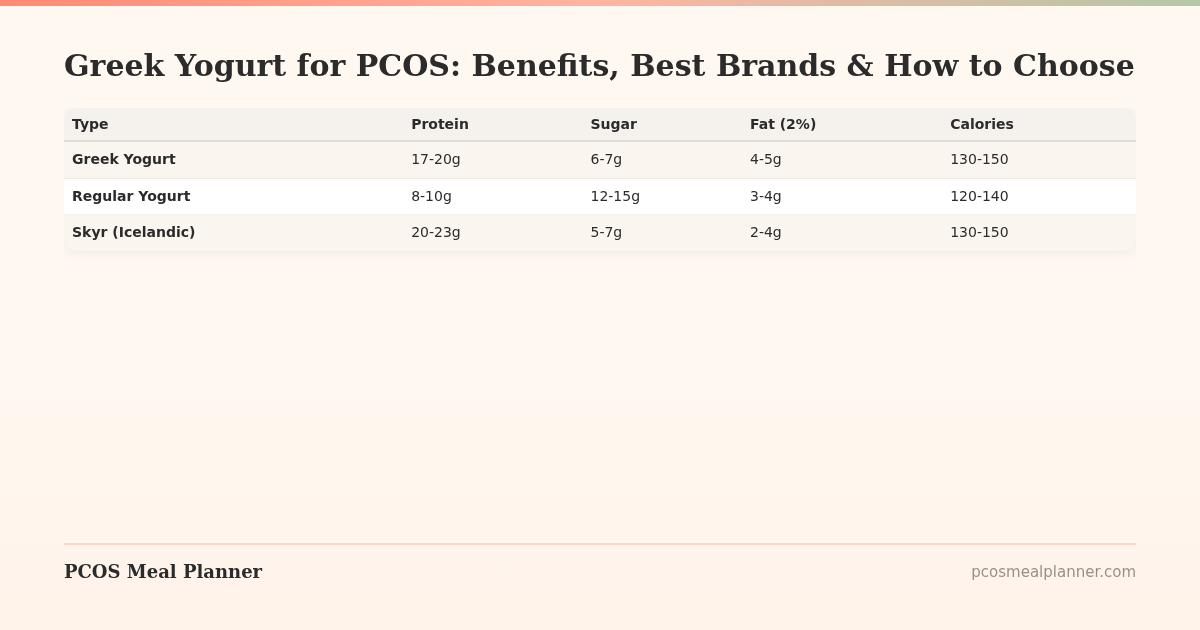
Not all yogurt is created equal. The straining process is what sets greek yogurt apart — and it is the reason it works so much better for PCOS.
| Type | Protein | Sugar | Fat (2%) | Calories |
|---|---|---|---|---|
| Greek Yogurt | 17-20g | 6-7g | 4-5g | 130-150 |
| Regular Yogurt | 8-10g | 12-15g | 3-4g | 120-140 |
| Skyr (Icelandic) | 20-23g | 5-7g | 2-4g | 130-150 |
Greek yogurt is strained three times, removing most of the whey (liquid). This concentrates the protein — nearly double that of regular yogurt — while reducing lactose content. Less lactose means less sugar and better digestibility for women who are mildly lactose sensitive.
Regular yogurt is strained once. It has roughly half the protein and greatly more natural sugar (lactose). It still contains probiotics, but the lower protein content means it does less to stabilize blood sugar. For PCOS, regular yogurt is not a bad food — it is just not the optimal choice when greek yogurt is available at the same price.
Skyr (Icelandic yogurt) is technically a fresh cheese, strained even more aggressively than greek yogurt. It has the highest protein content of the three — up to 23g per serving — and a thicker, creamier texture. For PCOS, skyr is excellent. The only downside is it tends to be more expensive and harder to find in some areas. If it is available and you enjoy the texture, it is a top-tier option.
The bottom line: Greek yogurt or skyr are both excellent for PCOS. Regular yogurt is acceptable if plain and unsweetened, but delivers less protein per calorie. Avoid all flavored varieties regardless of type.
The Gut Microbiome Connection: Why Probiotics Matter for PCOS
This is where yogurt goes from "good food" to "strategic PCOS intervention."
Research over the past decade has established that women with PCOS have greatly different gut microbiomes compared to women without the condition. A 2018 systematic review in the Journal of Clinical Medicine found consistent patterns: reduced microbial diversity, lower levels of helpful bacteria (especially Lactobacillus species), and increased gut permeability — the "leaky gut" pattern.
Why this matters for your hormones:
- Gut bacteria regulate inflammation. A less diverse microbiome produces more lipopolysaccharides (LPS), which trigger systemic inflammation. Chronic low-grade inflammation is a hallmark of PCOS and drives insulin resistance independently of body weight.
- Gut bacteria influence insulin signaling. Short-chain fatty acids (SCFAs) produced by helpful bacteria improve insulin sensitivity and regulate appetite hormones. Fewer helpful bacteria means fewer SCFAs.
- Gut bacteria metabolize estrogen. The "estrobolome" — a subset of gut bacteria — regulates how estrogen is processed and recycled. Disrupted estrogen metabolism contributes to the hormonal imbalance in PCOS.
- Gut bacteria affect androgen levels. A 2020 study in the Journal of Ovarian Research found that probiotic supplementation improved testosterone and DHEA-S levels in women with PCOS, along with improvements in inflammatory markers.
Greek yogurt delivers Lactobacillus and Bifidobacterium species directly. Unlike probiotic supplements, yogurt provides these bacteria alongside their natural food matrix — protein, fat, and prebiotics — which supports their survival through the digestive tract. A 2014 study in BMC Microbiology found that regular yogurt intake measurably altered gut microbiome composition within 2-4 weeks.
This does not mean yogurt replaces targeted probiotic therapy. But as a daily dietary habit, it is one of the simplest, most evidence-backed ways to support the gut diversity that PCOS undermines.
Blood Sugar Impact: How Greek Yogurt Stabilizes Insulin
Insulin resistance is the metabolic engine behind PCOS. Anything that blunts post-meal glucose spikes is directly therapeutic — and greek yogurt is remarkably effective at this.
The protein effect: Protein triggers glucagon-like peptide-1 (GLP-1) release, which slows gastric emptying and enhances insulin secretion in a glucose-dependent manner. A 200g serving of greek yogurt with 17-20g protein creates a meaningful GLP-1 response that flattens the glucose curve from whatever you eat alongside it.
The fat effect: Fat further slows gastric emptying. This is why full-fat or 2% greek yogurt is better for PCOS than non-fat — the fat creates a longer, flatter glucose response. A 2013 study in the European Journal of Clinical Nutrition showed that full-fat dairy intake was inversely linked to metabolic syndrome risk, while low-fat dairy showed no protective effect.
The practical application: If you are going to eat carbs — fruit, oats, granola, toast — eating them with greek yogurt greatly reduces their glycemic impact. A bowl of berries alone will spike your blood sugar more than berries mixed into greek yogurt. This is not a hack — it is basic physiology. Protein and fat slow the rate at which carbs are broken down and absorbed.
If you track glucose with a CGM or track, try this experiment: eat a piece of fruit on its own one day, then eat the same fruit mixed into 200g of plain greek yogurt the next day. Compare the spike. Most women see 30-50% lower peak glucose when fruit is paired with yogurt. That difference compounds across every meal, every day.
Calcium and Vitamin D: Two Deficiencies Greek Yogurt Helps Fix
Women with PCOS have a disproportionately high rate of calcium and vitamin D deficiency — and both nutrients play direct roles in PCOS outcomes.
Vitamin D: A meta-analysis in the Journal of Clinical Endocrinology & Metabolism found that 67-85% of women with PCOS are vitamin D deficient. Low vitamin D is linked to worse insulin resistance, higher androgen levels, and irregular menstrual cycles. Supplementation studies have shown improvements in insulin sensitivity and ovulatory function when vitamin D levels are corrected.
Calcium: Calcium is involved in insulin secretion and signaling. A randomized controlled trial published in Complementary Therapies in Clinical Practice found that calcium plus vitamin D supplementation improved menstrual regularity and reduced androgen levels in women with PCOS over 8 weeks.
A 200g serving of greek yogurt provides about 200-250mg of calcium (15-20% of daily needs). Many brands are also fortified with vitamin D, adding 10-15% of your daily requirement per serving. This does not replace supplementation if you are clinically deficient. It contributes meaningful amounts as part of your daily intake — and the calcium in yogurt is highly bioavailable due to the protein and fat matrix.
Best Greek Yogurt Brands for PCOS: Ranked
Not all greek yogurts are equal. Here is a breakdown of the best options based on what matters for PCOS: protein content, sugar content, live cultures, and ingredient simplicity.
| Brand | Protein | Sugar | Live Cultures | Notes |
|---|---|---|---|---|
| Fage Total 2% | 20g | 7g | 5 strains | Top pick. Thickest texture, highest protein, minimal ingredients (milk, cream, cultures). |
| Siggi’s Plain | 17g | 4g | 5 strains | Technically skyr (Icelandic). Lowest sugar. Tart, thick, excellent macros. |
| Chobani Plain | 16g | 6g | 6 strains | Widely available, good price point. Choose whole milk or 2% versions. |
| Two Good Plain | 12g | 2g | 3 strains | Lowest sugar by far. Good if you are strict on carbs. Lower protein than others. |
| Oikos Triple Zero | 15g | 7g | 4 strains | No added sugar, no artificial sweeteners, no fat. Uses stevia. Acceptable option. |
Top pick for most women with PCOS: Fage Total 2%. It has the highest protein (20g), a simple ingredient list (milk, cream, live cultures), and the thickest texture — meaning it was strained the most aggressively. The 2% fat version provides enough fat to slow glucose absorption without excess calories.
Best budget option: Chobani Plain. Widely available at most grocery stores, often on sale, and reliable quality. Choose whole milk or 2% — the non-fat version is acceptable but less effective at blunting blood sugar.
Lowest sugar: Two Good. At only 2g of sugar per serving, this is the best option if you are following a very low-carb or ketogenic approach. The tradeoff is lower protein (12g vs 20g for Fage). Consider pairing it with nuts or seeds to bump up the protein and fat content.
What to Avoid: Yogurts That Work Against PCOS
Some yogurt choices are actively counterproductive for PCOS. Here is what to skip and why:
Flavored greek yogurt (fruit-on-the-bottom or premixed): A single serving of strawberry or vanilla greek yogurt can contain 15-24g of added sugar. That is 4-6 teaspoons of sugar in a food you thought was healthy. The sugar triggers an insulin spike that negates most of the benefits you came for. This is the single biggest mistake women with PCOS make when choosing yogurt.
Low-fat and non-fat flavored yogurt: When manufacturers remove fat, they replace it with sugar and thickeners to keep taste and texture. The result is a higher glycemic product that is less satiating. A 2016 systematic review in the European Journal of Nutrition found no benefit of low-fat dairy over full-fat for weight control — and full-fat dairy was linked to lower metabolic syndrome risk.
Yogurt "drinks" and smoothies: Pre-made yogurt drinks like Dannon DanActive or store-brand drinkable yogurts are essentially sugar-sweetened beverages with a probiotic label. They often contain 20-30g of sugar per bottle with minimal protein.
Frozen yogurt: Frozen yogurt is a dessert, not a health food. The freezing process kills most live cultures, and the sugar content rivals ice cream. It has no place in a PCOS care strategy.
Yogurts with artificial sweeteners (sucralose, aspartame, acesulfame-K): While the calorie count looks appealing, emerging research suggests artificial sweeteners may disrupt the gut microbiome — the exact system you are trying to support. If you want sweetness, use fresh berries, a half teaspoon of raw honey, or a pinch of cinnamon. Or choose Two Good, which uses stevia — a natural sweetener that appears to have less impact on gut bacteria.
How to Read Yogurt Labels: A 30-Second PCOS Check
You do not need to be a nutritionist. Here are the three numbers to check before any yogurt goes in your cart:
- Protein: 15g or higher per serving. This is non-negotiable. If it is under 15g, it is not strained enough to qualify as a high-protein option. Most good greek yogurts hit 17-20g.
- Sugar: 8g or less per serving. Plain greek yogurt naturally contains 5-7g of sugar from lactose — that is fine. If the total sugar exceeds 8g, the product has added sugar. Check the ingredient list for sugar, honey, cane sugar, fructose, or fruit concentrate.
- Live cultures: Listed on the label. Look for "contains live and active cultures" and specific strain names (Lactobacillus, Bifidobacterium, S. thermophilus). Some budget brands use heat-treated yogurt that kills the cultures — these will not say "live and active."
Ingredient list shortcut: The best greek yogurts have 2-3 ingredients: milk (or cream), and live active cultures. If the ingredient list has more than 5-6 items, or includes thickeners like modified corn starch, gelatin, or pectin, the product is lower quality. Proper greek yogurt gets its thickness from straining — not from additives.
5 PCOS-Friendly Ways to Eat Greek Yogurt
Greek yogurt is one of the most versatile PCOS-friendly foods. Here are five ways to make it a daily habit, each designed to stabilize blood sugar and keep you full.
1. The PCOS Breakfast Power Bowl
This is the foundation meal. Start with 200g of plain greek yogurt. Add a handful of mixed berries (blueberries and raspberries are best — highest fiber, lowest sugar among fruits). Top with 1 tablespoon of ground flaxseed (anti-inflammatory omega-3s), a sprinkle of walnuts or almonds (healthy fats, magnesium). A dusting of cinnamon (improves insulin sensitivity in small studies). Optional: 1 tablespoon of chia seeds for extra fiber.
This bowl delivers about 25g of protein, 12g of fiber, healthy fats, probiotics, and omega-3s — all for around 350 calories. It will keep your blood sugar flat for 3-4 hours.
2. High-Protein Smoothie Base
Use 150g of greek yogurt as your smoothie base instead of milk or juice. Add a handful of spinach (tasteless in a smoothie, rich in magnesium), half a banana or a handful of frozen berries, 1 tablespoon of almond butter, and ice. This creates a smoothie with 20-25g of protein without any protein powder — though you can add a scoop if you want to push it to 40g+.
The key: using yogurt instead of juice or milk as the base eliminates 15-25g of liquid sugar that most smoothie recipes include.
3. Savory Yogurt Dips and Sauces
Greek yogurt is not just for sweet applications. Mix it with lemon juice, garlic, cucumber, and dill for a PCOS-friendly tzatziki. Use it as a base for turmeric dressing (anti-inflammatory), herb dips with vegetables, or as a sour cream replacement on chili, tacos, or baked potatoes.
Savory yogurt removes the temptation to add sweeteners entirely. A turmeric-yogurt sauce on grilled chicken or fish adds probiotics, protein. Anti-inflammatory compounds to a savoury meal — turning a good dinner into a better one.
4. Baking Substitute
Replace butter, oil, or sour cream with greek yogurt in baking recipes at a 1:1 ratio. This works especially well in muffins, pancakes, and quick breads. You get more protein, less saturated fat. Probiotics that survive moderate baking temperatures (though some cultures are lost at temperatures above 60°C / 140°F).
PCOS-friendly pancake upgrade: Mix 200g greek yogurt with 1 egg, 30g oat flour, and a pinch of cinnamon. Cook as normal. Each pancake has roughly double the protein of a standard pancake with half the glycemic impact.
5. Overnight Yogurt Parfait
Layer 200g of greek yogurt with 30g of rolled oats, 1 tablespoon of chia seeds, and a handful of berries in a jar. Refrigerate overnight. The oats soften, the chia seeds form a gel (excellent for gut health), and the yogurt cultures continue to develop at fridge temperature.
This takes 3 minutes to prepare the night before and gives you a grab-and-go breakfast with 22-25g of protein, 10g+ of fiber. A glycemic index well below 30. Make 3-5 jars on Sunday night for the entire work week.
The Dairy Question: Is Dairy Bad for PCOS?
This is one of the most contentious topics in PCOS nutrition. The blanket advice to "cut dairy" is not supported by the evidence in the way most people think.
Where the anti-dairy argument comes from: Some studies have found that dairy intake — particularly milk — can increase IGF-1 (insulin-like growth factor 1), which may stimulate androgen production. Milk also contains hormones from the cow (estrogens, progesterone) and can be inflammatory for people with dairy sensitivity or lactose intolerance.
Why this does not apply equally to yogurt:
- Fermentation changes the food. The bacterial cultures in yogurt partially digest lactose, break down casein proteins, and produce bioactive peptides. Fermented dairy is a fundamentally different food from unfermented milk, even though both are "dairy."
- Fermented dairy is linked to better metabolic outcomes. A large meta-analysis in the European Journal of Nutrition (2017) found that fermented dairy intake was linked to a 12% reduced risk of type 2 diabetes, while total dairy and milk showed weaker or no associations.
- The IGF-1 concern is primarily about milk. Studies showing IGF-1 increases are primarily linked to milk intake, not fermented dairy. The fermentation process appears to modify the IGF-1 stimulating components.
- Probiotics in yogurt counteract inflammation. Even if dairy protein causes some inflammatory response in sensitive people, the probiotic content of yogurt simultaneously reduces inflammation through gut microbiome support. The net effect appears to be neutral or positive for most people.
The practical approach: If you have no known dairy sensitivity, greek yogurt is a net positive for PCOS care. If you suspect dairy is problematic for you (increased acne, bloating, digestive issues), try a 3-week elimination: remove all dairy, then reintroduce greek yogurt first and track symptoms. Many women who react to milk tolerate fermented dairy perfectly well because the fermentation process has already broken down the problematic components.
If you are truly dairy-intolerant, coconut-based or almond-based yogurts with added probiotics are an alternative — but they are much lower in protein (2-5g vs 17-20g) and you will need to supplement protein from other sources.
Portion Guidance for PCOS
More is not always better. Here is how to calibrate your yogurt intake:
| Goal | Amount | When |
|---|---|---|
| General PCOS care | 150-200g, 1x daily | Breakfast or afternoon snack |
| High-protein / weight loss | 200g, 1-2x daily | Breakfast + post-workout or snack |
| Gut health focus | 150g, 1x daily (consistency matters more than quantity) | Same time daily for microbiome regularity |
| Dairy-sensitive | 100-150g, every other day | Track symptoms over 2-3 weeks |
The ceiling: There is no clinical evidence that more than 400g of yogurt per day provides additional PCOS-specific benefits. At that point, you are displacing other important foods from your diet. One to two servings daily is the sweet spot — enough to deliver meaningful protein, probiotics. Nutrients without crowding out the variety your gut microbiome needs.
Timing tip: If you eat yogurt once daily, make it breakfast. Starting the day with 17-20g of protein from yogurt sets the tone for blood sugar stability across the entire morning. Research shows that a high-protein breakfast reduces total caloric intake for the rest of the day by 10-15% in women with insulin resistance.
Building Greek Yogurt Into a Complete PCOS Nutrition System
Greek yogurt is one food. It is an excellent food for PCOS — but it does not work in isolation. The women who see real, lasting improvements in their PCOS symptoms are the ones who build a complete system: the right foods in the right combinations at the right times, consistently.
That means pairing your greek yogurt with anti-inflammatory proteins, insulin-stabilizing complex carbs, omega-3 rich fats. A rotation of vegetables and herbs that support hormone metabolism. It means knowing which foods work together and which combinations to avoid.
The PCOS Meal Planner builds this complete system for you. Every meal plan is designed specifically for PCOS — built around insulin-stabilizing, anti-inflammatory foods like greek yogurt, with full weekly menus, grocery lists, and prep guides. Greek yogurt appears regularly in breakfast bowls, snacks, smoothies, and sauces — always paired with the right complementary ingredients. It costs $9 and your plan is delivered within 24 hours.
Greek yogurt is one of the best individual foods you can add. A structured meal plan makes sure everything else you eat works just as hard.
Frequently Asked Questions
Is greek yogurt good for PCOS?
Yes. Greek yogurt is one of the best foods for PCOS. A single serving delivers 15-20g of protein that stabilizes blood sugar, live probiotic cultures that support gut health. Meaningful amounts of calcium and vitamin D — two nutrients commonly deficient in women with PCOS. The high protein and fat content slows glucose absorption, directly counteracting insulin resistance. Choose plain, 2% or full-fat varieties. Avoid flavored options — they can contain 15-20g of added sugar per serving, which triggers the insulin spikes you are trying to prevent.
Is dairy bad for PCOS?
Not all dairy is equal, and the blanket advice to avoid dairy is oversimplified. Fermented dairy like greek yogurt is fundamentally different from milk or ice cream. Fermentation breaks down lactose, produces helpful bacteria, and creates bioactive peptides that may reduce inflammation. A 2017 meta-analysis found fermented dairy was linked to 12% lower type 2 diabetes risk. The concerns about dairy and PCOS — IGF-1 stimulation and hormonal content — apply primarily to unfermented milk, not yogurt. If you tolerate dairy, greek yogurt is a net positive for PCOS care.
How much yogurt should I eat with PCOS?
One to two servings daily (150-200g per serving) is the optimal range. This provides 15-40g of protein, a consistent dose of probiotics for gut health, and 20-40% of your daily calcium needs. Consistency matters more than quantity — one serving every day is better than three servings on random days. Start with one serving at breakfast, as the protein sets up blood sugar stability for the entire morning. If you notice bloating or acne after 2-3 weeks, reduce to every other day or try lactose-free greek yogurt.
Is flavored yogurt OK for PCOS?
Most flavored yogurts are a poor choice for PCOS. A typical strawberry or vanilla greek yogurt contains 12-20g of added sugar — that is 3-5 teaspoons of sugar triggering the exact insulin spike you are trying to avoid. Always start with plain greek yogurt and add your own flavor: fresh berries, cinnamon, vanilla extract, a small drizzle of raw honey, or a tablespoon of unsweetened cocoa powder. Two Good brand (2g total sugar) is an acceptable pre-flavored option if convenience matters, but plain with your own toppings gives you full control.
What is the best yogurt for insulin resistance?
Plain greek yogurt, 2% or full-fat, with at least 15g protein and under 8g sugar per serving. The protein slows glucose absorption, the fat improves satiety and further blunts blood sugar rise, and the probiotics support gut health that influences insulin signaling. Top picks: Fage Total 2% (20g protein, 7g sugar), Siggi's plain (17g protein, 4g sugar), or Chobani Plain (16g protein, 6g sugar). Avoid non-fat flavored varieties — removing fat and adding sugar worsens insulin resistance, not improves it.
Can yogurt help with PCOS gut health?
Yes. Greek yogurt delivers live probiotic cultures — Lactobacillus, Bifidobacterium, and Streptococcus thermophilus — that directly support gut microbiome diversity. Women with PCOS have consistently been shown to have reduced gut microbial diversity, which contributes to chronic inflammation and insulin resistance. A 2020 study in the Journal of Ovarian Research found probiotic supplementation improved hormonal profiles in women with PCOS. Daily yogurt intake is one of the simplest ways to deliver these probiotics alongside their natural food matrix, which supports bacterial survival through digestion.
Greek yogurt is one of the easiest, most impactful additions to a PCOS diet. But the real results come from building a complete system — where every meal supports your insulin, gut health, and hormones. Get a personalized PCOS meal plan that includes greek yogurt in the right combinations, alongside anti-inflammatory proteins, blood sugar-stabilizing carbs, and hormone-supporting fats. $9, delivered within 24 hours.
Community Comments
Add a comment