This guide gives you the direct answer, explains the science behind the dairy-PCOS debate, tells you exactly which cheeses help and which hurt. Shows you how to include cheese in a PCOS-friendly diet without guessing.
The Direct Answer: No, Cheese Is Not Bad for PCOS
Cheese — real, minimally processed cheese — is not something you need to remove with PCOS. In fact, the right cheeses provide three things your body specifically needs:
- High-quality protein that stabilizes blood sugar and supports lean muscle mass (which improves insulin sensitivity)
- Calcium and vitamin D — two nutrients that women with PCOS are often deficient in, and both play roles in ovarian function and metabolic health
- Probiotics from fermented and aged cheeses that support gut health, which research increasingly links to hormone regulation
The problem is never "cheese" as a category. The problem is specific types of cheese, how much you eat, and what you eat it with. A slice of aged parmesan on a salad is a completely different metabolic event than Velveeta on white bread.
The Dairy-PCOS Debate: What the Evidence Actually Shows
Three concerns come up repeatedly when women with PCOS research dairy. Let us look at what the science says about each one.
IGF-1 and Hormonal Concerns
Dairy can raise levels of insulin-like growth factor 1 (IGF-1), which some researchers have linked to androgen production. This is the foundation of the "dairy is bad for PCOS" argument. However, the effect is dose-dependent and varies greatly by dairy type. A 2020 study in the Journal of Clinical Endocrinology & Metabolism found that moderate dairy intake (2-3 servings daily) did not greatly elevate androgens in women with PCOS. The IGF-1 response is strongest with milk — particularly skim milk — and weaker with fermented dairy like cheese and yogurt.
Insulin Response
Here is what surprises most people: cheese has a low glycemic index. Full-fat cheese produces a minimal blood sugar and insulin response when eaten on its own. A 2018 meta-analysis in the European Journal of Nutrition found that cheese intake was not linked to increased type 2 diabetes risk and may even be mildly protective. The protein and fat content in cheese slows digestion, preventing the blood sugar spikes that drive insulin resistance. The exception is when cheese is paired with refined carbs — pizza, white bread, crackers — where the combination triggers a larger insulin response.
Inflammation
A 2019 systematic review in Advances in Nutrition found that fermented dairy products are either neutral or anti-inflammatory. Aged cheeses like parmesan, feta, and gouda contain helpful bacteria and bioactive peptides that may actually reduce inflammatory markers. Processed cheese products, on the other hand, contain emulsifiers, added sodium, and inflammatory seed oils that can worsen the chronic low-grade inflammation common in PCOS.
The bottom line: the dairy-PCOS connection is about type and quality, not a blanket prohibition.
When Cheese IS a Problem for PCOS
Cheese becomes genuinely problematic in these specific situations:
Processed cheese products. American singles, Velveeta, canned cheese, cheese spreads, and cheese dips are not really cheese. They are manufactured products containing added sugars, high sodium, emulsifiers, and inflammatory vegetable oils. These products spike insulin, promote inflammation, and provide minimal nutritional benefit. If the label says "cheese product" or "pasteurized prepared cheese product" instead of just "cheese," it is processed.
High-sugar pairings. Cheese on pizza, in sugary sauces, on white bread, or with crackers made from refined flour. The refined carb spikes blood sugar, and the combination drives a larger insulin response than either food alone. It is not the cheese that is the problem — it is the pairing.
Large portions without fiber. Even healthy cheese, eaten in large amounts without fiber or vegetables, can contribute excessive saturated fat and calories. A 100g block of cheddar is roughly 400 calories. Portion control matters.
Individual dairy sensitivity. Some women with PCOS are genuinely sensitive to dairy — particularly A1 casein found in conventional cow milk products. Symptoms include bloating, acne flares, digestive discomfort, and increased mucus production. If you suspect sensitivity, an elimination trial (3-4 weeks dairy-free, then reintroduce one type at a time) is the most reliable way to know.
When Cheese IS Helpful for PCOS
The right cheeses are not just "allowed" — they actively support PCOS care:
High protein for blood sugar stability. Protein slows gastric emptying and produces a gradual, sustained energy release instead of a spike-and-crash. Cottage cheese, for example, provides 11g of protein per 100g serving — comparable to a small egg.
Probiotics from aged and fermented varieties. Aged cheeses like parmesan, gouda, cheddar, and feta contain live helpful bacteria that support gut microbiome diversity. Emerging research links gut health directly to PCOS severity — women with PCOS tend to have less microbial diversity. Improving it may help regulate androgen production.
Calcium and vitamin D. Women with PCOS are often deficient in both. A 2015 study in the Journal of Clinical Endocrinology & Metabolism found that calcium and vitamin D supplementation improved menstrual regularity and metabolic markers in women with PCOS. Cheese is one of the most bioavailable dietary sources of calcium.
Satiety for weight control. The combination of protein and fat in cheese is highly satiating, meaning you feel full longer and are less likely to reach for high-carb snacks. For women with PCOS trying to manage weight, this is directly useful.
Quick Reference: Best Cheeses for PCOS
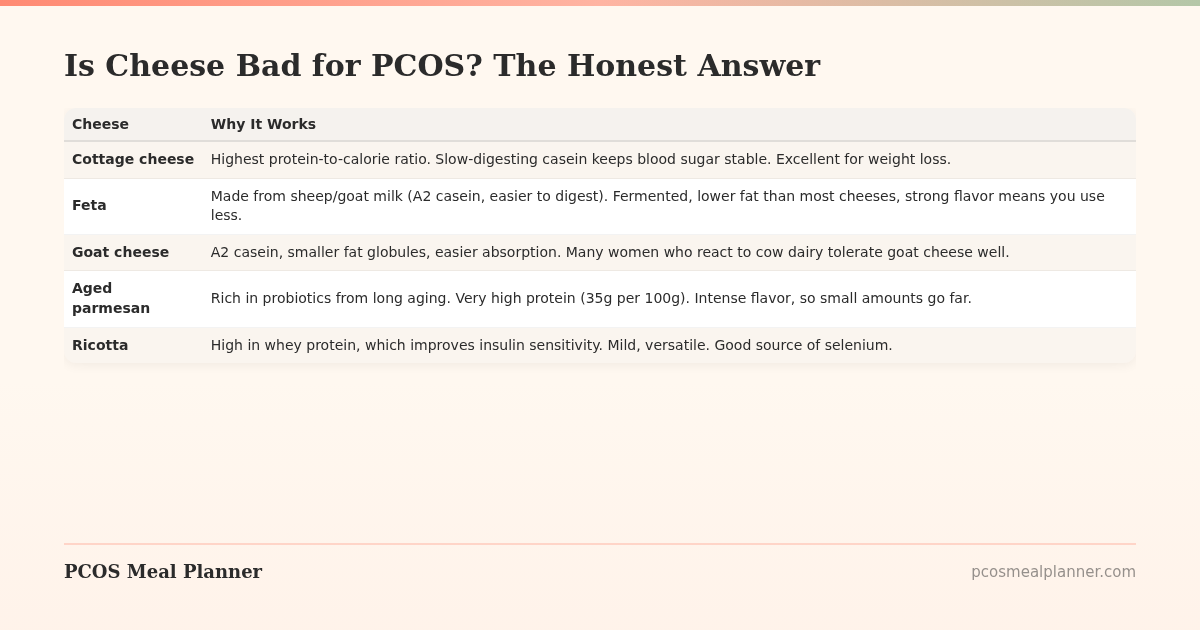
| Cheese | Why It Works |
|---|---|
| Cottage cheese | Highest protein-to-calorie ratio. Slow-digesting casein keeps blood sugar stable. Excellent for weight loss. |
| Feta | Made from sheep/goat milk (A2 casein, easier to digest). Fermented, lower fat than most cheeses, strong flavor means you use less. |
| Goat cheese | A2 casein, smaller fat globules, easier absorption. Many women who react to cow dairy tolerate goat cheese well. |
| Aged parmesan | Rich in probiotics from long aging. Very high protein (35g per 100g). Intense flavor, so small amounts go far. |
| Ricotta | High in whey protein, which improves insulin sensitivity. Mild, versatile. Good source of selenium. |
For the complete breakdown of each option with nutritional profiles and serving ideas, see our 8 Best Cheeses for PCOS guide.
Quick Reference: Worst Cheeses for PCOS
| Cheese | Why It Is Problematic |
|---|---|
| American singles | Classified as "cheese product." Contains emulsifiers, added sodium, and minimal actual cheese. |
| Velveeta | "Pasteurized prepared cheese product." High in sodium, contains milk protein concentrate and inflammatory additives. |
| Cheese spreads | Often contain added sugars, vegetable oils, and preservatives. Low protein, high in inflammatory ingredients. |
| Cream cheese (large amounts) | Very low protein (6g per 100g) relative to fat and calories. Fine as a condiment, problematic as a main ingredient. |
For the full list with specific brands and swap suggestions, see our 7 Worst Cheeses for PCOS guide.
The Cottage Cheese Spotlight: A PCOS Weight-Loss Powerhouse
If you are searching specifically about cottage cheese and PCOS weight loss, here is why it deserves its own section.
Cottage cheese is arguably the single best cheese for women with PCOS who are trying to lose weight. The numbers explain why:
- Protein: ~11g (keeps you full, supports muscle mass)
- Fat: ~4g (modest, not excessive)
- Carbs: ~3.5g (minimal blood sugar impact)
- Calories: ~98 (very low for the satiety it provides)
- GI: Low (slow-digesting casein protein)
The protein in cottage cheese is mostly casein, which digests slowly over several hours. This produces a gradual, sustained amino acid release rather than a spike — exactly what you want for blood sugar management with insulin resistance. A 2015 study found that high-protein dairy intake increased satiety hormones (GLP-1 and PYY) and reduced subsequent calorie intake at the next meal.
Cottage cheese is also incredibly versatile. Eat it plain with berries and a sprinkle of cinnamon (all anti-inflammatory), use it as a base for savory bowls with vegetables and olive oil, blend it into smoothies for extra protein, or use it as a higher-protein substitute for ricotta in recipes.
The one rule: Buy plain cottage cheese. Flavored varieties (especially fruit-on-the-bottom types) contain 10-15g of added sugar per serving — which defeats the entire purpose. Check the ingredients: you should see milk, cream, salt, and cultures. That is it.
Portion Guidance: The Thumb Rule
Getting portions right is the difference between cheese helping your PCOS and cheese working against it. The simplest guideline:
One serving = one thumb. From the tip of your thumb to the base is roughly 30g of hard cheese — about a 1-inch cube. This gives you about 7g of protein and 100 calories from a cheese like cheddar or parmesan.
For soft cheeses like cottage cheese or ricotta, one serving is roughly half a cup (about 115g).
Aim for 1-2 servings per day. This amount provides meaningful protein and calcium without excessive saturated fat.
Always pair cheese with fiber. This is the most important practical rule for cheese and PCOS. Fiber slows digestion further and blunts any insulin response. Practical pairings:
- Feta crumbled over a leafy green salad with olive oil
- Cottage cheese with berries and ground flaxseed
- Parmesan shaved over roasted vegetables
- Goat cheese with sliced apple and walnuts
- Ricotta on whole grain toast with tomatoes and basil
Avoid pairing cheese with refined carbs — white bread, regular crackers, pastry — as this combination produces the exact insulin spike you are trying to prevent.
How To Build Meals With the Right Dairy Balance
Knowing which cheeses work is step one. Building complete meals around them — with the right protein, fiber, and anti-inflammatory ingredients — is where results actually come from.
Breakfast: Cottage cheese bowl with blueberries, walnuts, ground flaxseed, and cinnamon
Lunch: Mediterranean salad with feta, chickpeas, cucumber, tomatoes, olives, and olive oil dressing
Snack: Apple slices with a thumb-sized piece of aged cheddar
Dinner: Baked salmon with roasted vegetables and a shaving of parmesan
Every meal here pairs cheese with fiber, includes anti-inflammatory ingredients, and keeps portions controlled. The cheese adds flavour, protein, and satisfaction without driving insulin resistance.
Building meals like this every day takes planning. The PCOS Meal Planner generates your personalized weekly meal plan with the right dairy balance built in — complete menus, grocery lists, and prep guides designed around insulin-stabilizing, anti-inflammatory foods. It costs $9 and your plan is delivered within 24 hours.
Should You Try Dairy-Free With PCOS?
If you experience any of the following, a dairy elimination trial may be worth trying:
- Acne that does not respond to other diet changes
- Persistent bloating after eating dairy
- Digestive discomfort (cramping, gas, loose stools) with cheese or milk
- Increased mucus production or sinus congestion
How to do it properly: Remove all dairy for 3-4 weeks. Then reintroduce one type at a time — start with goat cheese or sheep cheese (feta), wait 3 days, note any symptoms. Then try hard aged cow cheese (parmesan, cheddar). Then soft cow cheese. Then milk. This systematic approach tells you exactly which dairy products you tolerate and which ones cause issues.
Many women with PCOS find they tolerate goat and sheep dairy well even if cow dairy causes problems. This is likely due to the difference between A1 and A2 casein proteins. If you fall into this category, feta, goat cheese, and sheep milk ricotta become your go-to options.
If you tolerate dairy fine — no bloating, no skin flares, no digestive issues — there is no evidence-based reason to remove it. Keep eating the good cheeses.
The Bottom Line
No. Cheese is not bad for PCOS. Processed cheese products, oversized portions, and high-sugar pairings are bad for PCOS. Real, minimally processed cheese — particularly cottage cheese, feta, goat cheese, aged parmesan, and ricotta — provides protein, calcium, probiotics, and satiety that actively support PCOS care.
Choose real cheese. Keep portions to a thumb. Pair it with fiber. Avoid the processed stuff.
For the detailed lists, see our 8 Best Cheeses for PCOS and 7 Worst Cheeses for PCOS.
If you want a meal plan that gets the dairy balance right — along with every other macro and micronutrient that matters for PCOS — the PCOS Meal Planner builds your personalized weekly plan around insulin-friendly, anti-inflammatory foods. Delivered in 24 hours for $9. No guesswork, no calorie counting, no conflicting advice.
Frequently Asked Questions
Is cheese bad for PCOS?
No. Cheese is not inherently bad for PCOS. The answer depends on the type. High-protein, minimally processed cheeses like feta, cottage cheese, goat cheese, and aged parmesan are PCOS-friendly — low-GI, rich in protein, and containing helpful nutrients. Processed cheeses like American singles, Velveeta, and cheese spreads are problematic due to added sugars, sodium, and inflammatory ingredients. Choose real cheese, keep portions to a thumb-sized serving, and pair with fiber.
Can I eat cheese with insulin resistance?
Yes. Full-fat, minimally processed cheese has a low glycemic index and does not spike blood sugar on its own. A 2018 meta-analysis found cheese intake was not linked to increased type 2 diabetes risk. The key is choosing aged or fermented cheeses, keeping portions to about 30g. Pairing cheese with fiber-rich foods rather than refined carbs like white bread or crackers.
Is cottage cheese good for PCOS?
Cottage cheese is one of the best cheeses for PCOS, especially for weight loss. A 100g serving of low-fat cottage cheese provides roughly 11g of protein with only 98 calories. The slow-digesting casein protein keeps blood sugar stable for hours. It is also rich in calcium, B12, and selenium. Buy plain varieties — flavored cottage cheese contains 10-15g of added sugar per serving.
Does dairy cause inflammation with PCOS?
It depends on the type. A 2019 systematic review found that fermented dairy (yogurt, aged cheese, kefir) is either neutral or anti-inflammatory due to probiotic content. Highly processed dairy products may promote inflammation. If you suspect dairy sensitivity, try an elimination protocol — remove all dairy for 3-4 weeks, then reintroduce one type at a time. Many women tolerate goat and sheep dairy better than cow dairy.
Is goat cheese better than cow cheese for PCOS?
For many women with PCOS, yes. Goat cheese contains A2 casein protein, which is easier to digest than the A1 casein in most cow dairy. It has smaller fat globules for easier absorption. Women who experience bloating, acne, or digestive issues with cow cheese often find goat cheese does not trigger the same reactions. Nutritionally, goat cheese has slightly more medium-chain fatty acids which are metabolized more efficiently.
How much cheese can I eat with PCOS?
Aim for 1-2 thumb-sized servings per day (roughly 30-60g total). One thumb-sized piece is about a 1-inch cube. For soft cheeses like cottage cheese, one serving is about half a cup (115g). Always pair cheese with fiber — vegetables, whole grains, or fruit — to slow digestion. If you are actively trying to lose weight, stick to one serving per day and choose high-protein options like cottage cheese, feta, or parmesan.
PCOS Cheese Hub
Cheese gets a bad reputation with PCOS that is mostly wrong. These guides cover which cheeses fit, which to limit, and the dairy-free swaps that work.
Community Comments
Add a comment